















Saltar al contenido
MisLibrosTexto
Ad

Modal verbs: exercises on ability, permission, requests and obligation

📄 ejercicios ingles 🎓 otro · 2° TELESECUNDARIA México 🇲🇽 MX 🗣 Español
Página 152
152 de 171
Página 152 de Uérakua anapu uantakua. Projects and Readings.  Libro de Educación Telesecundaria Grado 2°  Ciclo Escolar 2025 - 2026
Anterior Página 152 / 171 Siguiente

Respuesta rápida

3: a) can, b) may, c) would, d) could, e) should, f) might. 4: a) opinion, b) possibility, c) obligation, d) permission, e) offer, f) request.

📚 exercise ingles ⭐⭐ Dificultad 2/5 ⏱ 6 min lectura

Solución — Página 152

Uérakua anapu uantakua. Projects and Readings. Libro de Educación Telesecundaria Grado 2° Ciclo Escolar 2025 - 2026

3
Ejercicio 3

Complete the following sentences with the adequate modal verb.

a
Parte 3.a

I ______ (can/have to/might) give you a ride if you're in a hurry.

  1. La oración expresa una oferta espontánea de ayuda.
  2. Have to indica obligación y might indica posibilidad; ninguno ofrece ayuda.
  3. Can se usa para ofrecer ayuda: I can give you a ride.
Respuesta

can

b
Parte 3.b

Excuse me, ______ (might/may/must) I use your pen for a second?

  1. Es una pregunta que pide permiso.
  2. Must expresa obligación y might posibilidad; no piden permiso.
  3. May es el modal formal para pedir permiso: May I use your pen?
Respuesta

may

c
Parte 3.c

What ______ (would/will/could) you like to do when we arrive to the city?

  1. La estructura would like to expresa deseos o preferencias.
  2. Will forma futuro y could habilidad o posibilidad pasada.
  3. Se usa would: What would you like to do?
Respuesta

would

d
Parte 3.d

______ (should/may/could) you tell me what time is the next train to Salina Cruz?

  1. Es una petición cortés de información.
  2. Should da consejos y may pide permiso formal.
  3. Could es la forma cortés de pedir algo: Could you tell me...?
Respuesta

could

e
Parte 3.e

You look very tired today. I think you ______ (would/will/should) take a break.

  1. La oración da un consejo o recomendación.
  2. Would y will no expresan consejo.
  3. Should es el modal para dar consejos: you should take a break.
Respuesta

should

f
Parte 3.f

People ______ (should/might/have to) think you're crazy if you go out in this rain.

  1. La oración plantea una posibilidad sobre lo que la gente pensará.
  2. Should da consejo y have to obligación.
  3. Might expresa posibilidad: People might think you're crazy.
Respuesta

might
4
Ejercicio 4

Write the kind of situation that each modal verb expresses.

a
Parte 4.a

If you're planning to go to the beach, I think you should make a reservation.

  1. Should expresa una recomendación personal del hablante.
  2. Dar una recomendación es expresar una opinión.
Respuesta

opinion

b
Parte 4.b

I might come with you this evening; I have to finish this work.

  1. Might indica que algo es posible pero no seguro.
  2. La segunda parte con have to no cambia la situación del modal subrayado.
Respuesta

possibility

c
Parte 4.c

We must leave now if we want to get there on time.

  1. Must expresa una necesidad fuerte o regla.
  2. Esa necesidad obligatoria corresponde a obligación.
Respuesta

obligation

d
Parte 4.d

Your new smart watch is great. May I see it for a second?

  1. May I...? es una fórmula para pedir permiso.
  2. Pedir permiso corresponde a permission.
Respuesta

permission

e
Parte 4.e

I could help you drive if you get tired on the road.

  1. Could aquí ofrece ayuda al interlocutor.
  2. Ofrecer ayuda corresponde a offer.
Respuesta

offer

f
Parte 4.f

Would you please tell her that I called? It's important.

  1. Would you please...? es una petición cortés.
  2. Pedir algo corresponde a request.
Respuesta

request

Contenido de la página

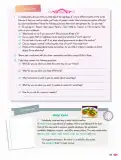
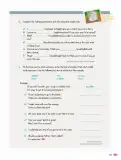
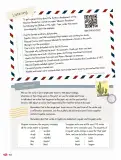
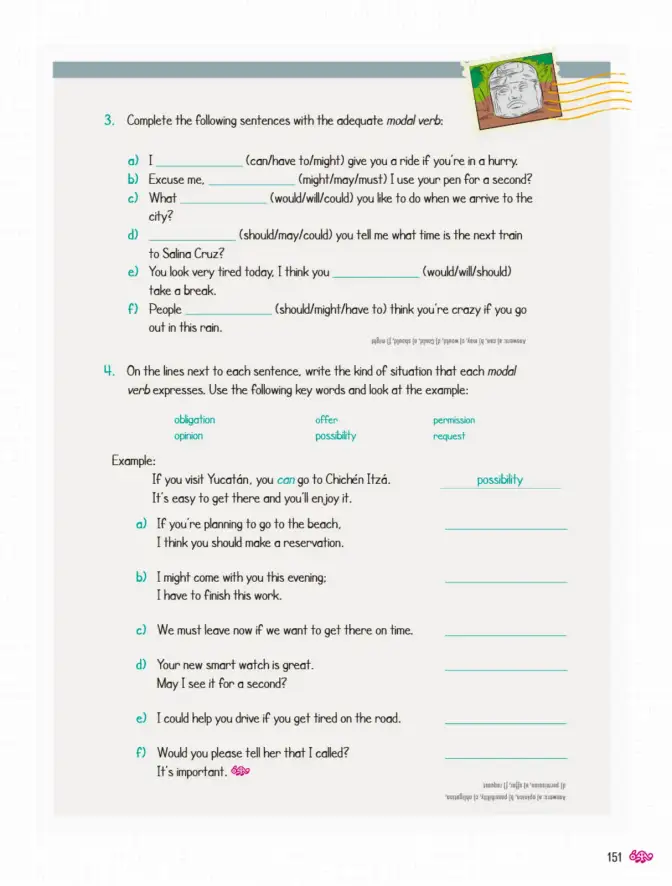
3. Complete the following sentences with the adequate modal verb:

a) I ______ (can/have to/might) give you a ride if you're in a hurry.

b) Excuse me, ______ (might/may/must) I use your pen for a second?

c) What ______ (would/will/could) you like to do when we arrive to the city?

d) ______ (should/may/could) you tell me what time is the next train to Salina Cruz?

e) You look very tired today. I think you ______ (would/will/should) take a break.

f) People ______ (should/might/have to) think you're crazy if you go out in this rain.

4. On the lines next to each sentence, write the kind of situation that each modal verb expresses. Use the following key words and look at the example:

obligation · offer · permission · opinion · possibility · request

Example: If you visit Yucatán, you can go to Chichén Itzá. It's easy to get there and you'll enjoy it. → possibility

a) If you're planning to go to the beach, I think you should make a reservation.

b) I might come with you this evening; I have to finish this work.

c) We must leave now if we want to get there on time.

d) Your new smart watch is great. May I see it for a second?

e) I could help you drive if you get tired on the road.

f) Would you please tell her that I called? It's important.

Ejemplos resueltos

If you visit Yucatán, you can go to Chichén Itzá. It's easy to get there and you'll enjoy it.

El modal can expresa possibility: es posible visitar Chichén Itzá desde Yucatán.

Tabla

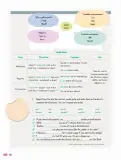
Modal Función Ejemplo
can habilidad / oferta / posibilidad I can give you a ride.
may permiso formal / posibilidad May I use your pen?
might posibilidad remota People might think you're crazy.
could petición cortés / habilidad pasada Could you tell me the time?
should consejo / opinión You should take a break.
must / have to obligación We must leave now.
would deseo / petición cortés What would you like to do?

Glosario (7)

modal verb
Verbo auxiliar que expresa posibilidad, obligación, permiso, etc. (can, may, must, should).
obligation
Obligación; algo que se debe hacer.
offer
Oferta; acción de ofrecer ayuda o algo a alguien.
permission
Permiso; autorización para hacer algo.
possibility
Posibilidad; algo que puede ocurrir.
request
Petición; acción de pedir algo cortésmente.
opinion
Opinión; punto de vista o recomendación personal.

Temas y conceptos clave

Modal verbsFunctions of modal verbscanmaymightwouldcouldshouldmusthave toobligationpermissionpossibilityrequestofferopinion
¿Te fue útil esta página?

Figuras de la página (1)

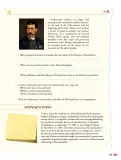
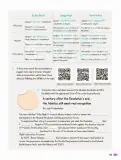
Ilustración de una cabeza tallada en piedra de estilo maya sobre fondo verde, junto a líneas decorativas amarillas.
Figura 1 image

Preguntas que la gente también hace

¿Cuándo se usa can y cuándo may para pedir permiso?
Consulta la solución completa arriba o explora el libro entero para temas relacionados.
¿Cuál es la diferencia entre should y must?
Consulta la solución completa arriba o explora el libro entero para temas relacionados.
¿Cómo se clasifican los verbos modales según su función?
Consulta la solución completa arriba o explora el libro entero para temas relacionados.
📌 Antes de leer esto
  • • Presente simple
  • • Pronombres personales
  • • Estructura básica de la oración en inglés
Siguiente tema sugerido
Modal verbs for advice and deduction (must, might, can't)
📝 Transcripción de la página (texto seleccionable) 1276 caracteres

3. Complete the following sentences with the adequate modal verb:

a)I (can/have to/might) give you a ride if you're in a hurry.

b) Excuse me,(might/may/must) I use your pen for a second?

c)What (would/will/could) you like to do when we arnive to the city?

d)(should/may/could) you tell me what time is the next train to Salina Cruz?

e You look very tired today, I think you (would/will/should)take a break.

f)People (should/might/have to) think you're crazy if you go out in this rain.

pnspn pnmeue smsuy

X On the lines next to each sentence, write the kind of situation that each modal verb expresses. Use the following key words and look at the example:

obligation offer permission opinion possibity request

Example:

If you visit Yucatán, you can go to Chichén Itzá.possibility It's easy to get there and you'll enjoy it.

a)If you're planning to go to the beach, I think you should make a reservation.

b) I might come with you this evening;I have to finish this work.

c)We must leave now if we want to get there on time.

d)Your new smart watch is great.May I see it for a second?

e) I could help you drive if you get tired on the road.

f)Would you please tell her that I called?It's important. 8

sambe ogos e

![](page=0,bbox=[846, 84, 1141, 235])

Ad

Otros libros recomendados

Ver todos →
Ad

Usamos cookies propias y de terceros para personalizar contenido, mostrar publicidad y analizar el tráfico. Las cookies necesarias siempre están activas.