Saltar al contenido
MisLibrosTexto
Ad

Recording the Experience & Appreciating My Path: Reflexión y compromiso ambiental

📄 ejercicios ingles 🎓 otro · 2° TELESECUNDARIA México 🇲🇽 MX 🗣 Español
Página 96
96 de 171
Página 96 de Uérakua anapu uantakua. Projects and Readings.  Libro de Educación Telesecundaria Grado 2°  Ciclo Escolar 2025 - 2026
Anterior Página 96 / 171 Siguiente

Respuesta rápida

Manifiesto con condicionales (If we recycle, we will reduce waste...), reflexión sobre causas y soluciones ambientales, autoevaluación del proyecto y acuerdos comunitarios sobre recursos naturales.

📚 exercise ingles ⭐⭐ Dificultad 2/5 ⏱ 8 min lectura

Solución — Página 96

Uérakua anapu uantakua. Projects and Readings. Libro de Educación Telesecundaria Grado 2° Ciclo Escolar 2025 - 2026

5
Ejercicio 5

(página anterior, continuación)

Take pictures and videos. Write down what you're doing. This will help you see how well you are doing and share your success with others.

Respuesta orientativa: Durante el proyecto, toma fotografías y videos de las actividades (limpieza, siembra, campañas) y anota en tu cuaderno qué hiciste cada día, con quién y qué resultado obtuviste. Este registro te permite evaluar tu avance y compartir tus logros con la comunidad escolar.

6
Ejercicio 6

In assembly, create a manifesto. Use conditionals to enumerate the things you care about and how you and your community will protect them.

a
Parte 6.a

Design a poster with your community manifesto and place it where everyone can see it and be reminded of the ethical practices you will enact.

Respuesta orientativa (manifiesto con condicionales):

  • If we keep throwing garbage in the streets, the soil and water will be polluted.
  • If we recycle paper, plastic and glass, we will reduce waste.
  • If we plant trees, we will have cleaner air.
  • If we save water, future generations will have enough to drink.
  • If we turn off the lights, we will save energy.
  • If we respect all living beings, we will live in a better world.

El cartel debe incluir el título "Our Community Manifesto", las oraciones condicionales anteriores y dibujos o fotos; colócalo en un lugar visible de la escuela.

Recording the Experience

1
Ejercicio 1

As a community, make a visual aid to share with your school community. Include your manifesto. Ask others to join and promise to care for the planet too.

Respuesta orientativa: Elabora un mural, cartel o presentación digital con el manifiesto, fotografías del proyecto y frases como "Join us! Promise to care for the planet". Preséntalo en una asamblea escolar e invita a otros grupos a firmar el compromiso.

Ad
2
Ejercicio 2

On your own, write in your notebook about:

a) What makes the environment get worse?

Respuesta orientativa: The environment gets worse because of pollution, deforestation, the excessive use of plastic, the burning of fossil fuels and the waste of water and energy. These actions cause climate change, the loss of biodiversity and the contamination of air, soil and water.

b) What things around you help keep Earth's resources?

Respuesta orientativa: Recycling, reusing materials, planting trees, saving water and electricity, using public transport or bicycles, and protecting natural areas help keep Earth's resources. Small daily actions, when done by many people, produce a big positive impact.

c) Why is it important to do things to help the environment?

Respuesta orientativa: It is important because natural resources are limited and our health and future depend on them. If we take care of the planet today, we guarantee a safe and healthy world for the next generations.

3
Ejercicio 3

Then, share what you wrote with your class community. Your teacher can help you share your ideas with everyone during a school meeting.

Respuesta orientativa: Lee tus respuestas en clase, escucha las de tus compañeros y, con ayuda del docente, presenta las conclusiones del grupo en una reunión escolar para difundir el compromiso ambiental.

Appreciating My Path

1
Ejercicio 1

On your own, think about:

a) How did you do during the project?

Respuesta orientativa: I participated actively, completed my tasks on time and collaborated with my team. I could improve my organization and my oral participation.

b) What new things did you learn?

Respuesta orientativa: I learned new vocabulary about the environment, how to write conditional sentences and how to work in a community project.

c) How did you agree with your classmates?

Respuesta orientativa: We agreed by listening to each other, respecting different opinions and voting when there were disagreements.

d) Did you use the right tools for the project?

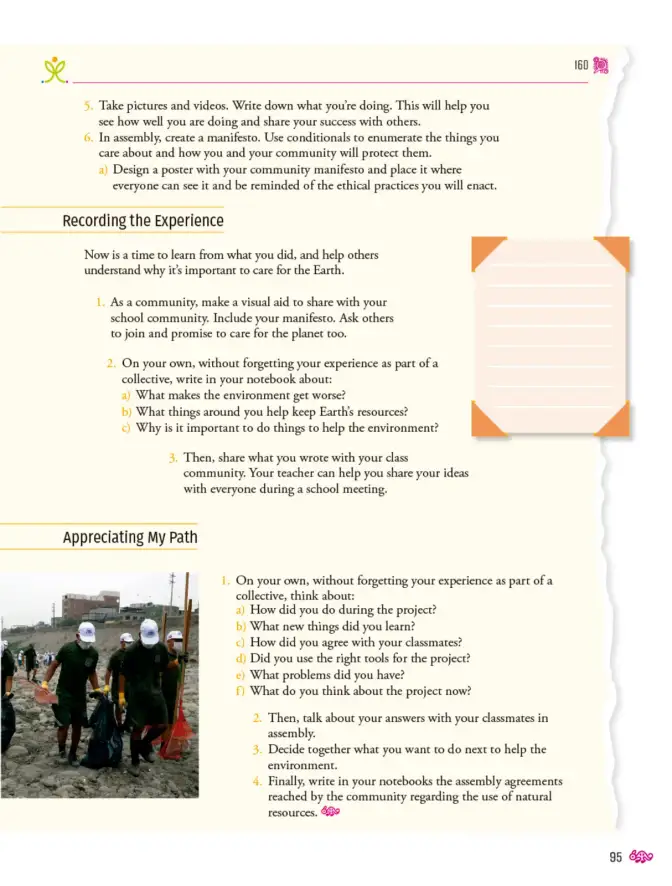
Respuesta orientativa: Yes, we used gloves, bags, shovels, posters and digital devices to take pictures and videos. Some tools were missing, but we shared what we had.

e) What problems did you have?

Respuesta orientativa: We had problems with time, with the distribution of tasks and with the lack of some materials. We solved them by organizing a schedule and asking for support.

f) What do you think about the project now?

Respuesta orientativa: I think it was a valuable experience because it taught me to care for the environment and to work as part of a community.

Ad
2
Ejercicio 2

Then, talk about your answers with your classmates in assembly.

Respuesta orientativa: Comparte tus respuestas en la asamblea, escucha las de los demás y anota los puntos en común y las diferencias.

3
Ejercicio 3

Decide together what you want to do next to help the environment.

Respuesta orientativa: Acuerden acciones concretas como una campaña de reciclaje permanente, la creación de un huerto escolar o la limpieza periódica de áreas comunes.

4
Ejercicio 4

Finally, write in your notebooks the assembly agreements reached by the community regarding the use of natural resources.

Respuesta orientativa: Escribe en tu cuaderno los acuerdos, por ejemplo: "We will recycle paper and plastic every week", "We will turn off the lights when we leave the classroom", "We will take care of the trees in the schoolyard".

Contenido de la página

5. Take pictures and videos. Write down what you're doing. This will help you see how well you are doing and share your success with others.

6. In assembly, create a manifesto. Use conditionals to enumerate the things you care about and how you and your community will protect them.

a) Design a poster with your community manifesto and place it where everyone can see it and be reminded of the ethical practices you will enact.


Recording the Experience

Now is a time to learn from what you did, and help others understand why it's important to care for the Earth.

  1. As a community, make a visual aid to share with your school community. Include your manifesto. Ask others to join and promise to care for the planet too.

  2. On your own, without forgetting your experience as part of a collective, write in your notebook about:

a) What makes the environment get worse?

b) What things around you help keep Earth's resources?

c) Why is it important to do things to help the environment?

  1. Then, share what you wrote with your class community. Your teacher can help you share your ideas with everyone during a school meeting.

Appreciating My Path

  1. On your own, without forgetting your experience as part of a collective, think about:

a) How did you do during the project?

b) What new things did you learn?

c) How did you agree with your classmates?

d) Did you use the right tools for the project?

e) What problems did you have?

f) What do you think about the project now?

  1. Then, talk about your answers with your classmates in assembly.

  2. Decide together what you want to do next to help the environment.

  3. Finally, write in your notebooks the assembly agreements reached by the community regarding the use of natural resources.

Ejemplos resueltos

Write a conditional sentence about protecting the environment.

If we recycle plastic bottles, we will reduce pollution in the oceans.

Glosario (6)

manifesto
Declaración pública de principios y compromisos de un grupo.
assembly
Reunión de toda la comunidad escolar para tomar decisiones.
visual aid
Material gráfico (cartel, mural, presentación) que apoya una exposición.
natural resources
Bienes que provienen de la naturaleza: agua, suelo, aire, bosques.
ethical practices
Acciones correctas y responsables con la sociedad y el ambiente.
environment
Entorno natural que rodea a los seres vivos.

Preguntas para practicar

What makes the environment get worse?

Pollution, deforestation, excessive plastic use and fossil fuels make the environment worse.

Why is it important to do things to help the environment?

Because natural resources are limited and future generations depend on them.

Temas y conceptos clave

Registro de la experienciaManifiesto comunitario con condicionalesReflexión sobre el cuidado del medio ambienteAutoevaluación del proyectoFirst conditionalManifestoNatural resourcesCommunity assemblyEnvironmental awareness
¿Te fue útil esta página?

Figuras de la página (2)

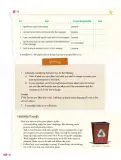
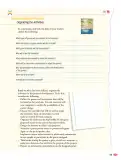
Hoja de papel con líneas para escribir, enmarcada con esquinas naranjas.
Figura 1 image
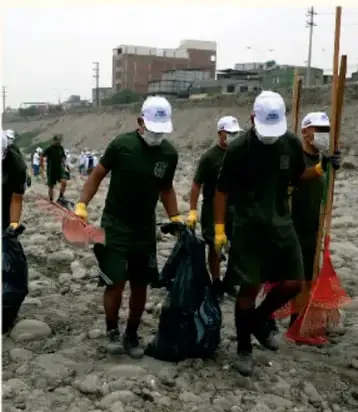
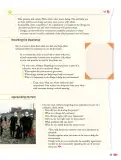
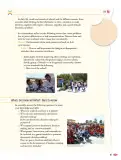
Fotografía de estudiantes con uniforme verde, guantes y cubrebocas recogiendo basura en un terreno.
Figura 2 image

Preguntas que la gente también hace

¿Cómo se escribe un manifiesto en inglés con condicionales?
Consulta la solución completa arriba o explora el libro entero para temas relacionados.
¿Qué acciones ayudan a cuidar los recursos naturales?
Consulta la solución completa arriba o explora el libro entero para temas relacionados.
¿Cómo se autoevalúa un proyecto comunitario en inglés?
Consulta la solución completa arriba o explora el libro entero para temas relacionados.
📌 Antes de leer esto
  • • Vocabulario básico sobre el medio ambiente en inglés
  • • Estructura del primer condicional (if + presente simple, will + verbo)
  • • Verbos en pasado simple para narrar experiencias
Siguiente tema sugerido
Presentación oral del manifiesto y evaluación final del proyecto ambiental
📝 Transcripción de la página (texto seleccionable) 1839 caracteres

災

  1. Take pictures and videos. Write down what you're doing. This will help you see how well you are doing and share your success with others.6. In assembly, create a manifesto. Use conditionals to enumerate the things you care about and how you and your community will protect them.a))Design a poster with your community manifesto and place it where everyone can see it and be reminded of the ethical practices you will enact.

Recording the Experience

Now is a time to learn from what you did, and help others understand why it's important to care for the Earth.

  1. As a community, make a visual aid to share with your school community. Include your manifesto. Ask others to join and promise to care for the planet too.

  2. On your own, without forgetting your experience as part of a collective, write in your notebook about:a) What makes the environment get worse? b) What things around you help keep Earth's resources? c)Why is it important to do things to help the environment?

  3. Then, share what you wrote with your class community. Your teacher can help you share your ideas with everyone during a school meeting.

Appreciating My Path

  1. On your own, without forgetting your experience as part of a collective, think about: a) How did you do during the project?

b) What new things did you learn?

c)How did you agree with your classmates? d) Did you use the right tools for the project? What problems did you have?

f) What do you think about the project now?

  1. Then, talk about your answers with your classmates in assembly.

  2. Decide together what you want to do next to help the environment.

4.Finally, write in your notebooks the assembly agreements reached by the community regarding the use of natural resources.

![](page=0,bbox=[848, 421, 1139, 794])

![](page=0,bbox=[0, 1027, 358, 1439])

160

95

乐
Ad

Otros libros recomendados

Ver todos →
Ad

Usamos cookies propias y de terceros para personalizar contenido, mostrar publicidad y analizar el tráfico. Las cookies necesarias siempre están activas.