

















Future with will and going to: grammar and speaking
Respuesta rápida
Will: decisiones inmediatas, predicciones sin evidencia, hechos futuros. Going to: planes previos, predicciones con evidencia, algo a punto de ocurrir. Speaking: 5 predicciones sobre donación de sangre.
Solución — Página 100
Uérakua anapu uantakua. Projects and Readings. Libro de Educación Telesecundaria Grado 3° Ciclo Escolar 2025 - 2026
Grammar: will vs. going to
Enunciado (traducido): Individualmente, pero considerando a los demás, presta atención a la gramática: usamos will y going to para hablar de eventos futuros. Estos son algunos ejemplos para empezar a usar y pensar durante tu proyecto.
Tabla comparativa
| Will | Going to |
|---|---|
| Expresa acciones futuras decididas en el momento de hablar (decisiones inmediatas). Ejemplo: I will have the salad and fish. | Expresa planes futuros decididos antes del momento de hablar (planes previos). Ejemplo: I am going to visit my aunt on Friday. |
| Expresa una predicción basada en lo que la gente espera que ocurra (predicción sin evidencia). Ejemplo: I think Barcelona will win the game. | Expresa una predicción basada en evidencia presente (predicción con evidencia). Ejemplo: Look at those black clouds! It is going to rain. |
| Expresa un hecho futuro. Ejemplo: The sun will rise tomorrow. | Expresa algo que está a punto de ocurrir. Ejemplo: The concert is going to start any minute now. |
Nota: Ambos, will y going to, pueden usarse para hacer predicciones sobre el futuro sin una diferencia real de significado.
Speaking
Enunciado (traducido): En comunidades, hagan algunas predicciones sobre el futuro usando will y going to con base en la información que reunieron previamente sobre la sangre y la donación de sangre. ¡Propongan nuevas ideas sobre la donación y formas de ayudar a las personas que la necesitan! Pueden usar el QR/enlace de la derecha como fuente de información.
Ejemplo: When I turn 18 years old, I am going to participate in a blood donation campaign.
Respuesta orientativa (Speaking)
- Predicción con evidencia (going to): Look at the low number of donors in our community; many patients are going to need blood next month.
- Predicción sin evidencia (will): I think our school campaign will encourage at least fifty new donors this year.
- Decisión inmediata (will): The hospital needs blood today, so I will call my older cousins right now.
- Plan previo (going to): Next semester we are going to organize a blood donation fair with the local health center.
- Hecho futuro (will): The blood bank will open a new collection point in our town next year.
Respuesta final: Se espera que el estudiante produzca al menos cinco oraciones, dos con will y dos con going to, más una predicción libre, relacionadas con la donación de sangre.
Contenido de la página
Grammar
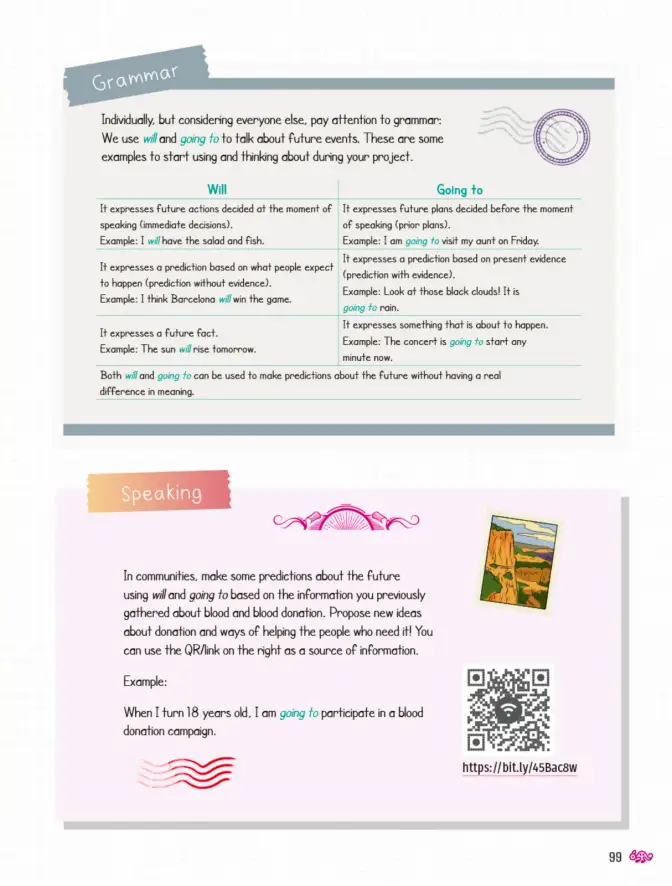
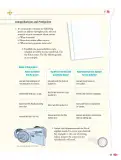
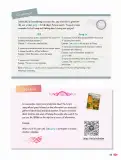
Individually, but considering everyone else, pay attention to grammar: We use will and going to to talk about future events. These are some examples to start using and thinking about during your project.
| Will | Going to |
|---|---|
| It expresses future actions decided at the moment of speaking (immediate decisions). Example: I will have the salad and fish. | It expresses future plans decided before the moment of speaking (prior plans). Example: I am going to visit my aunt on Friday. |
| It expresses a prediction based on what people expect to happen (prediction without evidence). Example: I think Barcelona will win the game. | It expresses a prediction based on present evidence (prediction with evidence). Example: Look at those black clouds! It is going to rain. |
| It expresses a future fact. Example: The sun will rise tomorrow. | It expresses something that is about to happen. Example: The concert is going to start any minute now. |
Both will and going to can be used to make predictions about the future without having a real difference in meaning.
Speaking
In communities, make some predictions about the future using will and going to based on the information you previously gathered about blood and blood donation. Propose new ideas about donation and ways of helping the people who need it! You can use the QR/link on the right as a source of information.
Example:
When I turn 18 years old, I am going to participate in a blood donation campaign.
Ejemplos resueltos
I will have the salad and fish.
Decisión inmediata tomada en el momento de hablar. Se usa will + verbo en forma base.
I am going to visit my aunt on Friday.
Plan previo decidido antes del momento de hablar. Se usa am/is/are + going to + verbo en forma base.
Look at those black clouds! It is going to rain.
Predicción con evidencia presente (las nubes negras). Se usa going to.
I think Barcelona will win the game.
Predicción sin evidencia, basada en una creencia u opinión. Se usa will.
Tabla
| Will | Going to |
|---|---|
| Future actions decided at the moment of speaking (immediate decisions). Example: I will have the salad and fish. | Future plans decided before the moment of speaking (prior plans). Example: I am going to visit my aunt on Friday. |
| Prediction based on what people expect to happen (prediction without evidence). Example: I think Barcelona will win the game. | Prediction based on present evidence (prediction with evidence). Example: Look at those black clouds! It is going to rain. |
| Future fact. Example: The sun will rise tomorrow. | Something that is about to happen. Example: The concert is going to start any minute now. |
Diagrama
graph TD
A[Future events] --> B[Will]
A --> C[Going to]
B --> B1[Immediate decisions]
B --> B2[Predictions without evidence]
B --> B3[Future facts]
C --> C1[Prior plans]
C --> C2[Predictions with evidence]
C --> C3[About to happen]
Glosario (5)
- will
- Auxiliar modal usado para decisiones inmediatas, predicciones sin evidencia y hechos futuros.
- going to
- Estructura usada para planes previos, predicciones con evidencia y eventos a punto de ocurrir.
- prediction
- Predicción: afirmación sobre lo que ocurrirá en el futuro.
- blood donation
- Donación de sangre: acción voluntaria de donar sangre para transfusiones.
- campaign
- Campaña: conjunto de acciones organizadas para lograr un objetivo social.
Preguntas para practicar
Why is blood donation important in your community?
Blood donation is important because hospitals need blood for surgeries, accidents and patients with serious illnesses. In many communities, blood banks have low reserves, so voluntary donors can save lives. Organizing campaigns helps raise awareness and ensures blood is available when needed.
What new ideas can you propose to encourage blood donation?
Students can propose school campaigns with health centers, informative talks, posters, social media posts and rewards for donors. They can also invite parents and neighbors to participate and explain that donating blood is safe and takes only a few minutes.
Temas y conceptos clave
Fuentes y referencias
- https://bit.ly/45Bac8w
Figuras de la página (5)



Preguntas que la gente también hace
¿Cuándo se usa will y cuándo going to en inglés?
¿Cómo hacer predicciones sobre el futuro en inglés?
¿Qué diferencia hay entre will y going to con ejemplos?
- • Presente simple y presente continuo
- • Vocabulario básico de salud y comunidad
- • Uso de auxiliares en inglés
📝 Transcripción de la página (texto seleccionable) 1830 caracteres
Grammar
Individually, but considering everyone else, pay attention to grammar:We use willand going to to talk about future events. These are some examples to start using and thinking about during your project.
Both willand going to can be used to make predictions about the future without having a real difference in meaning.
Speaking
In communities, make some predictions about the future using willand going to based on the information you previously gathered about blood and blood donation. Propose new ideas about donation and ways of helping the people who need it! You can use the QR/link on the right as a source of information.
Example:
When I turn 18 years old, I am going to participate in a blood donation campaign.

| Will | Going to |
| It expresses future actions decided at the moment of speaking (immediate decisions). Example: I will have the salad and fish. | It expresses future plans decided before the moment of speaking (prior plans). Example: I am going to visit my aunt on Friday. |
| It expresses a prediction based on what people expect to happen (prediction without evidence). Example: I think Barcelona will win the game. | It expresses a prediction based on present evidence (prediction with evidence). Example: Look at those black clouds! It is going to rain. |
| It expresses a future fact. Example: The sun willrise tomorrow. | It expresses something that is about to happen. Example: The concent is going to stant any minute now. |


99
乐
Otros libros recomendados

Colección Nanahuatzin. Lenguajes. Libro de Educación Telesecundaria Grado 3° Ciclo Escolar 2025 - 2026
SEP/CONALITEG
323 págs.
Colección Nanahuatzin. Ética, naturaleza y sociedades. Libro de Educación Telesecundaria Grado 3° Ciclo Escolar 2025 - 2026
SEP/CONALITEG
355 págs.
Colección Nanahuatzin. De lo humano y lo comunitario. Libro de Educación Telesecundaria Grado 3° Ciclo Escolar 2025 - 2026
SEP/CONALITEG
259 págs.
Colección Nanahuatzin. Nuestro libro de Proyectos. Tomo II. Libro de Educación Telesecundaria Grado 3° Ciclo Escolar 2025 - 2026
SEP/CONALITEG
275 págs.
Colección Nanahuatzin. Saberes y pensamiento científico. Libro de Educación Telesecundaria Grado 3° Ciclo Escolar 2025 - 2026
SEP/CONALITEG
339 págs.
Colección Nanahuatzin. Nuestro libro de Proyectos. Tomo I. Libro de Educación Telesecundaria Grado 3° Ciclo Escolar 2025 - 2026
SEP/CONALITEG
299 págs.
Colección Nanahuatzin. Nuestro libro de Proyectos. Tomo III. Libro de Educación Telesecundaria Grado 3° Ciclo Escolar 2025 - 2026
SEP/CONALITEG
291 págs.

Colección Nanahuatzin. Múltiples lenguajes. Libro de Educación Telesecundaria Grado 3° Ciclo Escolar 2025 - 2026
SEP/CONALITEG
163 págs.