
















Saltar al contenido
MisLibrosTexto
Ad

Direct and indirect offers: reported speech in community contexts

📄 ejercicios ingles 🎓 otro · 3° TELESECUNDARIA México 🇲🇽 MX 🗣 Español
Página 132
132 de 187
Página 132 de Uérakua anapu uantakua. Projects and Readings.  Libro de Educación Telesecundaria Grado 3°  Ciclo Escolar 2025 - 2026
Anterior Página 132 / 187 Siguiente

Respuesta rápida

a) The sergeant offered to let me rest soon. b) Maria offered to share her water with me. c) The enemy offered to negotiate a truce. d) A villager offered to show me the way. e) The doctor offered to treat my wound. f) The army declared they would not support the invader. g) The spokesperson said they could stop the attack. h) The man asked if I wanted food and water. i) My interviewee offered to speak again. j) The government said they would not introduce new taxes.

📚 exercise ingles ⭐⭐ Dificultad 2/5 ⏱ 8 min lectura

Solución — Página 132

Uérakua anapu uantakua. Projects and Readings. Libro de Educación Telesecundaria Grado 3° Ciclo Escolar 2025 - 2026

2
Ejercicio 2

Change the direct offers into indirect offers (cambia los ofrecimientos directos a indirectos).

Al pasar un ofrecimiento de estilo directo a indirecto se ajustan: el verbo introductorio (said → offered), los pronombres, los posesivos y los tiempos verbales (will → would, can → could, present → past).

a
Parte 2.a

"I will let you rest soon," the sergeant said.

  1. Verbo introductorio: said → offered.
  2. Pronombre I → he; you → me.
  3. will → would.
Respuesta

The sergeant offered to let me rest soon.

b
Parte 2.b

"I will share my water with you," my friend Maria said.

  1. said → offered.
  2. I → she; my → her; you → me.
  3. will → would.
Respuesta

My friend Maria offered to share her water with me.

c
Parte 2.c

"Let's negotiate a truce," the enemy said.

  1. Let's expresa sugerencia: said → offered / suggested.
  2. Estructura: offered + to + infinitivo.
Respuesta

The enemy offered to negotiate a truce.

d
Parte 2.d

"I will show you the way to the refugee camp," a kind local villager said.

  1. said → offered.
  2. I → he/she; you → me.
  3. will → would.
Respuesta

A kind local villager offered to show me the way to the refugee camp.

e
Parte 2.e

"I will treat your wound immediately," the doctor said.

  1. said → offered.
  2. I → he/she; your → my.
  3. will → would.
Respuesta

The doctor offered to treat my wound immediately.

f
Parte 2.f

"We will not support the invader," the army declared.

  1. declared → declared / stated (verbo de reporte).
  2. We → they; will not → would not.
Respuesta

The army declared that they would not support the invader.

g
Parte 2.g

"We can stop the attack," the spokesperson of the rebel group said.

  1. said → said / claimed.
  2. We → they; can → could.
Respuesta

The spokesperson of the rebel group said that they could stop the attack.

h
Parte 2.h

"Do you want some food and water?" a man displaced by the conflict said.

  1. Pregunta directa → pregunta indirecta con if.
  2. you → I; do you want → I wanted.
Respuesta

A man displaced by the conflict asked if I wanted some food and water.

i
Parte 2.i

"If you have any further questions, we speak again," my interviewee said.

  1. said → offered / said.
  2. you → I; we → they; have → had; speak → would speak.
Respuesta

My interviewee offered to speak again if I had any further questions.

j
Parte 2.j

"We will not introduce new taxes," the government said.

  1. said → said / announced.
  2. We → they; will not → would not.
Respuesta

The government said that they would not introduce new taxes.
Contenido de la página

  1. In community, change the direct offers into indirect offers.

a) "I will let you rest soon," the sergeant said.

b) "I will share my water with you," my friend Maria said.

c) "Let's negotiate a truce," the enemy said.

d) "I will show you the way to the refugee camp," a kind local villager said.

e) "I will treat your wound immediately," the doctor said.

f) "We will not support the invader," the army declared.

g) "We can stop the attack," the spokesperson of the rebel group said.

h) "Do you want some food and water?" a man displaced by the conflict said.

i) "If you have any further questions, we speak again," my interviewee said.

j) "We will not introduce new taxes," the government said.

Answers (al pie de la página):

a) The sergeant offered to let us rest soon. b) My friend Maria offered to share her water with me. c) The enemy offered to negotiate a truce. d) A kind local villager offered to show me the way to the refugee camp. e) The doctor offered to treat my wound immediately. f) The army offered not to support the invader. g) The spokesperson of the rebel group offered to stop the attack. h) A man displaced by the conflict offered to give me some food and water. i) My interviewee offered to speak again if I had any further questions. j) The government offered not to introduce new taxes.

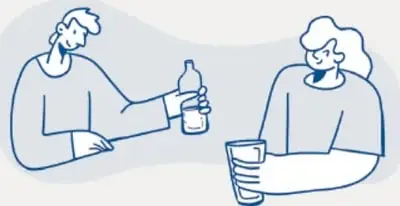
Ilustración: dos personas sentadas conversando; una sostiene una botella y la otra un vaso. Crédito: lara Wanda Gjinovich, ESTADO DE MÉXICO.

Ejemplos resueltos

"I will help you," she said.

She offered to help me. (said → offered; I → she; you → me; will → would)

Glosario (8)

offer
ofrecimiento; proponer dar algo o hacer algo por alguien
reported speech
estilo indirecto; forma de contar lo que alguien dijo sin citarlo textualmente
truce
tregua; acuerdo para detener temporalmente un conflicto
refugee camp
campamento de refugiados
invader
invasor; quien entra por la fuerza a un territorio
displaced
desplazado; persona obligada a dejar su hogar
wound
herida
spokesperson
portavoz; persona que habla en nombre de un grupo

Temas y conceptos clave

Reported speechDirect and indirect offersCommunity contextsoffered to + infinitivewill → wouldcan → couldpronoun shiftreported questions with if
¿Te fue útil esta página?

Figuras de la página (1)

Ilustración de dos personas sentadas conversando; una sostiene una botella y la otra un vaso, representando un ofrecimiento de agua o alimento.
Figura 1 image

Preguntas que la gente también hace

¿Cómo se cambia un ofrecimiento de estilo directo a indirecto en inglés?
Consulta la solución completa arriba o explora el libro entero para temas relacionados.
¿Qué cambios sufren will y can al pasar a reported speech?
Consulta la solución completa arriba o explora el libro entero para temas relacionados.
¿Cómo se reporta una pregunta con do you want en inglés?
Consulta la solución completa arriba o explora el libro entero para temas relacionados.
📌 Antes de leer esto
  • • Uso de will y can para ofrecimientos
  • • Pronombres personales y posesivos en inglés
  • • Estructura básica de la oración en inglés
  • • Verbos introductorios said, asked, declared
Siguiente tema sugerido
Reported speech: commands, requests and suggestions
📝 Transcripción de la página (texto seleccionable) 849 caracteres
  1. In community, change the direct offers into indirect offers.

a) "I will let you rest soon," the sergeant said.

b)"I wil share my water with you,"my friend Maria said.

c)"Let's negotiate a truce,"the enemy said.

d) "I wil show you the way to the refugee camp,'a kind local illager said.

e) "I will treat your wound immediately." the doctor said.

f)"We will not support the invader," the army declared.

"We can stop the attack," the spokesperson of the rebel group said.

h)"Do you want some food and water?"a man displaced by the conflict said.

i)"If you have any further questions, we speak again,"my interviewee said.

"We willnot introduce new taxes," the government said.

saxe u a n u pao aa a e a pa oas ape pao a aea n poaa s suamsuy

![](page=0,bbox=[145, 1140, 545, 1346])

lara Wanda Gjinovich, ESTA0o DE WExuCO

131

Ad

Otros libros recomendados

Ver todos →
Ad

Usamos cookies propias y de terceros para personalizar contenido, mostrar publicidad y analizar el tráfico. Las cookies necesarias siempre están activas.