

















Sentences With Two Verbs: infinitivo y gerundio en proyectos artisticos
Respuesta rápida
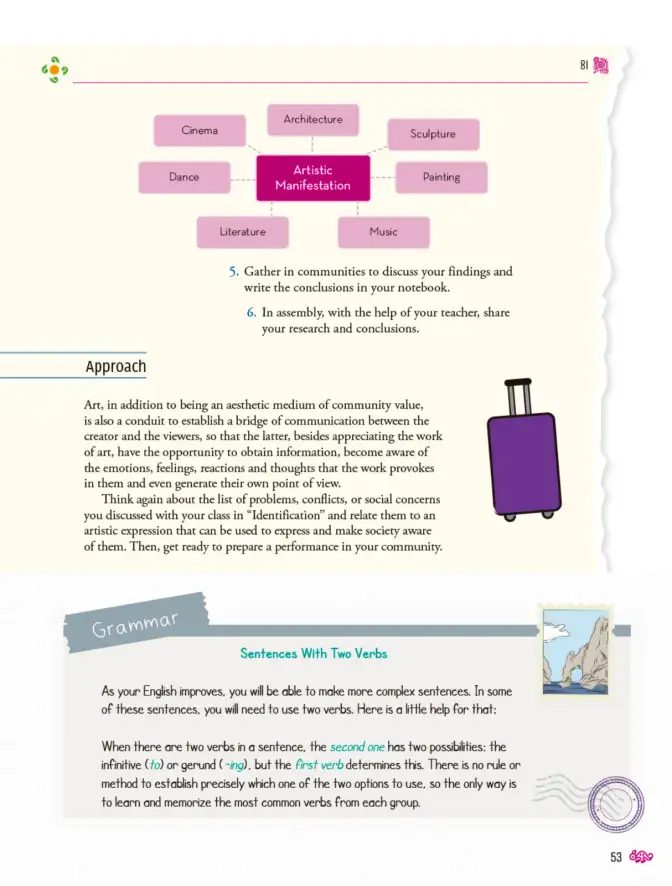
Pasos 5 y 6: discutir hallazgos y compartir conclusiones en asamblea. Approach: relacionar problemas sociales con una manifestación artística. Grammar: el primer verbo decide si el segundo va en infinitivo (to) o gerundio (-ing).
Solución — Página 54
Uérakua anapu uantakua. Projects and Readings. Libro de Educación Telesecundaria Grado 3° Ciclo Escolar 2025 - 2026
Paso 5
Enunciado: Gather in communities to discuss your findings and write the conclusions in your notebook.
Respuesta orientativa: Reúnete en equipos o comunidades para discutir los hallazgos de tu investigación artística y escribe las conclusiones en tu cuaderno. Organiza las ideas en tres partes: qué manifestación artística eligieron, qué problema social expresa y qué conclusión obtuvieron al compartirla.
Paso 6
Enunciado: In assembly, with the help of your teacher, share your research and conclusions.
Respuesta orientativa: En asamblea, con ayuda del docente, comparte tu investigación y conclusiones. Puedes apoyarte en una presentación breve, un cartel o una lectura oral de tus conclusiones, escuchando y respetando las opiniones de tus compañeros.
Approach
Enunciado: Think again about the list of problems, conflicts, or social concerns you discussed with your class in "Identification" and relate them to an artistic expression that can be used to express and make society aware of them. Then, get ready to prepare a performance in your community.
Respuesta orientativa: El arte funciona como puente de comunicación entre el creador y el público: permite transmitir emociones, sentimientos y puntos de vista. Por ejemplo, un mural puede denunciar la contaminación, una danza puede representar la migración o una canción puede hablar de la violencia escolar. Elige una manifestación artística (cine, arquitectura, escultura, danza, pintura, literatura o música) y prepara una presentación comunitaria que exprese el problema social identificado.
Grammar: Sentences With Two Verbs
Enunciado: When there are two verbs in a sentence, the second one has two possibilities: the infinitive (to) or gerund (-ing), but the first verb determines this.
Explicación: En inglés, cuando una oración tiene dos verbos, el segundo puede ir en infinitivo con to o en gerundio -ing, según el primer verbo. No hay una regla fija: se memorizan los verbos más comunes de cada grupo.
Ejemplos con infinitivo (to):
- I want to paint a mural. (Quiero pintar un mural.)
- She decided to dance in the festival. (Ella decidió bailar en el festival.)
- We hope to visit the museum. (Esperamos visitar el museo.)
Ejemplos con gerundio (-ing):
- I enjoy painting murals. (Disfruto pintar murales.)
- She finished dancing. (Ella terminó de bailar.)
- We avoid making noise. (Evitamos hacer ruido.)
Respuesta: El primer verbo decide si el segundo va en infinitivo con to o en gerundio -ing; se aprenden de memoria los verbos de cada grupo.
Contenido de la página
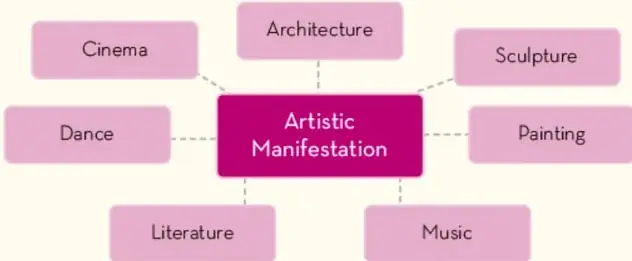
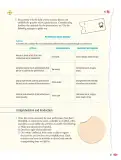
Artistic Manifestation
Mapa conceptual con las manifestaciones artísticas:
- Cinema
- Architecture
- Sculpture
- Dance
- Painting
- Literature
- Music
Pasos del proyecto
Gather in communities to discuss your findings and write the conclusions in your notebook.
In assembly, with the help of your teacher, share your research and conclusions.
Approach
Art, in addition to being an aesthetic medium of community value, is also a conduit to establish a bridge of communication between the creator and the viewers, so that the latter, besides appreciating the work of art, have the opportunity to obtain information, become aware of the emotions, feelings, reactions and thoughts that the work provokes in them and even generate their own point of view.
Think again about the list of problems, conflicts, or social concerns you discussed with your class in "Identification" and relate them to an artistic expression that can be used to express and make society aware of them. Then, get ready to prepare a performance in your community.
Grammar: Sentences With Two Verbs
As your English improves, you will be able to make more complex sentences. In some of these sentences, you will need to use two verbs. Here is a little help for that:
When there are two verbs in a sentence, the second one has two possibilities: the infinitive (to) or gerund (-ing), but the first verb determines this. There is no rule or method to establish precisely which one of the two options to use, so the only way is to learn and memorize the most common verbs from each group.
Ejemplos resueltos
I want ___ (paint) a mural.
El primer verbo want exige infinitivo con to: I want to paint a mural.
I enjoy ___ (paint) murals.
El primer verbo enjoy exige gerundio -ing: I enjoy painting murals.
Tabla
| Primer verbo | Segunda forma verbal | Ejemplo |
|---|---|---|
| want | infinitivo con to | I want to paint |
| decide | infinitivo con to | She decided to dance |
| hope | infinitivo con to | We hope to visit |
| enjoy | gerundio -ing | I enjoy painting |
| finish | gerundio -ing | She finished dancing |
| avoid | gerundio -ing | We avoid making noise |
Diagrama
mindmap
  root((Artistic Manifestation))
    Cinema
    Architecture
    Sculpture
    Dance
    Painting
    Literature
    Music
Glosario (6)
- Artistic manifestation
- Manifestación artística; forma de expresión como cine, danza, pintura o música.
- Infinitive
- Infinitivo; forma verbal precedida por to (to paint, to dance).
- Gerund
- Gerundio; forma verbal terminada en -ing que funciona como sustantivo (painting, dancing).
- Approach
- Enfoque; sección que explica el propósito comunicativo del arte.
- Performance
- Presentación o actuación artística ante un público.
- Findings
- Hallazgos o resultados de una investigación.
Preguntas para practicar
¿Por qué el arte es un puente de comunicación entre el creador y el público?
Porque transmite emociones, sentimientos y puntos de vista que el espectador interpreta y relaciona con su propia experiencia, generando conciencia sobre temas sociales.
¿Qué manifestación artística elegirías para expresar un problema de tu comunidad y por qué?
Un mural, porque es visible para toda la comunidad y permite representar imágenes y mensajes sobre el problema de forma directa y colectiva.
Temas y conceptos clave
Figuras de la página (3)

Preguntas que la gente también hace
¿Cuándo se usa el infinitivo con to y cuándo el gerundio en inglés?
¿Qué son las manifestaciones artísticas y cómo se clasifican?
¿Cómo puede el arte ayudar a crear conciencia sobre problemas sociales?
- • Reconocer verbos en inglés en presente simple
- • Identificar el sujeto y el verbo en una oración
- • Vocabulario básico de arte y emociones
📝 Transcripción de la página (texto seleccionable) 1530 caracteres
Gather in communities to discuss your findings and write the conclusions in your notebook.
In assembly, with the help of your teacher, share your research and conclusions.
Approach
Art, in addition to being an aesthetic medium of community value,is also a conduit to establish a bridge of communication between the creator and the viewers, so that the latter, besides appreciating the work of art, have the opportunity to obtain information, become aware of the emotions, feelings, reactions and thoughts that the work provokes in them and even generate their own point of view.
Think again about the list of problems, conflicts, or social concerns you discussed with your class in "Identification'" and relate them to an artistic expression that can be used to express and make society aware of them. Then, get ready to prepare a performance in your community.
Grammar
Sentences With Two Verbs
As your English improves, you will be able to make more complex sentences. In some of these sentences, you will need to use two verbs. Here is a little help for that:
When there are two verbs in a sentence, the second one has two possibilities: the infinitive(to)or gerund(-ing), but the first verb determines this. There is no rule or method to establish precisely which one of the two options to use, so the only way is to learn and memorize the most common verbs from each group.
81


538

Otros libros recomendados

Colección Nanahuatzin. Lenguajes. Libro de Educación Telesecundaria Grado 3° Ciclo Escolar 2025 - 2026
SEP/CONALITEG
323 págs.
Colección Nanahuatzin. Ética, naturaleza y sociedades. Libro de Educación Telesecundaria Grado 3° Ciclo Escolar 2025 - 2026
SEP/CONALITEG
355 págs.
Colección Nanahuatzin. De lo humano y lo comunitario. Libro de Educación Telesecundaria Grado 3° Ciclo Escolar 2025 - 2026
SEP/CONALITEG
259 págs.

Colección Nanahuatzin. Nuestro libro de Proyectos. Tomo II. Libro de Educación Telesecundaria Grado 3° Ciclo Escolar 2025 - 2026
SEP/CONALITEG
275 págs.
Colección Nanahuatzin. Saberes y pensamiento científico. Libro de Educación Telesecundaria Grado 3° Ciclo Escolar 2025 - 2026
SEP/CONALITEG
339 págs.
Colección Nanahuatzin. Nuestro libro de Proyectos. Tomo I. Libro de Educación Telesecundaria Grado 3° Ciclo Escolar 2025 - 2026
SEP/CONALITEG
299 págs.
Colección Nanahuatzin. Nuestro libro de Proyectos. Tomo III. Libro de Educación Telesecundaria Grado 3° Ciclo Escolar 2025 - 2026
SEP/CONALITEG
291 págs.

Colección Nanahuatzin. Múltiples lenguajes. Libro de Educación Telesecundaria Grado 3° Ciclo Escolar 2025 - 2026
SEP/CONALITEG
163 págs.