
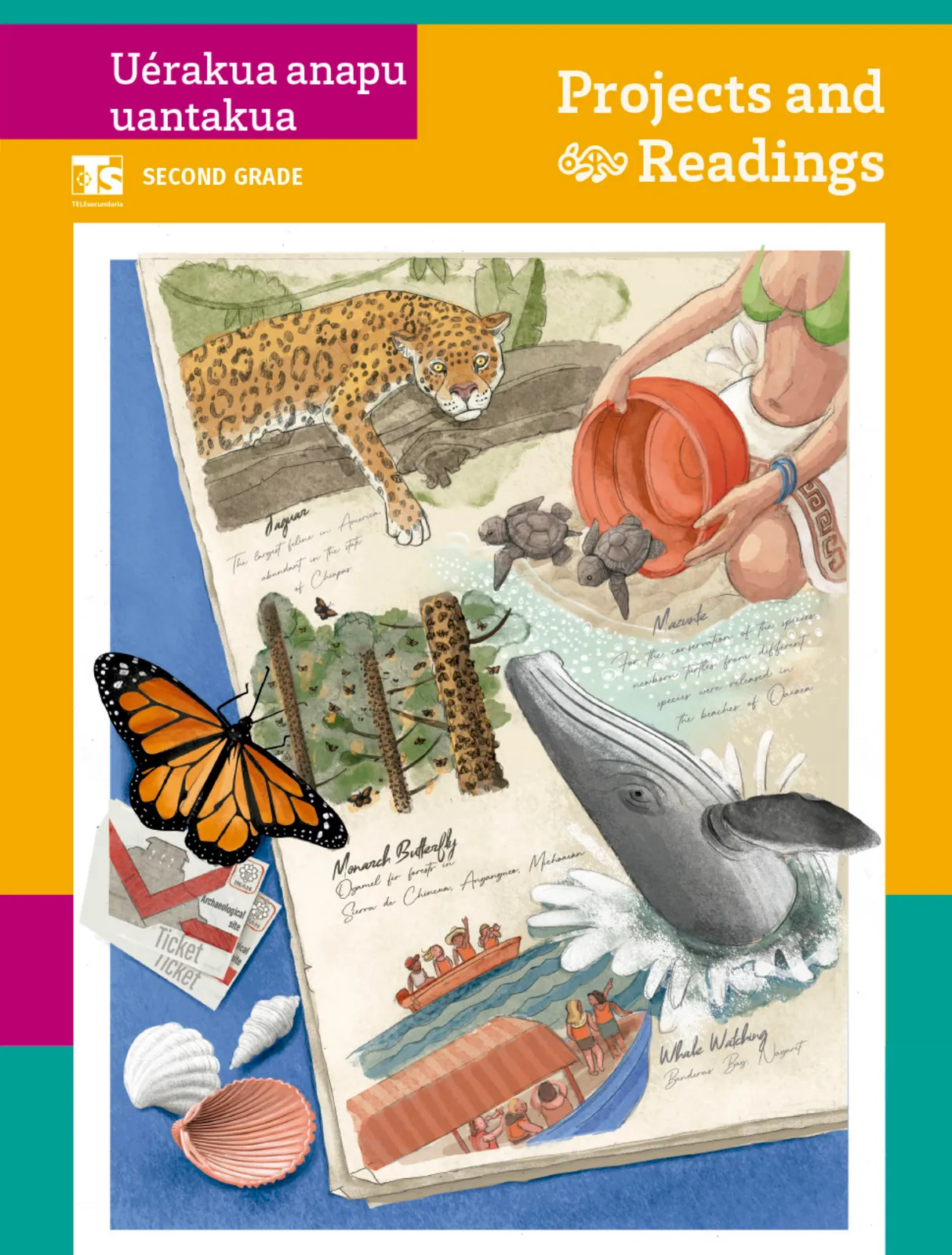
Página — Uerakua Anapu Uantakua Projects And Readings 2 (pág. 155)
Solución no disponible aún
Esta página está en proceso de revisión.
Pídela y la resolveremos antes. Sin registro.
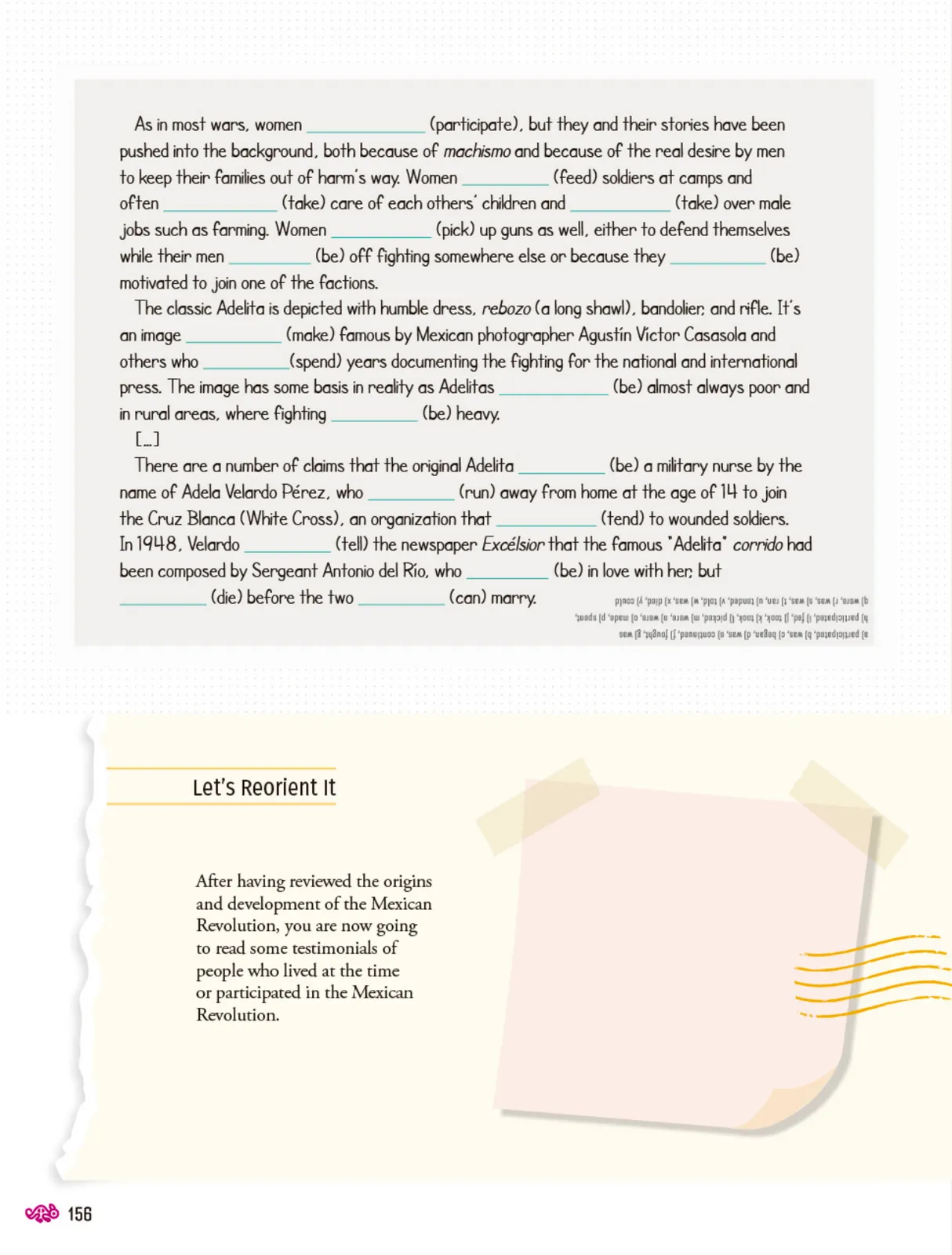
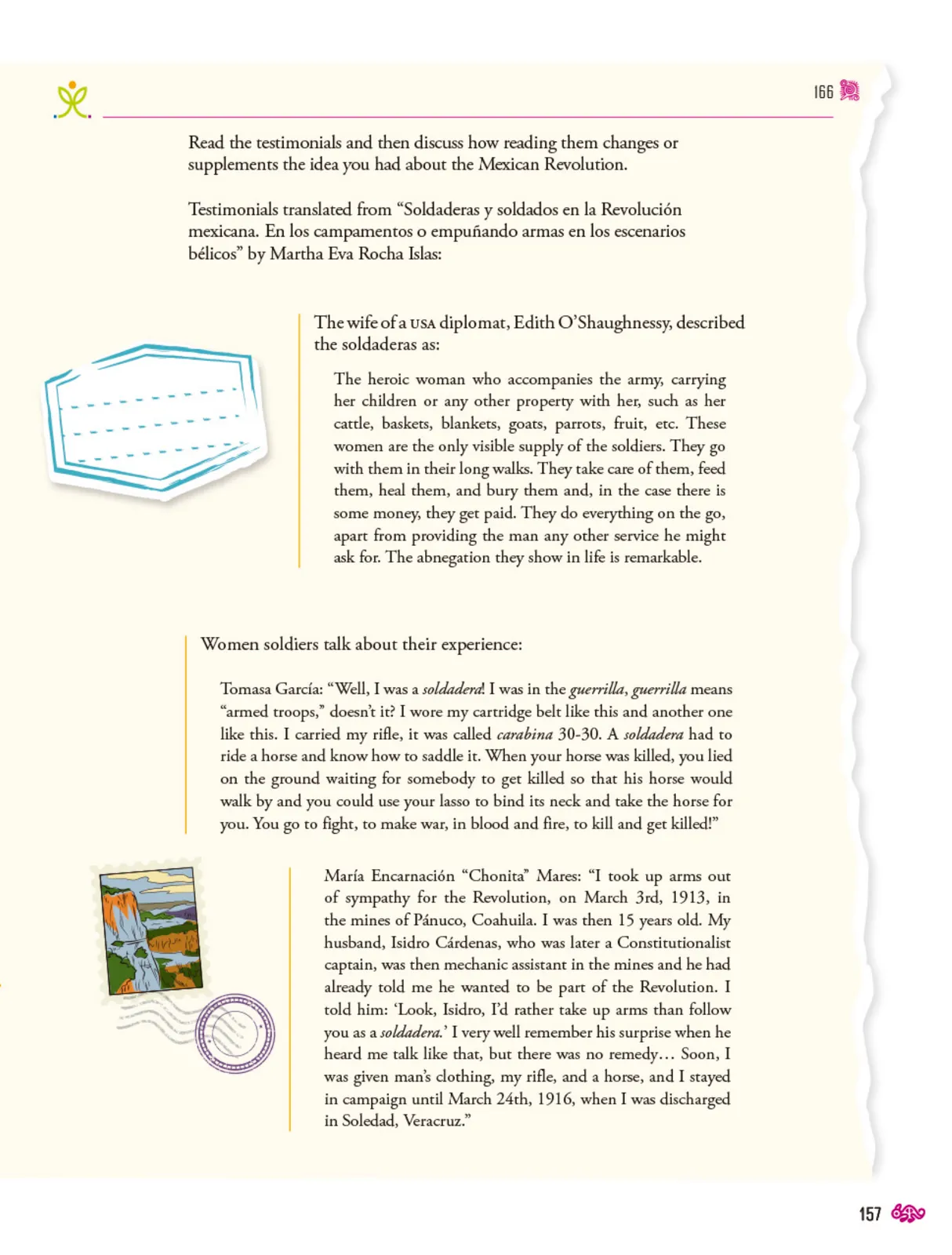
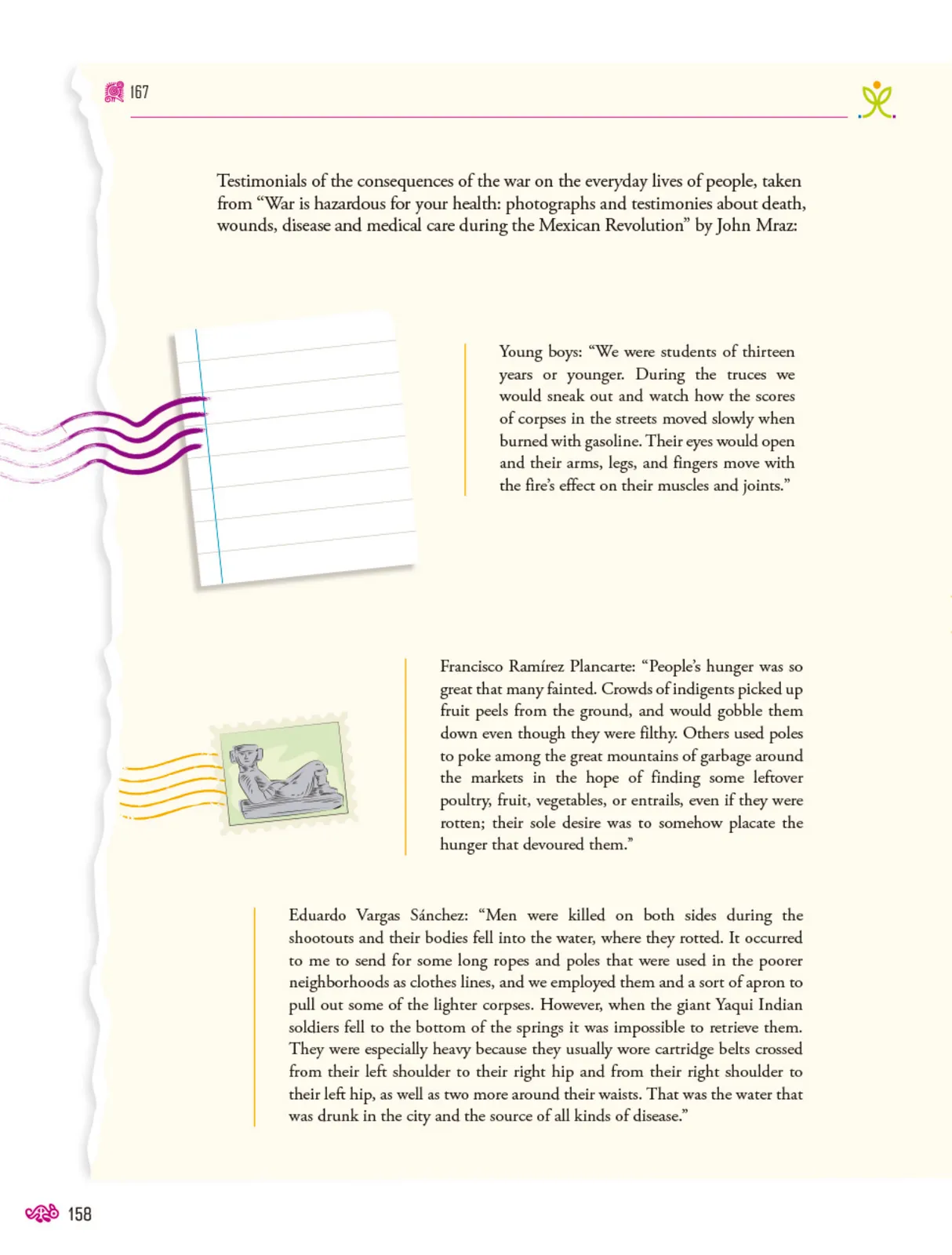
📝 Transcripción de la página (texto seleccionable) 1666 caracteres
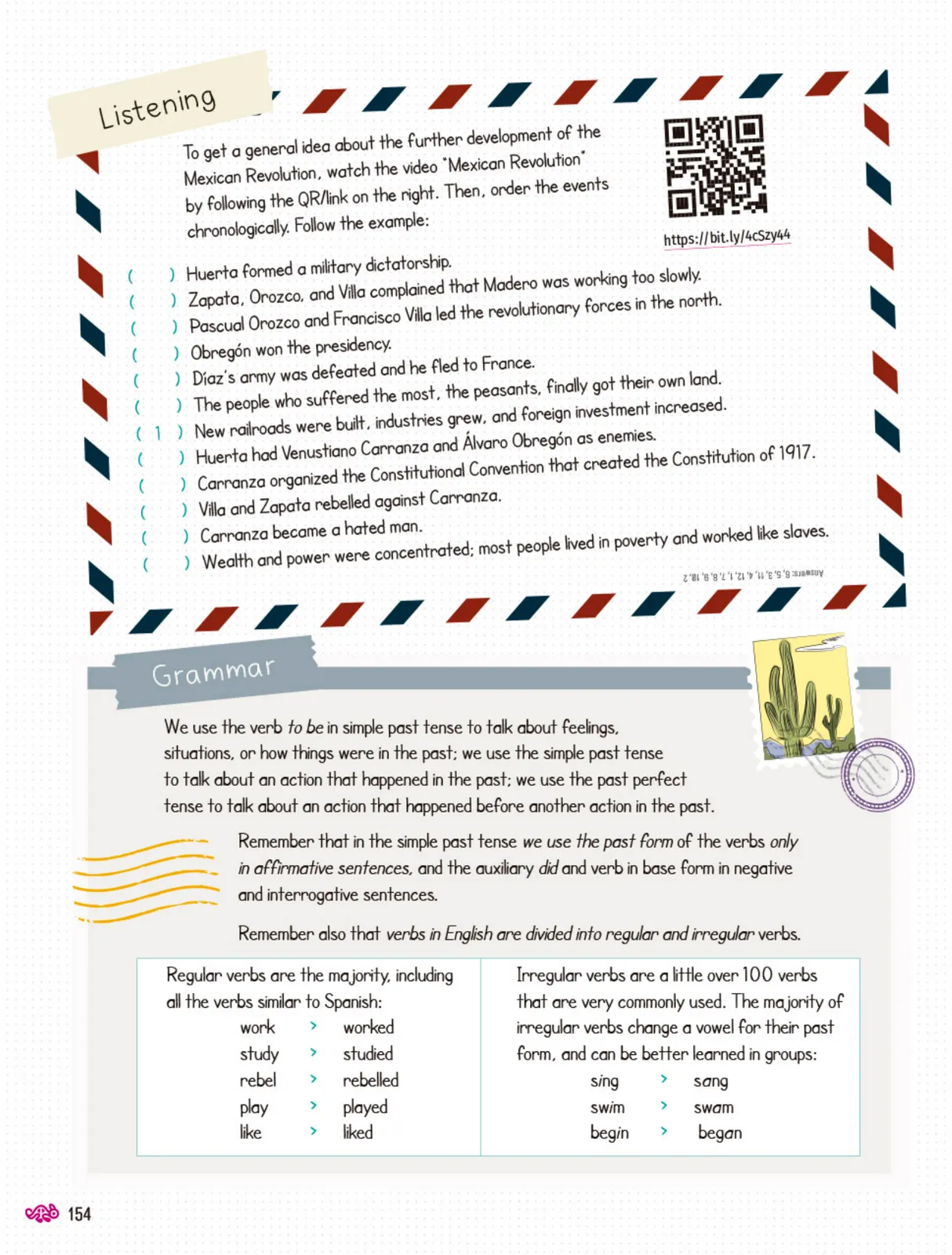
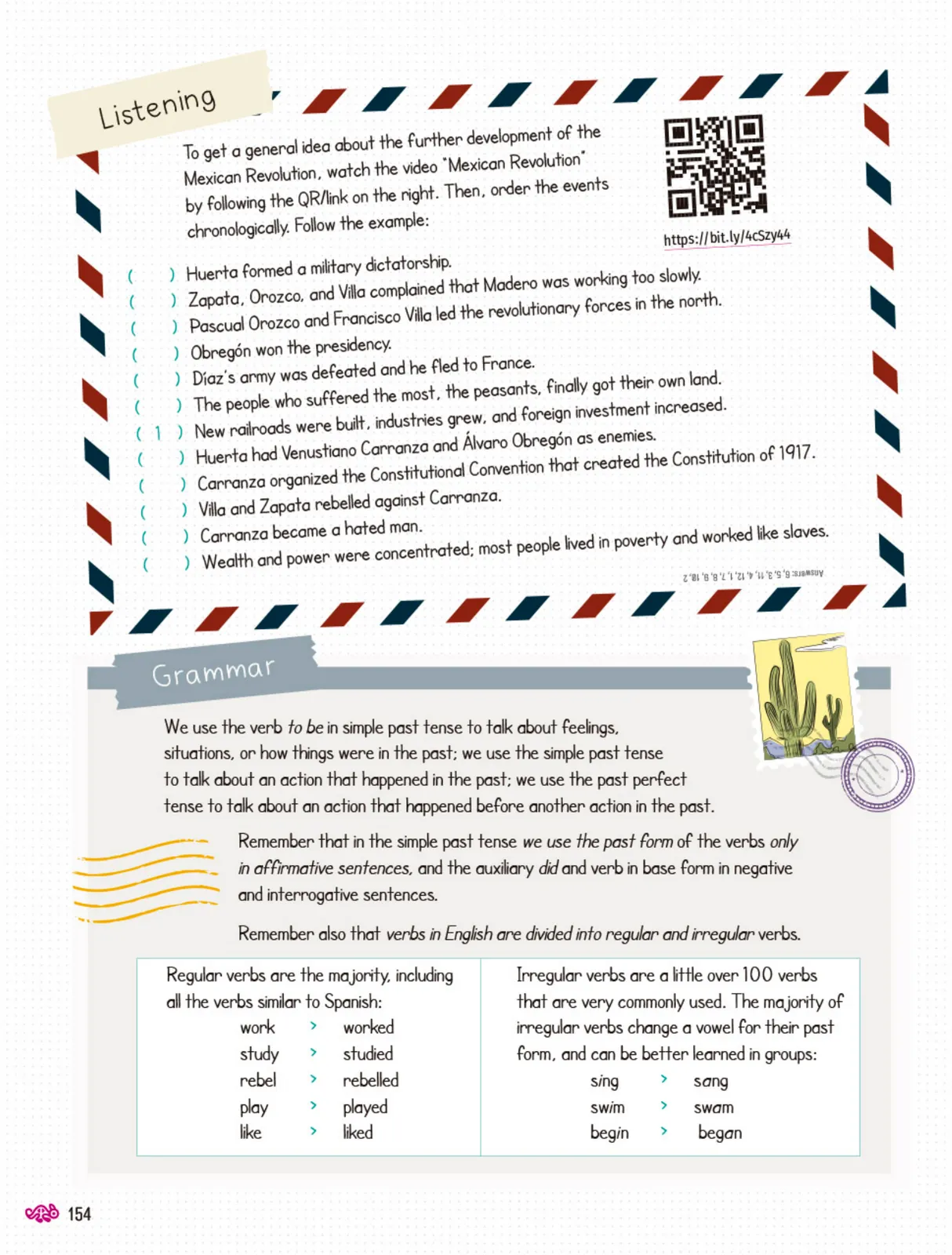
Listening
e Mexican Revolution, watch the video"Mexican Revolution"by following the QR/link on the right. Then, order the events chronologically. Follow the example:
)Huerta formed a military dictatorship.)Zapata,Orozco,and Villa coplaine d henevolutionary forces n thenonth.
Obregonwon iepdoe
)The people who suffered the most, the peusd foreian investment increased Diazsarmy was defeate an neTe
New railroaas were bunC annanza and Alvaro Obregón as enemies.
Huenta had Venustiano Carranzaand Aaro Orethat created h
Villa and Zapata rebelld against Caranza.
)Cse
22
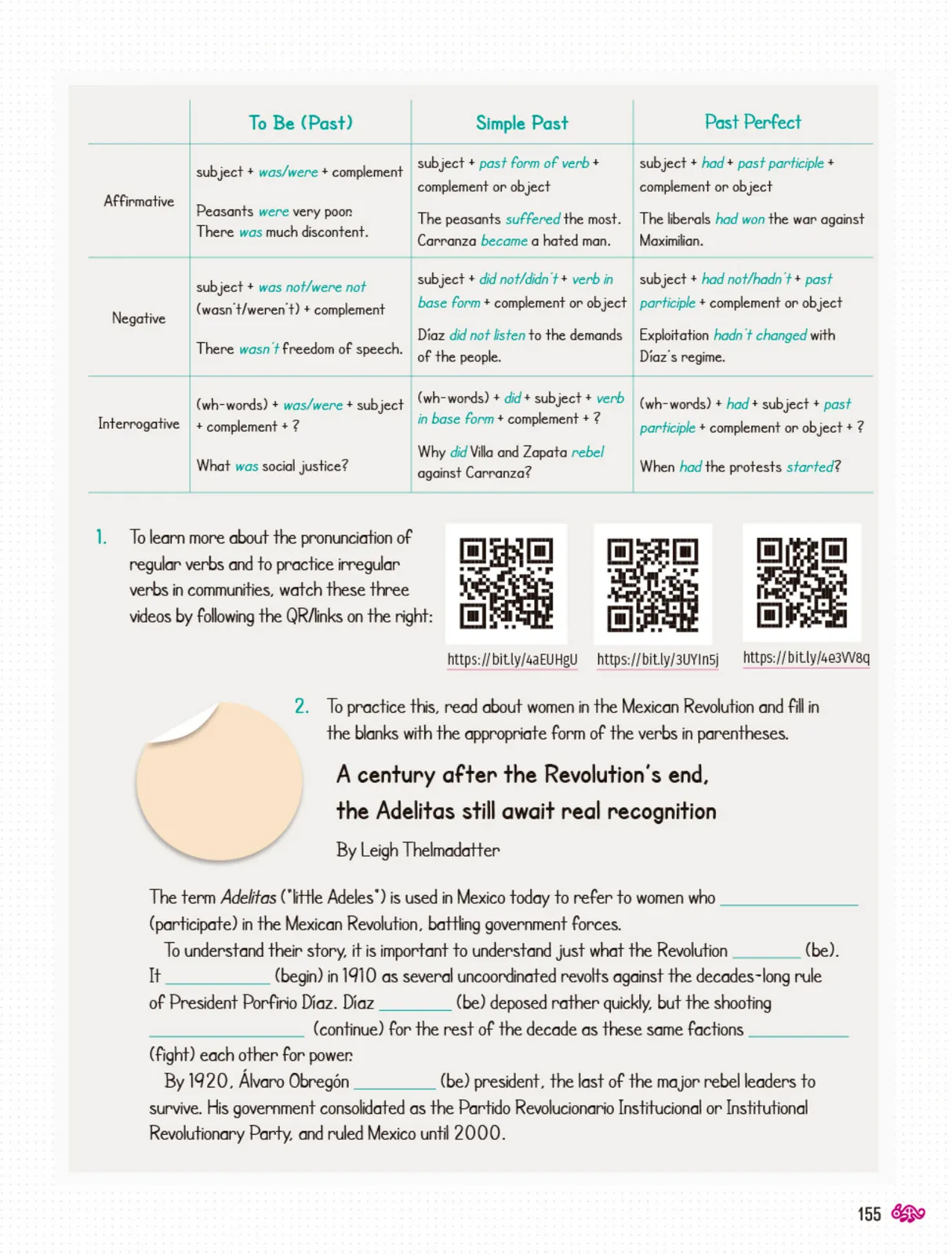
Grammar
We use the verb to be in simple past tense to talk about feelings,situations, or how things were in the past; we use the simple past tense to talk about an action that happened in the past; we use the past perfect tense to talk about an action that happened before another action in the past.
Remember that in the simple past tense we use the past form of the verbs only in affinmative sentences, and the auxiliary did and verb in base form in negative and interrogative sentences.
Remember also that verbs in English are divided into regular and iregular verbs.
Regular verbs are the majority, including all the verbs similar to Spanish:
work >worked study >studied rebel V rebelled play -played like V liked
Irregular verbs are a litle over 100 verbs that are very commonly used. The majority of irregular verbs change a vowel for their past form, and can be better learned in groups:
sing >sang swim V swam began


154
Otros libros recomendados
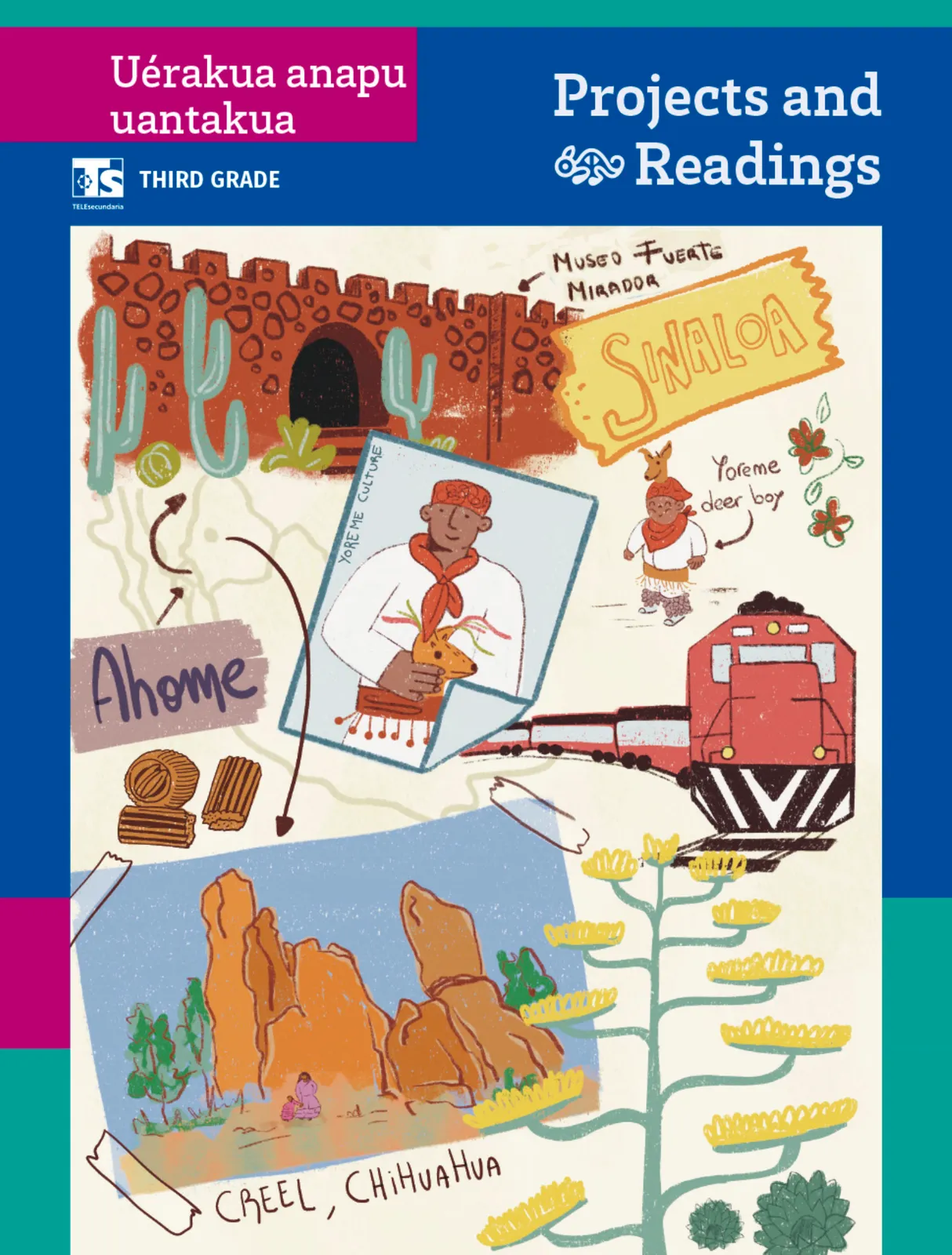
Uérakua anapu uantakua. Projects and Readings. Libro de Educación Telesecundaria Grado 3° Ciclo Escolar 2025 - 2026
SEP/CONALITEG
187 págs.
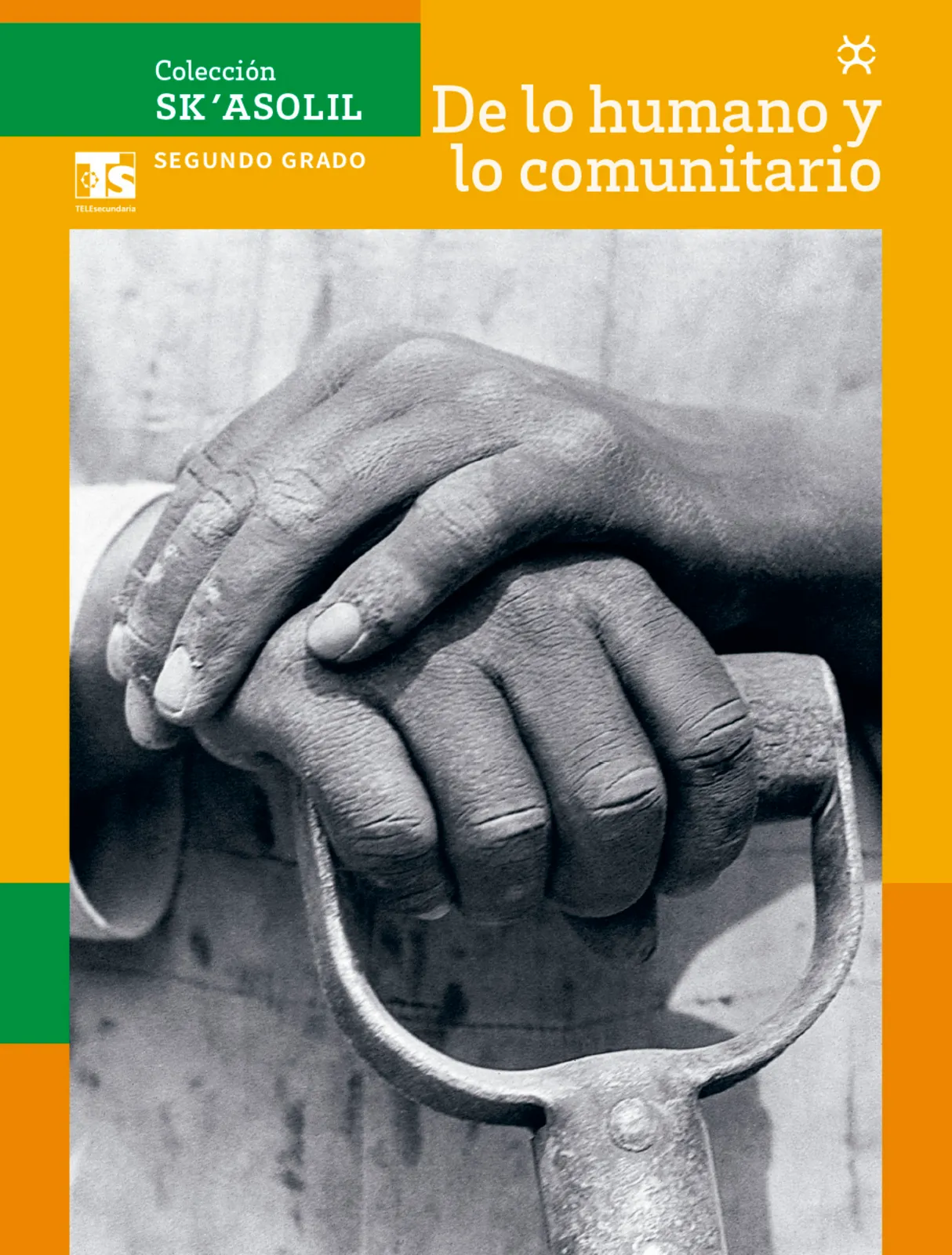
Colección Sk´asolil. De lo humano y lo comunitario. Libro de Educación Telesecundaria Grado 2° Ciclo Escolar 2025 - 2026
SEP/CONALITEG
259 págs.
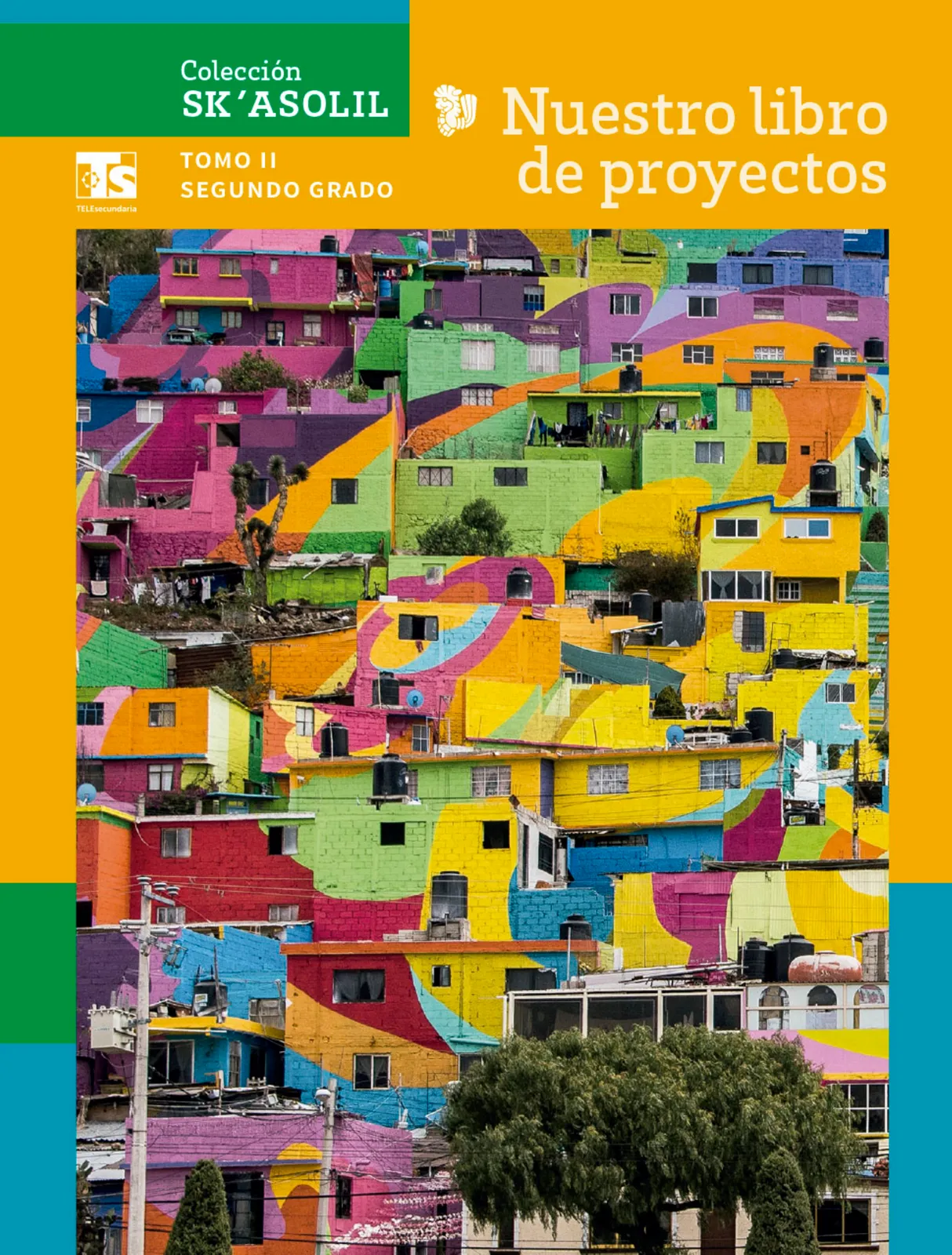
Colección Sk´asolil. Nuestro libro de Proyectos. Tomo II. Libro de Educación Telesecundaria Grado 2° Ciclo Escolar 2025 - 2026
SEP/CONALITEG
259 págs.
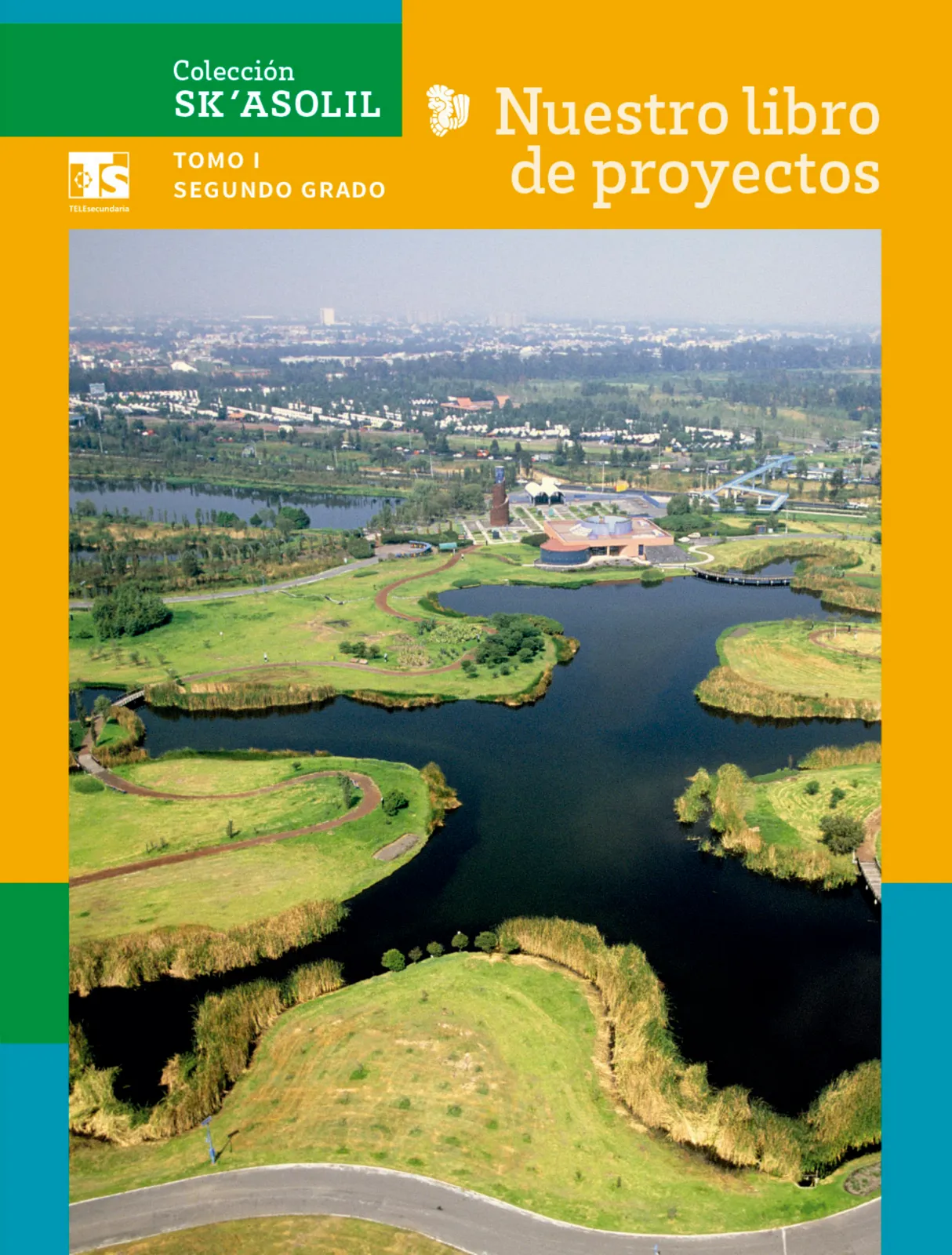
Colección Sk´asolil. Nuestro libro de Proyectos. Tomo I. Libro de Educación Telesecundaria Grado 2° Ciclo Escolar 2025 - 2026
SEP/CONALITEG
291 págs.
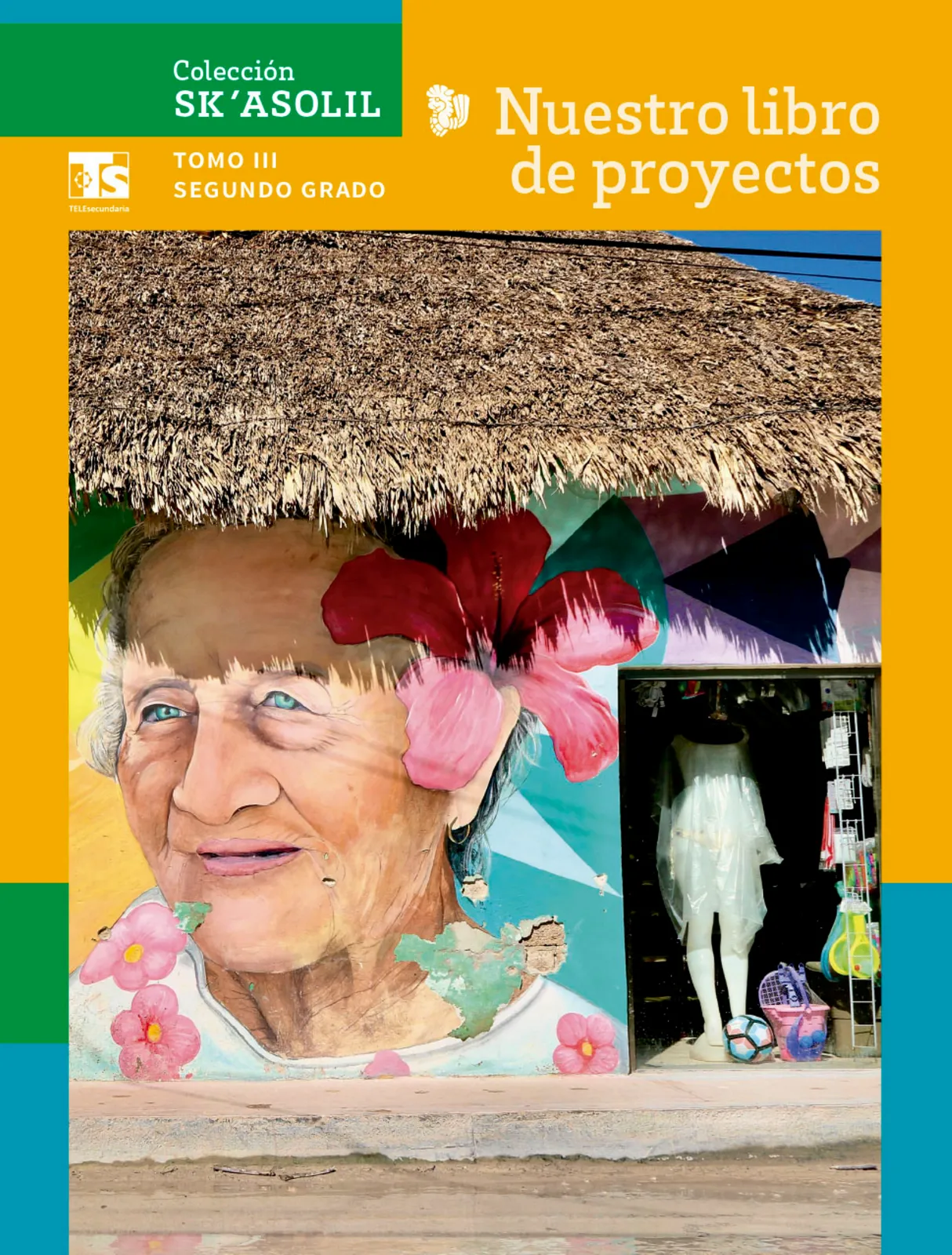
Colección Sk´asolil. Nuestro libro de Proyectos. Tomo III. Libro de Educación Telesecundaria Grado 2° Ciclo Escolar 2025 - 2026
SEP/CONALITEG
291 págs.
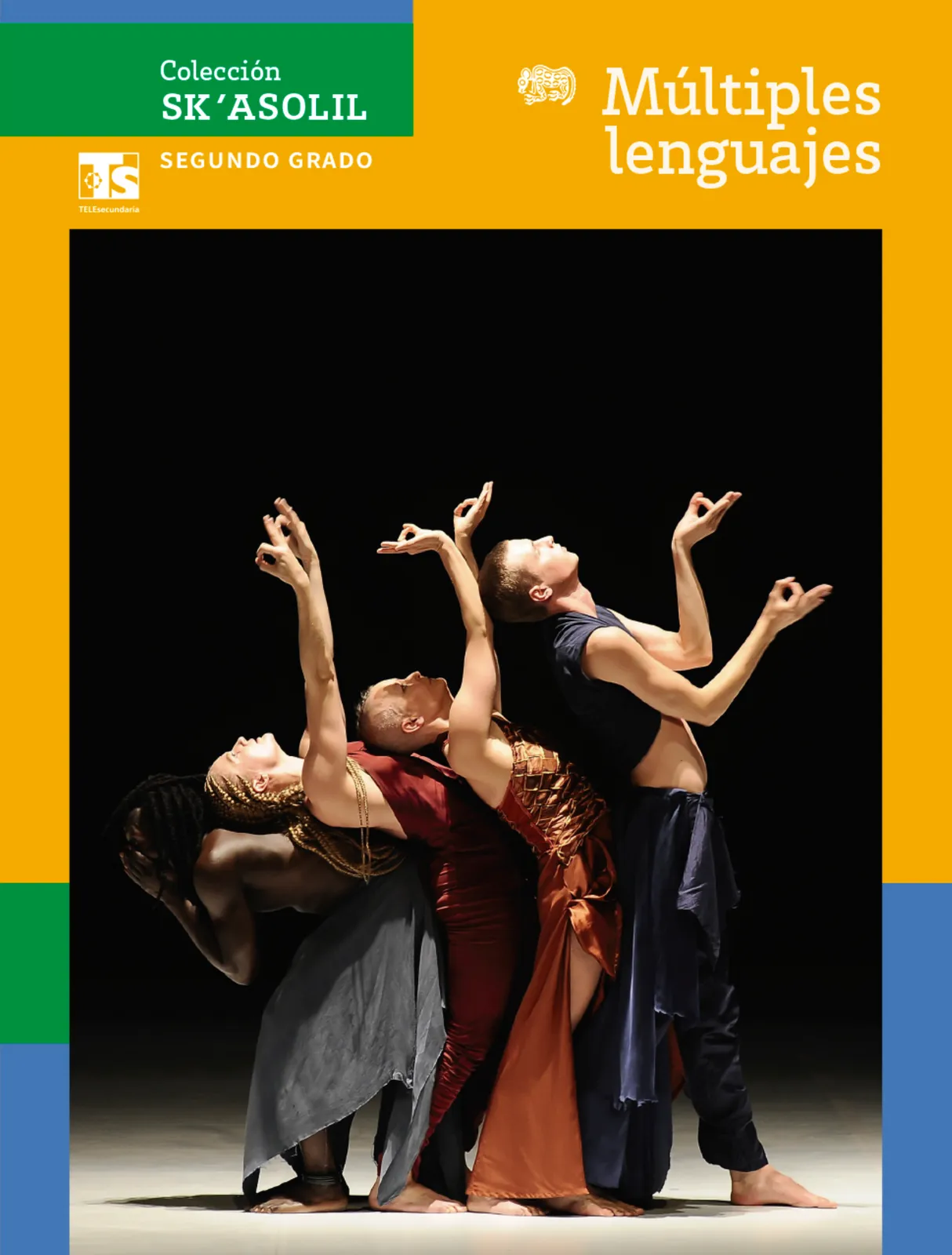
Colección Sk´asolil. Múltiples lenguajes. Libro de Educación Telesecundaria Grado 2° Ciclo Escolar 2025 - 2026
SEP/CONALITEG
163 págs.
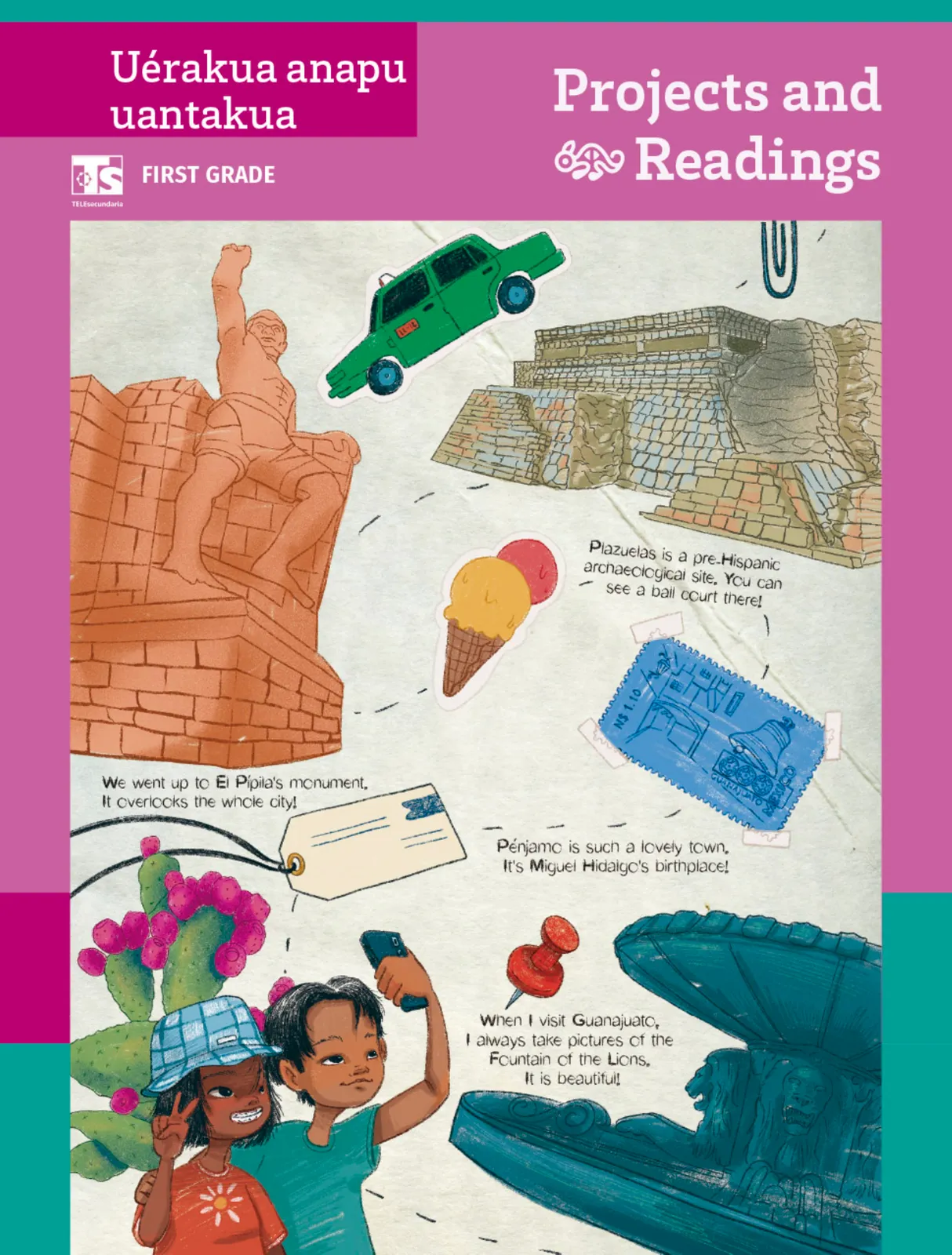
Uérakua anapu uantakua. Projects and Readings. Libro de Educación Telesecundaria Grado 1° Ciclo Escolar 2025 - 2026
SEP/CONALITEG
187 págs.
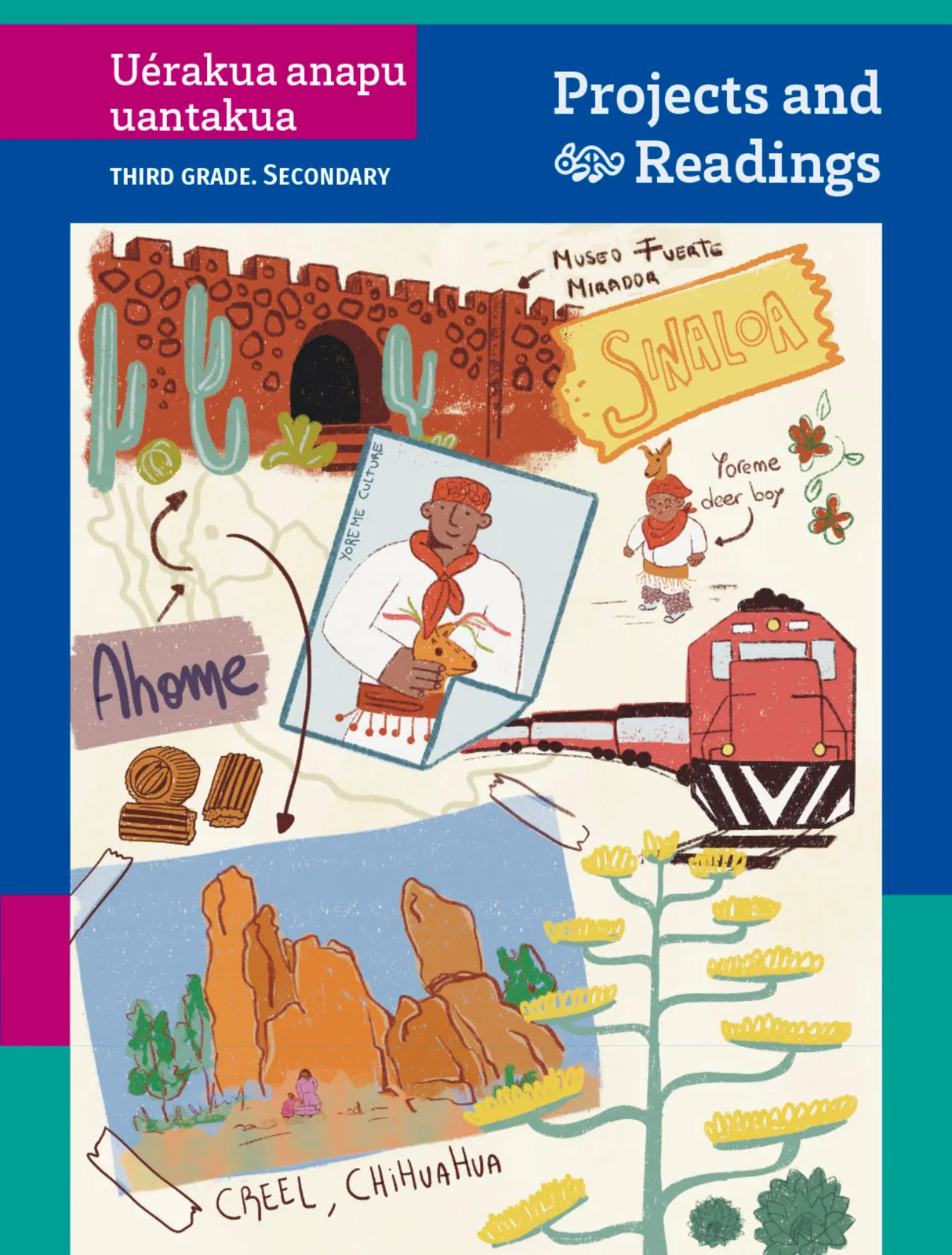
Uérakua anapu uantakua. Projects and Readings. Libro de Educación Secundaria Grado 3° Ciclo Escolar 2025 - 2026
SEP/CONALITEG
187 págs.