Saltar al contenido
MisLibrosTexto
Ad

Ancient Aztec Floating Gardens: Reading and Compare/Contrast

📄 ejercicios ingles 🎓 secundaria · 2° Secundaria México 🇲🇽 MX 🗣 Español
Página 110
110 de 171
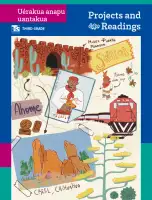
Página 110 de Uérakua anapu uantakua. Projects and Readings.  Libro de Educación Secundaria Grado 2°  Ciclo Escolar 2025 - 2026
Anterior Página 110 / 171 Siguiente

Respuesta rápida

Ejercicio 1: Respuestas personales en presente perfecto. Ejercicio 2: Tabla con similitudes (ubicación, propósito, construcción, cultivos) y diferencias (enfoque, cifras, autor, época).

📚 exercise ingles ⭐⭐ Dificultad 2/5 ⏱ 10 min lectura

Solución — Página 110

Uérakua anapu uantakua. Projects and Readings. Libro de Educación Secundaria Grado 2° Ciclo Escolar 2025 - 2026

1
Ejercicio 1

Read the text individually and answer the example question.

Example: Have you ever traveled on a trajinera? Answer: No, I have never traveled on a trajinera.

a
Parte 1.a

Enunciado: Write your own answers using the present perfect.

  1. Have you ever visited Mexico City?
  2. Have you ever eaten tacos?
  3. Have you ever seen a chinampa?
  4. Have you ever read about the Aztecs?
Respuesta
  1. Yes, I have visited Mexico City once.
  2. No, I have never eaten tacos.
  3. No, I have never seen a chinampa.
  4. Yes, I have read about the Aztecs in history class.
2
Ejercicio 2

Draw a table comparing and contrasting the information from the previous reading and the one from 'Floating Gardens' at the beginning of the lesson.

a
Parte 2.a

Compare (Things That Are Similar)

Aspect Both texts mention...
Location The chinampas were in Lake Texcoco, near Tenochtitlan (now Mexico City).
Purpose They were used to grow food for the population.
Construction They were artificial islands made with mud and sticks.
Crops They grew corn, beans, squash, etc.
Decline They were destroyed or abandoned after the Spanish conquest.
b
Parte 2.b

Contrast (Things That Are Different)

Aspect Previous Reading 'Floating Gardens'
Focus General history of chinampas. Specific details about size and yield.
Numbers Mentions 200,000 inhabitants. Mentions 300 ft long, 30 ft wide, 3 ft soil, 22,000 acres, 7 crops/year.
Author By Leaf of Life. Unknown (beginning of lesson).
Time Describes before and after 1519. Describes only before 1519.
Respuesta

La tabla comparativa debe incluir al menos tres similitudes y tres diferencias, como se muestra arriba.

Contenido de la página

Example: Have you ever traveled on a trajinera? No, I have never traveled on a trajinera.

Reading

1. Individually, read the following text:

Ancient Aztec Floating Gardens That Fed 200,000 Destroyed by Spanish in 1519 Called Chinampas By Leaf of Life

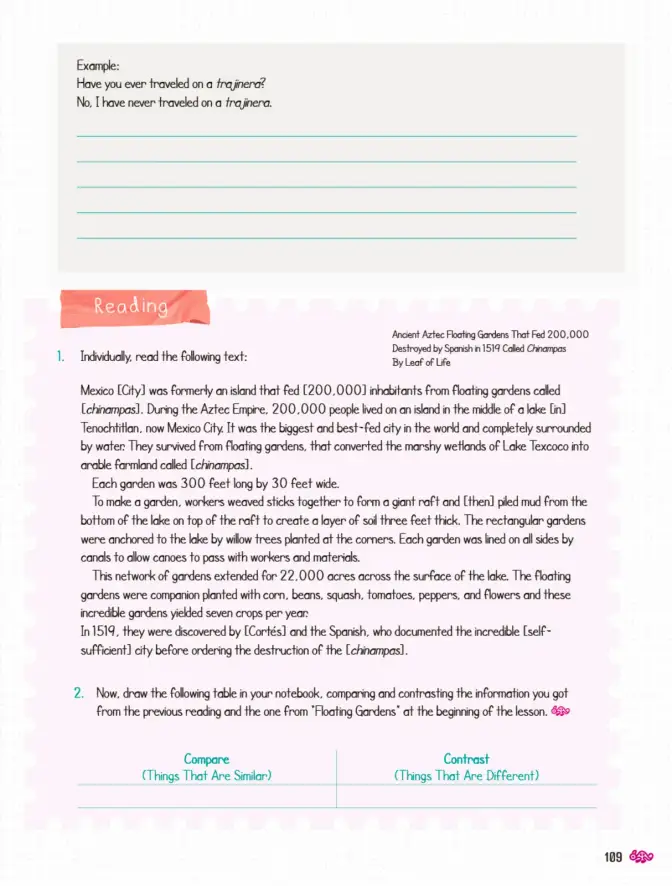
Mexico [City] was formerly an island that fed [200,000] inhabitants from floating gardens called [chinampas]. During the Aztec Empire, 200,000 people lived on an island in the middle of a lake [in] Tenochtitlan, now Mexico City. It was the biggest and best-fed city in the world and completely surrounded by water: They survived from floating gardens, that converted the marshy wetlands of Lake Texcoco into arable farmland called [chinampas].

Each garden was 300 feet long by 30 feet wide.

To make a garden, workers weaved sticks together to form a giant raft and [then] piled mud from the bottom of the lake on top of the raft to create a layer of soil three feet thick. The rectangular gardens were anchored to the lake by willow trees planted at the corners. Each garden was lined on all sides by canals to allow canoes to pass with workers and materials.

This network of gardens extended for 22,000 acres across the surface of the lake. The floating gardens were companion planted with corn, beans, squash, tomatoes, peppers, and flowers and these incredible gardens yielded seven crops per year.

In 1519, they were discovered by [Cortés] and the Spanish, who documented the incredible [self-sufficient] city before ordering the destruction of the [chinampas].

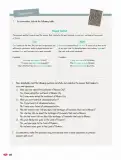
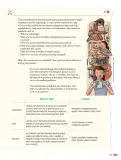
2. Now, draw the following table in your notebook, comparing and contrasting the information you got from the previous reading and the one from "Floating Gardens" at the beginning of the lesson.

Compare (Things That Are Similar) Contrast (Things That Are Different)

Ejemplos resueltos

Have you ever traveled on a trajinera?

No, I have never traveled on a trajinera.

Tabla

Compare (Things That Are Similar) Contrast (Things That Are Different)
Both texts mention the chinampas were in Lake Texcoco. The previous reading gives specific measurements (300 ft x 30 ft).
Both describe the use of mud and sticks for construction. The previous reading mentions 22,000 acres and 7 crops per year.
Both mention crops like corn, beans, and squash. The previous reading is by Leaf of Life; the other is anonymous.
Both mention the destruction by the Spanish in 1519. The previous reading includes the name Cortés.

Glosario (5)

chinampas
Jardines flotantes utilizados por los aztecas para cultivar en lagos.
trajinera
Bote tradicional usado en los canales de Xochimilco, México.
arable
Tierra apta para el cultivo.
marshy
Pantanoso, terreno húmedo y blando.
self-sufficient
Autosuficiente, capaz de satisfacer sus propias necesidades.

Preguntas para practicar

¿Qué aprendiste sobre las chinampas?

Las chinampas eran jardines flotantes construidos por los aztecas en el lago Texcoco. Permetían cultivar alimentos en una zona pantanosa y alimentaron a una gran población. Fueron destruidas por los españoles en 1519.

Temas y conceptos clave

Lectura en inglésComparación y contrasteHistoria aztecaChinampasPresente perfectoComparaciónContrasteLectura comprensiva
¿Te fue útil esta página?

Preguntas que la gente también hace

¿Qué son las chinampas y cómo funcionaban?
Consulta la solución completa arriba o explora el libro entero para temas relacionados.
¿Cómo se compara la información de los dos textos sobre jardines flotantes?
Consulta la solución completa arriba o explora el libro entero para temas relacionados.
¿Qué estructura gramatical se usa para preguntar sobre experiencias pasadas en inglés?
Consulta la solución completa arriba o explora el libro entero para temas relacionados.
📌 Antes de leer esto
  • • Conocimiento básico del presente perfecto en inglés
  • • Vocabulario sobre agricultura y civilizaciones antiguas
  • • Habilidad para identificar similitudes y diferencias en textos
Siguiente tema sugerido
Writing a compare and contrast paragraph
📝 Transcripción de la página (texto seleccionable) 1902 caracteres

Example:Have you ever traveled on a trajinera?No, I have never traveled on a trajinera.

Reading

1. Individually, read the following text:

Ancient Aztec Floating Gardens That Fed 200,000Destroyed by Spanish in 1519 Called Chinampas By Leaf of Life

Mexico [City] was formerly an island that fed [200,O00] inhabitants from floating gardens called [chinampas]. During the Aztec Empine, 200,O00 people lived on an island in the middle of a lake [in]Tenochtitlan, now Mexico City. It was the biggest and best-fed city in the world and completely surrounded by water: They survived from floating gardens, that converted the marshy wetlands of Lake Texcoco into arable farmland called [chinampas].

Each garden was 300 feet long by 30 feet wide.

To make a garden, workers weaved sticks together to form a giant raft and [then] piled mud from the bottom of the lake on top of the raft to create a layer of soil three feet thick. The rectangular gardens were anchored to the lake by willow trees planted at the corners. Each garden was lined on all sides by canals to allow canoes to pass with workers and materials.

This network of gardens extended for 22,O0O acres across the surface of the lake. The floating gardens were companion planted with corn, beans, squash, tomatoes, peppers, and flowers and these incredible gandens yielded seven crops per year:

In 1519, they were discovered by [Cortés] and the Spanish, who documented the incredible [selfsufficient] city before ordering the destruction of the [chinampas].

  1. Now, draw the following table in your notebook, comparing and contrasting the information you got from the previous reading and the one from "Floating Gardens"at the beginning of the lesson. 8
(Things That Are Similar) Compare
(Things That Are Different) Contrast

109

80
Ad

Otros libros recomendados

Ver todos →
Ad

Usamos cookies propias y de terceros para personalizar contenido, mostrar publicidad y analizar el tráfico. Las cookies necesarias siempre están activas.