















Saltar al contenido
MisLibrosTexto
Ad

Medición de magnitudes muy grandes y muy pequeñas: proyecto y póster

📄 ejercicios ciencias-naturales 🎓 secundaria · 2° Secundaria México 🇲🇽 MX 🗣 Español
Página 77
77 de 171
Página 77 de Uérakua anapu uantakua. Projects and Readings.  Libro de Educación Secundaria Grado 2°  Ciclo Escolar 2025 - 2026
Anterior Página 77 / 171 Siguiente

Respuesta rápida

Júpiter: D \approx 1.50\times 10^{8}\,\text{m}, M \approx 1.90\times 10^{27}\,\text{kg}. Bacteria: V \approx 3.9\times 10^{-19}\,\text{m}^{3}, m \approx 4.3\times 10^{-16}\,\text{kg}.

📚 exercise ciencias-naturales ⭐⭐⭐ Dificultad 3/5 ⏱ 12 min lectura

Solución — Página 77

Uérakua anapu uantakua. Projects and Readings. Libro de Educación Secundaria Grado 2° Ciclo Escolar 2025 - 2026

3
Ejercicio 3

In assembly, choose one of the following problems, solve it, and test the hypothesis. Then design a poster with the data collected and present it to the community.

a
Parte 3.a

Problema 1: diámetro y masa de un planeta del Sistema Solar

  1. Hipótesis: si conozco el diámetro angular del planeta y su distancia a la Tierra, entonces puedo calcular su diámetro real con trigonometría; y si conozco su diámetro y su densidad media, puedo estimar su masa.
  2. Datos de Júpiter: diámetro angular máximo \theta \approx 49.0'', distancia media a la Tierra d \approx 6.29\times 10^{8}\,\text{km}.
  3. Convierto el ángulo a radianes: 49.0'' \times \frac{1'}{60''} \times \frac{1^\circ}{60'} \times \frac{\pi}{180^\circ} = 2.38\times 10^{-4}\,\text{rad}.
  4. Diámetro real: D = d\,\theta = (6.29\times 10^{8})(2.38\times 10^{-4}) = 1.50\times 10^{5}\,\text{km}.
  5. Masa con la tercera ley de Kepler: M = \frac{4\pi^{2} a^{3}}{G T^{2}}, con a = 7.78\times 10^{11}\,\text{m} y T = 3.74\times 10^{8}\,\text{s}.
  6. M = \frac{4\pi^{2}(7.78\times 10^{11})^{3}}{(6.67\times 10^{-11})(3.74\times 10^{8})^{2}} = 1.90\times 10^{27}\,\text{kg}.
Respuesta

Júpiter: D \approx 1.50\times 10^{5}\,\text{km} = 1.50\times 10^{8}\,\text{m}; M \approx 1.90\times 10^{27}\,\text{kg}.

b
Parte 3.b

Problema 2: tamaño y masa de una célula, un virus o una bacteria

  1. Hipótesis: con un microscopio óptico y un micrómetro ocular puedo medir el diámetro de una bacteria; su masa se estima con m = \rho V.
  2. Bacteria Escherichia coli: forma de cilindro de 2\,\mu\text{m} de largo y 0.5\,\mu\text{m} de diámetro.
  3. Volumen: V = \pi r^{2} h = \pi (0.25\times 10^{-6})^{2}(2\times 10^{-6}) = 3.93\times 10^{-19}\,\text{m}^{3}.
  4. Densidad media del citoplasma: \rho \approx 1.1\times 10^{3}\,\text{kg/m}^{3}.
  5. Masa: m = \rho V = (1.1\times 10^{3})(3.93\times 10^{-19}) = 4.3\times 10^{-16}\,\text{kg}.
  6. Comparación: un virus como el SARS-CoV-2 mide \approx 100\,\text{nm} = 1\times 10^{-7}\,\text{m}, unas 5 veces menor que la bacteria.

Estrategias sugeridas

Estrategia 1

  1. Múltiplos del metro: 1\,\text{km} = 10^{3}\,\text{m}, 1\,\text{Mm} = 10^{6}\,\text{m}, 1\,\text{Gm} = 10^{9}\,\text{m}.
  2. Submúltiplos: 1\,\text{mm} = 10^{-3}\,\text{m}, 1\,\mu\text{m} = 10^{-6}\,\text{m}, 1\,\text{nm} = 10^{-9}\,\text{m}.
  3. Masa: 1\,\text{kg} = 10^{3}\,\text{g}, 1\,\text{mg} = 10^{-3}\,\text{g} = 10^{-6}\,\text{kg}, 1\,\text{Mt} = 10^{9}\,\text{kg}.

Respuesta orientativa: escribir 1.50\times 10^{8}\,\text{m} es más corto y claro que 150 000 000 m.

Estrategia 2

  1. Para lo muy grande: radiotelescopios, paralaje, tránsitos planetarios, sondas espaciales.
  2. Para lo muy pequeño: microscopio óptico, microscopio electrónico, difracción de rayos X.
  3. Para la masa: balanza analítica, espectrometría de masas, leyes de Kepler.

Respuesta orientativa: cada instrumento tiene un rango y una incertidumbre; elegir el adecuado evita errores de escala.

Find and Learn (póster)

a) Resultados en múltiplos, submúltiplos y notación científica: D = 1.50\times 10^{5}\,\text{km}, m = 4.3\times 10^{-16}\,\text{kg}. b) Unidades: longitud en metros, masa en kilogramos; conversiones 1\,\text{km} = 10^{3}\,\text{m}, 1\,\mu\text{m} = 10^{-6}\,\text{m}. c) Instrumentos: regla, calibrador Vernier, balanza, microscopio con micrómetro ocular, telescopio. d) Análisis histórico: del codo y la balanza romana al Sistema Internacional (SI) y los patrones de precisión actuales. e) Datos adicionales: densidad media, temperatura superficial, distancia al Sol, tamaño del genoma.

Respuesta orientativa: el póster debe incluir título, hipótesis, datos, cálculos, unidades, instrumentos, conclusión y fuentes.

Respuesta

E. coli*: V \approx 3.9\times 10^{-19}\,\text{m}^{3}, m \approx 4.3\times 10^{-16}\,\text{kg}; virus \approx 1\times 10^{-7}\,\text{m}.


Contenido de la página

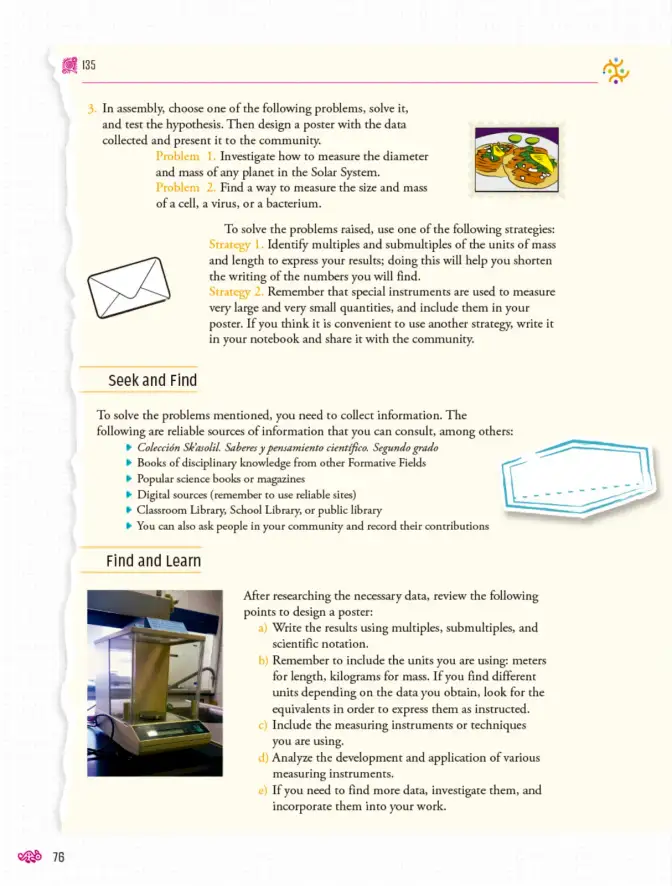
  1. In assembly, choose one of the following problems, solve it, and test the hypothesis. Then design a poster with the data collected and present it to the community.

Problem 1. Investigate how to measure the diameter and mass of any planet in the Solar System.

Problem 2. Find a way to measure the size and mass of a cell, a virus, or a bacterium.

To solve the problems raised, use one of the following strategies:

Strategy 1. Identify multiples and submultiples of the units of mass and length to express your results; doing this will help you shorten the writing of the numbers you will find.

Strategy 2. Remember that special instruments are used to measure very large and very small quantities, and include them in your poster. If you think it is convenient to use another strategy, write it in your notebook and share it with the community.

Seek and Find

To solve the problems mentioned, you need to collect information. The following are reliable sources of information that you can consult, among others:

  • Colección Sk'asolil. Saberes y pensamiento científico. Segundo grado
  • Books of disciplinary knowledge from other Formative Fields
  • Popular science books or magazines
  • Digital sources (remember to use reliable sites)
  • Classroom Library, School Library, or public library
  • You can also ask people in your community and record their contributions

Find and Learn

After researching the necessary data, review the following points to design a poster:

a) Write the results using multiples, submultiples, and scientific notation.

b) Remember to include the units you are using: meters for length, kilograms for mass. If you find different units depending on the data you obtain, look for the equivalents in order to express them as instructed.

c) Include the measuring instruments or techniques you are using.

d) Analyze the development and application of various measuring instruments.

e) If you need to find more data, investigate them, and incorporate them into your work.

Ejemplos resueltos

Calcular el diámetro de Júpiter si su diámetro angular es 49.0'' y está a 6.29\times 10^{8}\,\text{km}.

\theta = 2.38\times 10^{-4}\,\text{rad}; D = (6.29\times 10^{8})(2.38\times 10^{-4}) = 1.50\times 10^{5}\,\text{km}.

Estimar la masa de una bacteria cilíndrica de 0.5\,\mu\text{m} de diámetro y 2\,\mu\text{m} de largo.

V = \pi(0.25\times 10^{-6})^{2}(2\times 10^{-6}) = 3.93\times 10^{-19}\,\text{m}^{3}; m = (1.1\times 10^{3})(3.93\times 10^{-19}) = 4.3\times 10^{-16}\,\text{kg}.

Tabla

Magnitud Unidad base Múltiplo Submúltiplo
Longitud metro (m) km = 10^{3} m nm = 10^{-9} m
Masa kilogramo (kg) t = 10^{3} kg mg = 10^{-6} kg

Diagrama

flowchart TD
  A[Elegir problema] --> B[Formular hipotesis]
  B --> C[Buscar informacion confiable]
  C --> D[Medir o calcular]
  D --> E[Expresar en notacion cientifica]
  E --> F[Disenar poster]
  F --> G[Presentar a la comunidad]

Fórmulas y ecuaciones

D = d\,\theta

m = \rho V

1\,\text{km} = 10^{3}\,\text{m}

D = d\,\theta

M = \frac{4\pi^{2} a^{3}}{G T^{2}}

V = \pi r^{2} h

m = \rho V

1\,\mu\text{m} = 10^{-6}\,\text{m}

Glosario (5)

Notación científica
Forma de escribir números como $a\times 10^{n}$, con $1 \le a < 10$.
Múltiplo
Unidad mayor que la base, como el kilómetro ($10^{3}\,\text{m}$).
Submúltiplo
Unidad menor que la base, como el milímetro ($10^{-3}\,\text{m}$).
Hipótesis
Explicación provisional que se pone a prueba con datos.
Diámetro angular
Ángulo que abarca un objeto visto desde el observador.

Preguntas para practicar

¿Por qué conviene usar notación científica al reportar medidas astronómicas o microscópicas?

Porque permite escribir números muy grandes o muy pequeños de forma breve, comparar órdenes de magnitud y reducir errores al operar con potencias de 10.

¿Qué instrumentos permiten medir cantidades muy grandes y muy pequeñas?

Para lo muy grande se usan telescopios, radiotelescopios y sondas espaciales; para lo muy pequeño, microscopios ópticos y electrónicos, y balanzas analíticas para la masa.

Temas y conceptos clave

Medición de magnitudes muy grandes y muy pequeñasNotación científicaMúltiplos y submúltiplos de las unidadesInstrumentos de mediciónDiseño de un póster científicoNotación científicaMúltiplos y submúltiplosDiámetro angularDensidadInstrumentos de mediciónHipótesis

Fuentes y referencias

  • Colección Sk'asolil. Saberes y pensamiento científico. Segundo grado
  • NASA Solar System Exploration
  • Sistema Internacional de Unidades (SI)
¿Te fue útil esta página?

Figuras de la página (4)

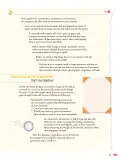
Ilustración de un plato con alimentos y un vaso, relacionada con la masa y la materia.
Figura 1 image
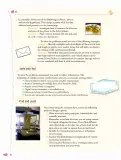
Sobre con una carta, símbolo de la búsqueda de información.
Figura 2 image
Etiqueta o marco en blanco para escribir datos.
Figura 3 image
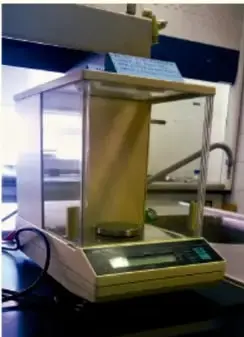
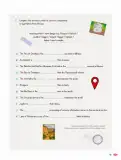
Balanza analítica de laboratorio, instrumento para medir masa con precisión.
Figura 4 image

Preguntas que la gente también hace

¿Cómo se mide el diámetro de un planeta del Sistema Solar?
Consulta la solución completa arriba o explora el libro entero para temas relacionados.
¿Cómo se calcula la masa de una bacteria o de un virus?
Consulta la solución completa arriba o explora el libro entero para temas relacionados.
¿Qué instrumentos se usan para medir cantidades muy grandes y muy pequeñas?
Consulta la solución completa arriba o explora el libro entero para temas relacionados.
📌 Antes de leer esto
  • • Potencias de base 10 y notación científica
  • • Unidades de longitud y masa del Sistema Internacional
  • • Fórmulas de volumen de cilindros y esferas
  • • Uso de regla, balanza y microscopio
Siguiente tema sugerido
Aplicación de la notación científica en la medición de distancias astronómicas y tamaños microscópicos
📝 Transcripción de la página (texto seleccionable) 2174 caracteres
  1. In assembly, choose one of the following problems, solve it,and test the hypothesis. Then design a poster with the data collected and present it to the community.

Problem 1. Investigate how to measure the diameter and mass of any planet in the Solar System.

Problem 2. Find a way to measure the size and mass of a cell, a virus, or a bacterium.

To solve the problems raised, use one of the following strategies:Strategy 1. Identify multiples and submultiples of the units of mass and length to express your results; doing this will help you shorten the writing of the numbers you will find.

Strategy 2. Remember that special instruments are used to measure very large and very small quantities, and include them in your poster. If you think it is convenient to use another strategy, write it in your notebook and share it with the community.

Seek and Find

To solve the problems mentioned, you need to collect information. The following are reliable sources of information that you can consult, among others:

Colección Sk'asolil. Saberes y pensamiento cientifico. Segundo grado

Books of disciplinary knowledge from other Formative Fields

Popular science books or magazines

图Digital sources (remember to use reliable sites)

Classroom Library, School Library, or public library

You can also ask people in your community and record their contributions

Find and Learn

After researching the necessary data, review the following points to design a poster:

a) Write the results using multiples, submultiples, and scientific notation.

b) Remember to include the units you are using: meters for length, kilograms for mass. If you find different units depending on the data you obtain, look for the equivalents in order to express them as instructed.

c)Include the measuring instruments or techniques you are using.

d) Analyze the development and application of various measuring instruments.

e)If you need to find more data, investigate them, and incorporate them into your work.

01355

8

![](page=0,bbox=[851, 225, 1009, 347])

![](page=0,bbox=[155, 460, 308, 575])

![](page=0,bbox=[903, 788, 1190, 940])

![](page=0,bbox=[156, 1062, 400, 1399])

76

Ad

Otros libros recomendados

Ver todos →
Ad

Usamos cookies propias y de terceros para personalizar contenido, mostrar publicidad y analizar el tráfico. Las cookies necesarias siempre están activas.