













Ejercicio 1
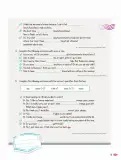
Enunciado: Individually, without forgetting you are part of a community, answer the following questions in your notebook:
a) Could you take those measurements? b) Would you need any special instrument? c) How would you read or write those quantities?
Parte 1.a
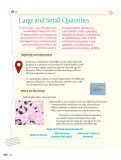
- Se pregunta si es posible medir la masa de toda la arena de un montículo en una playa o el follaje de un árbol.
- Medir toda la arena de una playa requeriría separar la arena de otros materiales, transportarla y pesarla en básculas industriales; es una tarea logísticamente muy compleja.
- Medir el follaje completo de un árbol implicaría contar y pesar cada hoja, lo cual es posible pero muy laborioso.
Respuesta
No de forma directa y sencilla; se necesitarían métodos indirectos o estimaciones, ya que son cantidades muy grandes y difíciles de aislar.
Parte 1.b
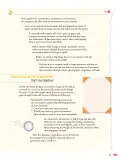
- Para cantidades grandes se requieren básculas de gran capacidad, cintas métricas largas, recipientes volumétricos grandes o métodos de muestreo.
- Para cantidades pequeñas se necesitan instrumentos de precisión: balanza analítica, microscopio, pipetas micrométricas, reglas graduadas finas.
Respuesta
Sí, se necesitan instrumentos especiales: balanzas industriales o de precisión, microscopios, pipetas, entre otros.
Parte 1.c
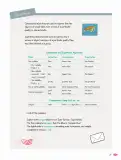
- Las cantidades grandes se leen y escriben con potencias de 10 o notación científica, por ejemplo 6.022 \times 10^{23}.
- Las cantidades pequeñas también usan notación científica y prefijos del Sistema Internacional: mili (10^{-3}), micro (10^{-6}), nano (10^{-9}).
Respuesta
Se leen y escriben usando notación científica y prefijos del SI, por ejemplo 5 \times 10^{6} granos de arena o 3 \times 10^{-6} m para una célula.