

















Verbos seguidos de infinitivo o gerundio: formas afirmativa, negativa e interrogativa
Respuesta rápida
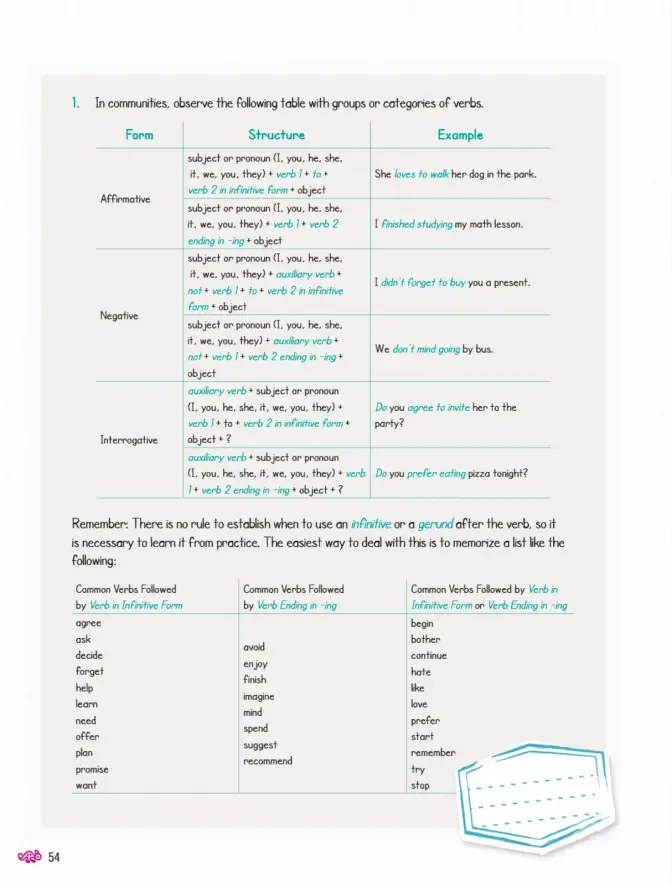
Tabla de estructuras afirmativas, negativas e interrogativas con infinitivo o gerundio, más listas de verbos comunes según la forma que los sigue.
Solución — Página 55
Uérakua anapu uantakua. Projects and Readings. Libro de Educación Secundaria Grado 3° Ciclo Escolar 2025 - 2026
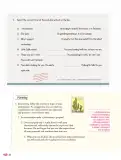
Explicación de la tabla de estructuras
La página enseña cómo construir oraciones con dos verbos consecutivos: el primero conjugado y el segundo en infinitivo (to + verb) o en gerundio (verb + -ing).
Forma afirmativa
- Estructura con infinitivo: sujeto + verbo 1 + to + verbo 2 en infinitivo + objeto.
- Ejemplo: She loves to walk her dog in the park.
- Estructura con gerundio: sujeto + verbo 1 + verbo 2 terminado en -ing + objeto.
- Ejemplo: I finished studying my math lesson.
Forma negativa
- Con infinitivo: sujeto + verbo auxiliar + not + verbo 1 + to + verbo 2 en infinitivo + objeto.
- Ejemplo: I didn't forget to buy you a present.
- Con gerundio: sujeto + verbo auxiliar + not + verbo 1 + verbo 2 terminado en -ing + objeto.
- Ejemplo: We don't mind going by bus.
Forma interrogativa
- Con infinitivo: verbo auxiliar + sujeto + verbo 1 + to + verbo 2 en infinitivo + objeto + ?
- Ejemplo: Do you agree to invite her to the party?
- Con gerundio: verbo auxiliar + sujeto + verbo 1 + verbo 2 terminado en -ing + objeto + ?
- Ejemplo: Do you prefer eating pizza tonight?
Listas de verbos comunes
No existe una regla fija para decidir si un verbo va seguido de infinitivo o de gerundio; se aprende con la práctica. Estas listas ayudan a memorizar el patrón.
| Verbos seguidos de infinitivo | Verbos seguidos de gerundio (-ing) | Verbos que aceptan ambas formas |
|---|---|---|
| agree | avoid | begin |
| ask | enjoy | bother |
| decide | finish | continue |
| forget | imagine | hate |
| help | mind | like |
| learn | spend | love |
| need | suggest | prefer |
| offer | recommend | start |
| plan | remember | |
| promise | try | |
| want | stop |
Respuesta orientativa: Para dominar estas estructuras conviene memorizar las listas, practicar con oraciones propias y observar el verbo principal para decidir si el segundo verbo va en infinitivo o en gerundio.
Contenido de la página
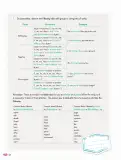
- In communities, observe the following table with groups or categories of verbs.
| Form | Structure | Example |
|---|---|---|
| Affirmative | subject or pronoun (I, you, he, she, it, we, you, they) + verb 1 + to + verb 2 in infinitive form + object | She loves to walk her dog in the park. |
| Affirmative | subject or pronoun (I, you, he, she, it, we, you, they) + verb 1 + verb 2 ending in -ing + object | I finished studying my math lesson. |
| Negative | subject or pronoun (I, you, he, she, it, we, you, they) + auxiliary verb + not + verb 1 + to + verb 2 in infinitive form + object | I didn't forget to buy you a present. |
| Negative | subject or pronoun (I, you, he, she, it, we, you, they) + auxiliary verb + not + verb 1 + verb 2 ending in -ing + object | We don't mind going by bus. |
| Interrogative | auxiliary verb + subject or pronoun (I, you, he, she, it, we, you, they) + verb 1 + to + verb 2 in infinitive form + object + ? | Do you agree to invite her to the party? |
| Interrogative | auxiliary verb + subject or pronoun (I, you, he, she, it, we, you, they) + verb 1 + verb 2 ending in -ing + object + ? | Do you prefer eating pizza tonight? |
Remember: There is no rule to establish when to use an infinitive or a gerund after the verb, so it is necessary to learn it from practice. The easiest way to deal with this is to memorize a list like the following:
| Common Verbs Followed by Verb in Infinitive Form | Common Verbs Followed by Verb Ending in -ing | Common Verbs Followed by Verb in Infinitive Form or Verb Ending in -ing |
|---|---|---|
| agree | avoid | begin |
| ask | enjoy | bother |
| decide | finish | continue |
| forget | imagine | hate |
| help | mind | like |
| learn | spend | love |
| need | suggest | prefer |
| offer | recommend | start |
| plan | remember | |
| promise | try | |
| want | stop |
Ejemplos resueltos
She loves to walk her dog in the park.
Sujeto: She. Verbo 1: loves. Verbo 2 en infinitivo: to walk. Objeto: her dog. Lugar: in the park.
I finished studying my math lesson.
Sujeto: I. Verbo 1: finished. Verbo 2 en gerundio: studying. Objeto: my math lesson.
I didn't forget to buy you a present.
Sujeto: I. Auxiliar negativo: didn't. Verbo 1: forget. Verbo 2 en infinitivo: to buy. Objeto indirecto: you. Objeto directo: a present.
We don't mind going by bus.
Sujeto: We. Auxiliar negativo: don't. Verbo 1: mind. Verbo 2 en gerundio: going. Complemento: by bus.
Do you agree to invite her to the party?
Auxiliar interrogativo: Do. Sujeto: you. Verbo 1: agree. Verbo 2 en infinitivo: to invite. Objeto: her. Complemento: to the party.
Do you prefer eating pizza tonight?
Auxiliar interrogativo: Do. Sujeto: you. Verbo 1: prefer. Verbo 2 en gerundio: eating. Objeto: pizza. Complemento de tiempo: tonight.
Tablas (2)
| Form | Structure | Example |
|---|---|---|
| Affirmative | subject or pronoun + verb 1 + to + verb 2 in infinitive form + object | She loves to walk her dog in the park. |
| Affirmative | subject or pronoun + verb 1 + verb 2 ending in -ing + object | I finished studying my math lesson. |
| Negative | subject or pronoun + auxiliary verb + not + verb 1 + to + verb 2 in infinitive form + object | I didn't forget to buy you a present. |
| Negative | subject or pronoun + auxiliary verb + not + verb 1 + verb 2 ending in -ing + object | We don't mind going by bus. |
| Interrogative | auxiliary verb + subject or pronoun + verb 1 + to + verb 2 in infinitive form + object + ? | Do you agree to invite her to the party? |
| Interrogative | auxiliary verb + subject or pronoun + verb 1 + verb 2 ending in -ing + object + ? | Do you prefer eating pizza tonight? |
| Common Verbs Followed by Verb in Infinitive Form | Common Verbs Followed by Verb Ending in -ing | Common Verbs Followed by Verb in Infinitive Form or Verb Ending in -ing |
|---|---|---|
| agree | avoid | begin |
| ask | enjoy | bother |
| decide | finish | continue |
| forget | imagine | hate |
| help | mind | like |
| learn | spend | love |
| need | suggest | prefer |
| offer | recommend | start |
| plan | remember | |
| promise | try | |
| want | stop |
Glosario (5)
- infinitive form
- Forma verbal básica precedida por 'to', por ejemplo 'to walk'.
- gerund
- Forma verbal terminada en '-ing' que funciona como sustantivo, por ejemplo 'studying'.
- auxiliary verb
- Verbo que ayuda a formar negaciones, preguntas o tiempos compuestos, como do, does, did.
- object
- Persona o cosa que recibe la acción del verbo.
- subject
- Persona, animal o cosa que realiza la acción del verbo.
Preguntas para practicar
¿Por qué es importante memorizar listas de verbos seguidos de infinitivo o gerundio?
Porque no existe una regla fija que determine cuándo usar infinitivo o gerundio después de un verbo. Memorizar listas y practicar con ejemplos ayuda a interiorizar el patrón correcto y a usarlo con fluidez.
Temas y conceptos clave
Figuras de la página (1)

Preguntas que la gente también hace
¿Cuándo se usa infinitivo y cuándo gerundio después de un verbo en inglés?
¿Qué verbos van seguidos de infinitivo con to?
¿Qué verbos van seguidos de gerundio en inglés?
- • Conocer el presente simple y los auxiliares do/does/did
- • Identificar sujeto, verbo y objeto en una oración
- • Reconocer la formación del gerundio (-ing)
📝 Transcripción de la página (texto seleccionable) 2421 caracteres
54
- In communities, observe the following table with groups or categories of verbs.
| Form | Structure | Example |
| Affinmative | subject or pronoun (I, you, he, she, it, we, you, they) + verb 1+ to + venb 2 in infinitive form + object | She loves to walk her dog in the pank. |
| subject or pronoun (I, you, he, she, it, we, you, they) + venb 1+ verb 2 ending in-ing + object | I finished studying my math lesson. | |
| Negative | subject or pronoun (I, you, he, she, it, we, you, they)+ auxiliary verb + not+ verb 1+ to + venb 2 in infinitive form+ object | I didn't forget to buy you a present. |
| subject or pronoun (I, you, he, she, it, we, you, they) + auxiliory venb + not + venb 1+ venb 2 ending in -ing+ object | We don't mind going by bus. | |
| Interrogative | auxiliary venb + subject or pronoun (I, you, he, she, it, we, you, they)+ venb 1 + to + verb 2 in infinitive form + object+? | Do you agree to invite her to the party? |
| auxiliry venb + subject or pronoun 1+ verb 2 ending in-ing + object +? |
Remember: There is no rule to establish when to use an infinitive or a gerund after the verb, so it is necessary to learn it from practice. The easiest way to deal with this is to memorize a list like the following:
| Common Verbs Followed by Verb in Infinitive Form | Common Verbs Followed by Venb Ending in -ing | Common Verbs Followed by Venb in Infinitive Form or Verb Ending in -ing |
| agree | begin | |
| ask | bother | |
| decide | avoid | continue |
| forget | enjoy | hate |
| help | finish | like |
| learn | imagine | love |
| need | mind | prefer |
| offer | spend | start |
| plan | suggest | remember |
| promise | recommend | try |
| want | stop |

Otros libros recomendados
Uérakua anapu uantakua. Projects and Readings. Libro de Educación Telesecundaria Grado 3° Ciclo Escolar 2025 - 2026
SEP/CONALITEG
187 págs.
Uérakua anapu uantakua. Projects and Readings. Libro de Educación Telesecundaria Grado 2° Ciclo Escolar 2025 - 2026
SEP/CONALITEG
171 págs.
Uérakua anapu uantakua. Projects and Readings. Libro de Educación Telesecundaria Grado 1° Ciclo Escolar 2025 - 2026
SEP/CONALITEG
187 págs.
Uérakua anapu uantakua. Projects and Readings. Libro de Educación Secundaria Grado 2° Ciclo Escolar 2025 - 2026
SEP/CONALITEG
171 págs.
Uérakua anapu uantakua. Projects and Readings Libro de Educación Secundaria Grado 1° Ciclo Escolar 2025 - 2026
SEP/CONALITEG
187 págs.
Colección Ximhai. Múltiples lenguajes. Libro de Educación Secundaria Grado 1° Ciclo Escolar 2025 - 2026
SEP/CONALITEG
163 págs.

Matematica 9° · Secundaria Activa
MinEducación
218 págs.

Ciencias Naturales 9° · Secundaria Activa
MinEducación
318 págs.