Saltar al contenido
MisLibrosTexto
Ad

Everything We Create Is Art: We Are All Artists

📄 introduccion ingles 🎓 bachillerato · 3° Secundaria México 🇲🇽 MX 🗣 Español
Página 51
51 de 187
Página 51 de Uérakua anapu uantakua. Projects and Readings.  Libro de Educación Secundaria Grado 3°  Ciclo Escolar 2025 - 2026
Anterior Página 51 / 187 Siguiente

Respuesta rápida

2.a) El arte expresa ideas y emociones con diversos medios. 2.b) Siete artes clásicas y varias contemporáneas. 2.c) Murales, danzas, música, artesanías. 2.d) Plazas, escuelas, mercados; artesanos y vecinos. 2.e) Fortalece identidad y diálogo comunitario.

ingles ⭐⭐ Dificultad 2/5 ⏱ 8 min lectura

Solución — Página 51

Uérakua anapu uantakua. Projects and Readings. Libro de Educación Secundaria Grado 3° Ciclo Escolar 2025 - 2026

1
Ejercicio 1

In assembly, in the presence of your teacher, read the following text.

  1. Lectura en voz alta del texto sobre el arte como forma de interpretar el mundo.
  2. Identificación de la idea principal: el arte permite expresar sentimientos, ideas, deseos e inquietudes.
  3. Reconocimiento de la función social del arte: generar diálogos, debates y propuestas para comprender e influir en la realidad.
  4. Conclusión del texto: toda persona puede ser artista si expresa y comparte su creatividad para transformar su entorno.

Respuesta orientativa: El texto sostiene que el arte es un lenguaje universal que sirve para interpretar y transformar la realidad; cualquier persona puede ejercerlo al expresar y compartir sus emociones, ideas y opiniones.

2
Ejercicio 2

In communities, answer the questions below in your notebook. Share your answers and come to conclusions.

a
Parte 2.a

What is art?

  1. Definir el arte como manifestación humana de emociones, ideas y visiones del mundo.
  2. Mencionar sus medios: imágenes, palabras, sonidos, movimientos y objetos.
  3. Señalar su función: comunicar, cuestionar y transformar la realidad.
Respuesta

El arte es la expresión creativa de sentimientos, ideas y opiniones mediante imágenes, palabras, sonidos, movimientos u objetos, con la que las personas interpretan y transforman su realidad.

b
Parte 2.b

How many types of art do you know?

  1. Recordar las artes clásicas: pintura, escultura, arquitectura, música, danza, literatura y teatro.
  2. Añadir las artes contemporáneas: cine, fotografía, performance, arte digital y arte urbano.
  3. Concluir que existen tantas clasificaciones como culturas y épocas.
Respuesta

Se conocen al menos siete artes clásicas (pintura, escultura, arquitectura, música, danza, literatura y teatro) y varias contemporáneas (cine, fotografía, performance, arte digital, arte urbano).

c
Parte 2.c

What artistic expressions have you seen in your community?

  1. Observar el entorno: murales, danzas tradicionales, música regional, artesanías.
  2. Identificar festividades locales con expresiones artísticas.
  3. Registrar ejemplos concretos en el cuaderno.
Respuesta

Murales, danzas y música tradicional, artesanías, ferias del pueblo, teatro comunitario y festivales escolares.

d
Parte 2.d

In what places of your community can you find an artistic expression? What kind of people practice these expressions?

  1. Localizar espacios: plazas, mercados, casas de cultura, escuelas, iglesias, calles.
  2. Identificar a quienes las practican: artesanos, músicos, danzantes, pintores, estudiantes, vecinos.
  3. Relacionar espacio y práctica artística.
Respuesta

En plazas, mercados, casas de cultura, escuelas e iglesias; las practican artesanos, músicos, danzantes, pintores, estudiantes y vecinos de todas las edades.

e
Parte 2.e

What is the role or purpose of artistic expression in your community?

  1. Reconocer su función identitaria: preserva tradiciones y memoria colectiva.
  2. Señalar su función social: une a la comunidad y da voz a sus problemas.
  3. Destacar su función transformadora: propone soluciones y genera diálogo.
Respuesta

Fortalece la identidad y la memoria colectiva, une a las personas y da voz a los problemas de la comunidad para imaginar soluciones.

3
Ejercicio 3

In assembly, collaborating with your teacher, present the conclusions you reached.

  1. Organizar las respuestas del ejercicio 2 en una conclusión grupal.
  2. Designar voceros y preparar una presentación breve.
  3. Exponer ante el grupo y registrar acuerdos finales.

Respuesta orientativa: La conclusión grupal debe integrar las definiciones de arte, sus tipos, los ejemplos locales y su función social, presentándose de forma oral y colaborativa ante el grupo.

Contenido de la página

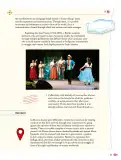
Everything We Create Is Art ∴ We Are All Artists

Project overview (EN): In this project, you will explore some artistic expressions, either written or made up of images, body movements, sounds, and objects. Additionally, you will create a performance and present it at school.

Descripción del proyecto (ES): En este proyecto, explorarás algunas manifestaciones artísticas, tanto escritas como conformadas por imágenes, movimientos del cuerpo, sonidos u objetos. Además, crearás un performance y lo presentarás en la escuela.

Identification

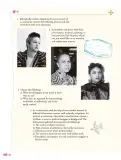
1. In assembly, in the presence of your teacher, read the following text:

Over time, art has been a way to interpret the world, with which human beings express their feelings, ideas, desires and concerns. Also, art has permitted the generation and stimulation of dialogues, debates or proposals to understand and influence reality.

In this sense, it is possible to say that the artistic world is an effective alternative for exhibiting the problems of different communities through diverse tools that allow us to analyze, expose, contain, protest, and even find solutions.

Everybody can be an artist. They just need to let go, express their emotions, ideas, opinions, and creativity, and share them to transform their surroundings.

Nota matemática: In math, the symbol ∴ means "therefore" or "because of this." It appeared in the 17th century, and it is still used in the mathematics language nowadays.

2. In communities, answer the questions below in your notebook. Share your answers and come to conclusions.

a) What is art?

b) How many types of art do you know?

c) What artistic expressions have you seen in your community?

d) In what places of your community can you find an artistic expression? What kind of people practice these expressions?

e) What is the role or purpose of artistic expression in your community?

3. In assembly, collaborating with your teacher, present the conclusions you reached.

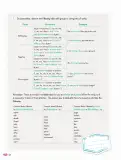
Tabla

Question Key answer
a) What is art? Creative expression of feelings, ideas and opinions
b) Types of art 7 classical + contemporary arts
c) Expressions in my community Murals, dances, music, handicrafts
d) Places and people Squares, schools, markets; artisans, neighbours
e) Role of art Identity, dialogue, transformation

Diagrama

mindmap
  root((Everything We Create Is Art))
    Definition
      Express feelings
      Express ideas
      Interpret the world
    Types
      Classical
        Painting
        Sculpture
        Music
        Dance
        Literature
        Theatre
      Contemporary
        Cinema
        Photography
        Performance
        Digital art
    Community
      Places
        Squares
        Schools
        Markets
      People
        Artisans
        Musicians
        Dancers
        Students
    Purpose
      Identity
      Dialogue
      Transformation

Glosario (5)

Art
Expresión creativa de ideas, emociones y visiones del mundo mediante diversos medios.
Performance
Manifestación artística que combina cuerpo, espacio y tiempo ante un público.
Artistic expression
Manifestación concreta del arte en una cultura o comunidad.
∴ (therefore)
Símbolo matemático que significa 'por lo tanto' o 'debido a esto'.
Community
Grupo de personas que comparten un territorio, cultura e intereses.

Preguntas para practicar

What is art?

Art is the creative expression of feelings, ideas and opinions through images, words, sounds, movements or objects, used to interpret and transform reality.

How many types of art do you know?

At least seven classical arts (painting, sculpture, architecture, music, dance, literature, theatre) and several contemporary ones (cinema, photography, performance, digital art).

What artistic expressions have you seen in your community?

Murals, traditional dances and music, handicrafts, town fairs, community theatre and school festivals.

In what places of your community can you find an artistic expression? What kind of people practice these expressions?

In squares, markets, cultural centres, schools and churches; practiced by artisans, musicians, dancers, painters, students and neighbours of all ages.

What is the role or purpose of artistic expression in your community?

It strengthens identity and collective memory, brings people together and gives voice to community problems in order to imagine solutions.

Temas y conceptos clave

El arte como forma de interpretar el mundoManifestaciones artísticas en la comunidadEl performance como expresión artísticaArt as interpretation of realityArtistic expressionsCommunity identityPerformanceCreativity
¿Te fue útil esta página?

Figuras de la página (1)

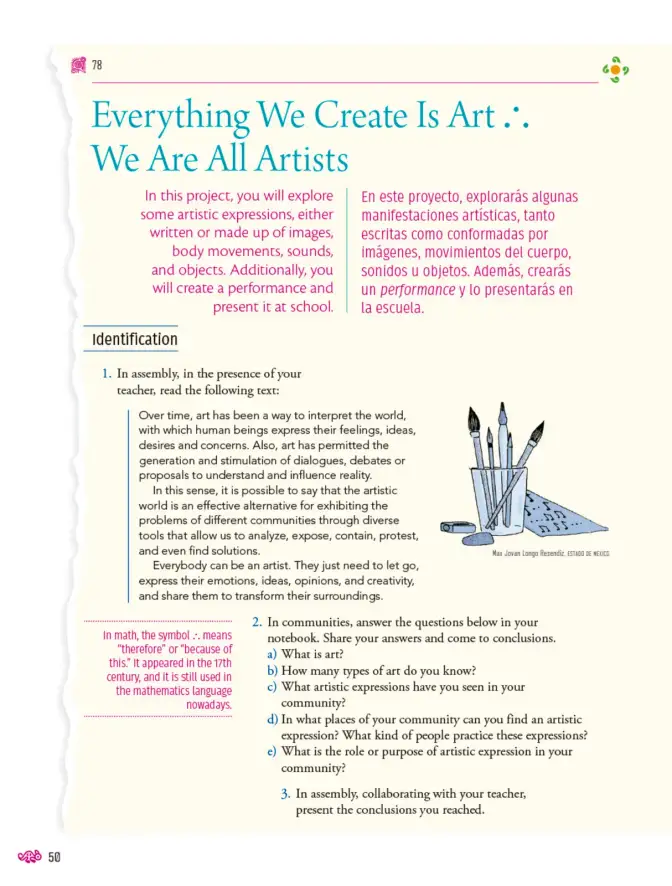
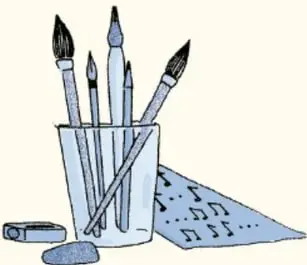
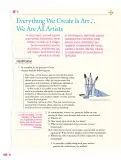
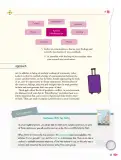
Ilustración de un vaso con pinceles, un lápiz y una paleta de pintura con notas musicales; crédito 'Max Jowan Longo Resendiz, ESTADO DE MÉXICO'.
Figura 1 image

Preguntas que la gente también hace

¿Qué es el arte y cómo se define en inglés?
Consulta la solución completa arriba o explora el libro entero para temas relacionados.
¿Cuántos tipos de arte existen y cuáles son?
Consulta la solución completa arriba o explora el libro entero para temas relacionados.
¿Cómo se dice 'manifestaciones artísticas de mi comunidad' en inglés?
Consulta la solución completa arriba o explora el libro entero para temas relacionados.
📌 Antes de leer esto
  • • Vocabulario básico en inglés sobre arte y comunidad
  • • Uso de presente simple para describir
  • • Habilidad para formular opiniones breves en inglés
Siguiente tema sugerido
Planning and creating a school performance about art
📝 Transcripción de la página (texto seleccionable) 1979 caracteres

Everything We Create Is Art .. We Are All Artists

In this project, you will explore some artistic expressions, either written or made up of images,body movements, sounds,and objects. Additionally, you will create a performance and present it at school.

Identification

  1. In assembly, in the presence of your teacher, read the following text:

Over time, art has been a way to interpret the world,with which human beings express their feelings, ideas,desires and concerns. Also, art has permitted the generation and stimulation of dialogues, debates or proposals to understand and influence reality.

In this sense, it is possible to say that the artistic world is an effective alternative for exhibiting the problems of different communities through diverse tools that allow us to analyze, expose, contain, protest,and even find solutions.

Everybody can be an artist. They just need to let go,express their emotions, ideas, opinions, and creativity,and share them to transform their surroundings.

In math, the symbol .. means "therefore"or"because of this." It appeared in the 17th century, and it is still used in the mathematics language nowadays.

En este proyecto, explorarás algunas manifestaciones artisticas, tanto escritas como conformadas por imágenes, movimientos del cuerpo,sonidos u objetos. Además, crearás un performance y lo presentarás en la escuela.

  1. In communities, answer the questions below in your notebook. Share your answers and come to conclusions.

a) What is art?

b) How many types of art do you know?

c) What artistic expressions have you seen in your community?

d) In what places of your community can you find an artistic expression? What kind of people practice these expressions?e)What is the role or purpose of artistic expression in your community?

  1. In assembly, collaborating with your teacher,present the conclusions you reached.

78

,

![](page=0,bbox=[793, 720, 1100, 985])

Max Jowan Longo Resendiz, ESTADo DE MEXIcO

A

50

Ad

Otros libros recomendados

Ver todos →
Ad

Usamos cookies propias y de terceros para personalizar contenido, mostrar publicidad y analizar el tráfico. Las cookies necesarias siempre están activas.