














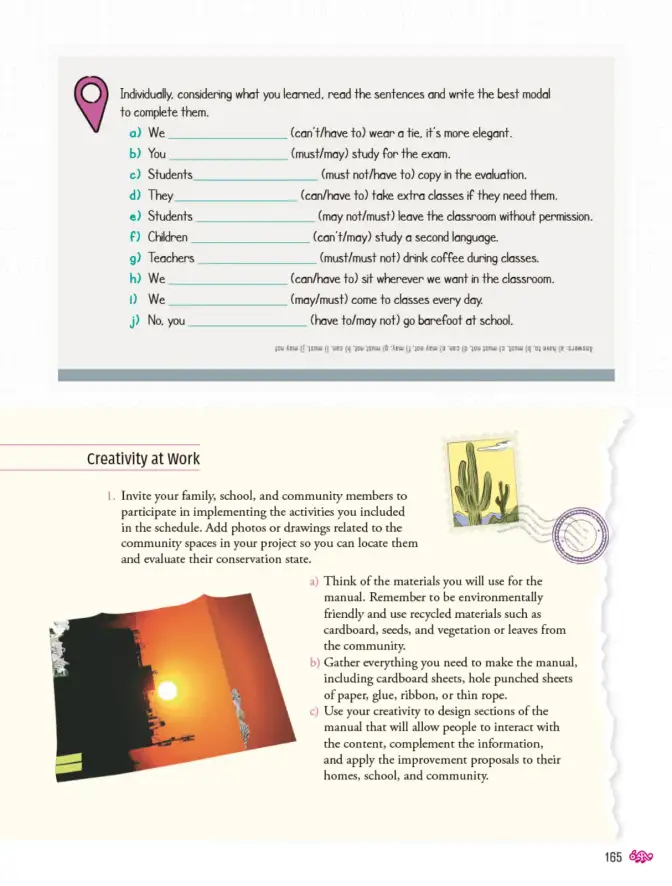
Ejercicio 1
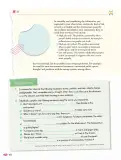
Completa cada oración con el modal correcto entre paréntesis.
Parte 1.a
We ___ (can't/have to) wear a tie, it's more elegant.
- La oración expresa obligación por elegancia.
- 'Have to' indica obligación; 'can't' indica prohibición.
- El contexto de elegancia sugiere una regla u obligación.
Respuesta
have to
Parte 1.b
You ___ (must/may) study for the exam.
- Se expresa una obligación fuerte para aprobar el examen.
- 'Must' indica obligación personal fuerte; 'may' indica permiso o posibilidad.
Respuesta
must
Parte 1.c
Students ___ (must not/have to) copy in the evaluation.
- Se prohíbe copiar en la evaluación.
- 'Must not' expresa prohibición; 'have to' expresa obligación.
Respuesta
must not
Parte 1.d
They ___ (can/have to) take extra classes if they need them.
- Se habla de una posibilidad u opción.
- 'Can' expresa posibilidad/permiso; 'have to' expresa obligación.
Respuesta
can
Parte 1.e
Students ___ (may not/must) leave the classroom without permission.
- Se prohíbe salir sin permiso.
- 'May not' expresa prohibición formal; 'must' expresa obligación.
Respuesta
may not
Parte 1.f
Children ___ (can't/may) study a second language.
- Se habla de una posibilidad general.
- 'May' expresa posibilidad; 'can't' expresa incapacidad o prohibición.
Respuesta
may
Parte 1.g
Teachers ___ (must/must not) drink coffee during classes.
- Se prohíbe beber café durante clases.
- 'Must not' expresa prohibición.
Respuesta
must not
Parte 1.h
We ___ (can/have to) sit wherever we want in the classroom.
- Se expresa permiso para sentarse donde se quiera.
- 'Can' expresa permiso; 'have to' expresa obligación.
Respuesta
can
Parte 1.i
We ___ (may/must) come to classes every day.
- Se expresa obligación de asistir diariamente.
- 'Must' expresa obligación fuerte.
Respuesta
must
Parte 1.j
No, you ___ (have to/may not) go barefoot at school.
- Se prohíbe ir descalzo en la escuela.
- 'May not' expresa prohibición.
Respuesta
may not