















Ejercicio 1
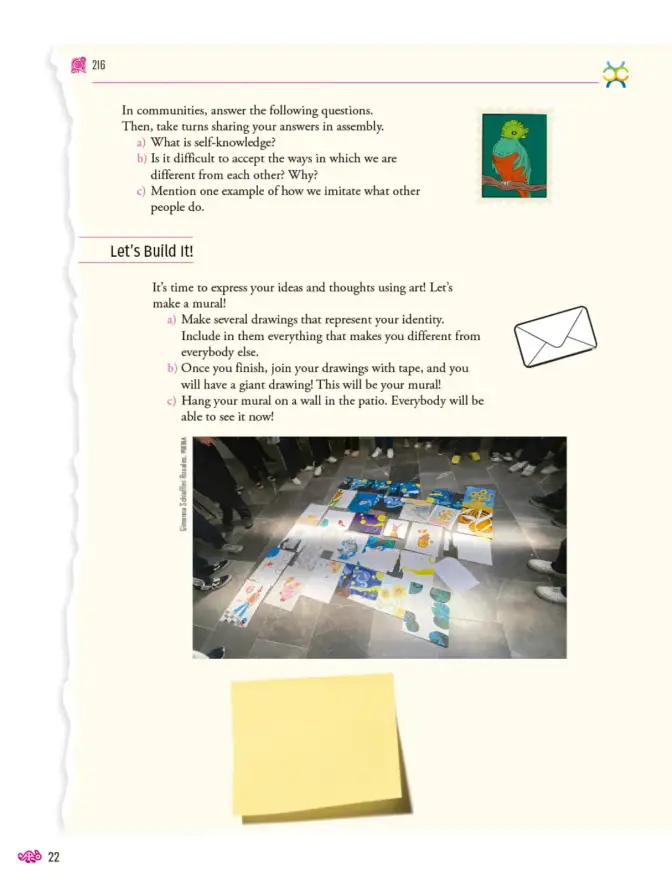
In communities, answer the following questions. Then, take turns sharing your answers in assembly.
Parte 1.a
What is self-knowledge?
- Self-knowledge is the ability to know yourself: your emotions, values, strengths, weaknesses and goals.
- It grows when you reflect on your actions and listen to feedback from others.
- It helps you make better decisions and accept yourself.
Respuesta
Self-knowledge is the understanding of your own emotions, values, abilities and limits; it is built through reflection and experience.
Parte 1.b
Is it difficult to accept the ways in which we are different from each other? Why?
- Sometimes it is difficult because people fear what is unfamiliar or different.
- Prejudice and stereotypes make us judge others before knowing them.
- However, differences enrich a community: they bring new ideas, customs and talents.
Respuesta
Yes, it can be difficult because of fear, prejudice and stereotypes, but accepting differences builds respect and inclusion.
Parte 1.c
Mention one example of how we imitate what other people do.
- We imitate family members, friends, teachers or influencers.
- Example: a student starts recycling because an older sibling does it at home.
- Imitation can be positive (healthy habits) or negative (aggressive behavior).
Respuesta
Example: a teenager learns to cook by imitating a grandparent, or copies a friend's way of speaking.