















Ejercicio 1
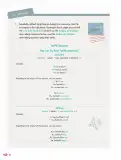
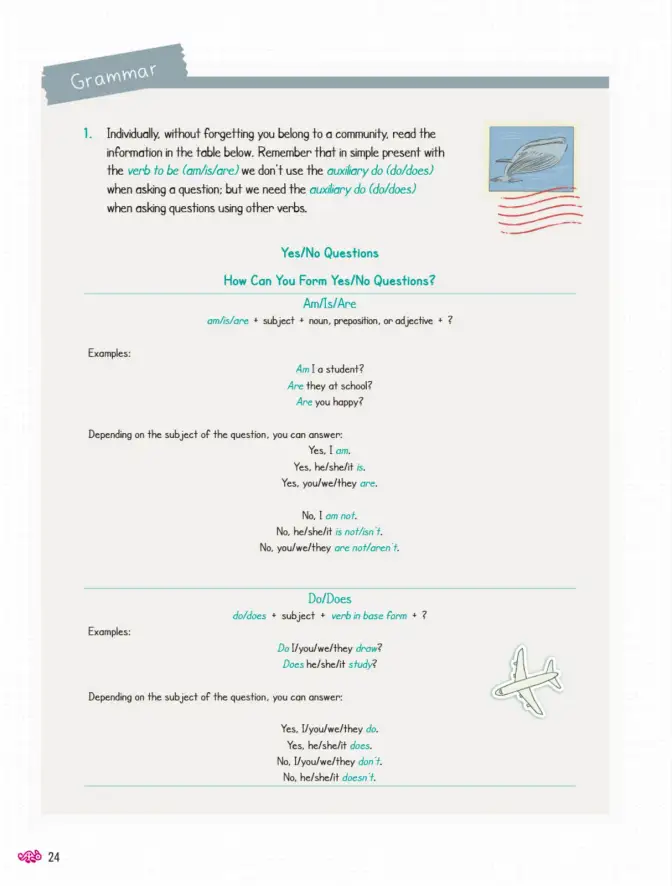
Individually, read the information in the table below. Remember that in simple present with the verb to be (am/is/are) we don't use the auxiliary do (do/does) when asking a question; but we need the auxiliary do (do/does) when asking questions using other verbs.
Parte 1.a
Preguntas con am/is/are
- La estructura es: am/is/are + sujeto + sustantivo, preposición o adjetivo + ?
- Se elige la forma del verbo to be según el sujeto: am con I, is con he/she/it, are con you/we/they.
- Ejemplos del libro: Am I a student?, Are they at school?, Are you happy?
- Respuestas cortas afirmativas: Yes, I am. / Yes, he/she/it is. / Yes, you/we/they are.
- Respuestas cortas negativas: No, I am not. / No, he/she/it is not (isn't). / No, you/we/they are not (aren't).
Respuesta
Estructura: am/is/are + sujeto + complemento + ? — Ej.: Are you happy? → Yes, I am. / No, I am not.
Parte 1.b
Preguntas con do/does
- La estructura es: do/does + sujeto + verbo en forma base + ?
- Se usa do con I/you/we/they y does con he/she/it.
- El verbo principal siempre va en forma base (sin -s): draw, study.
- Ejemplos del libro: Do I/you/we/they draw?, Does he/she/it study?
- Respuestas cortas afirmativas: Yes, I/you/we/they do. / Yes, he/she/it does.
- Respuestas cortas negativas: No, I/you/we/they don't. / No, he/she/it doesn't.
Respuesta
Estructura: do/does + sujeto + verbo base + ? — Ej.: Does she study? → Yes, she does. / No, she doesn't.