













Saltar al contenido
MisLibrosTexto
Ad

My Individual and Collective Identity - Awareness

📄 introduccion ingles 🎓 otro · 1° TELESECUNDARIA México 🇲🇽 MX 🗣 Español
Página 21
21 de 187
Página 21 de Uérakua anapu uantakua. Projects and Readings.  Libro de Educación Telesecundaria Grado 1°  Ciclo Escolar 2025 - 2026
Anterior Página 21 / 187 Siguiente

Respuesta rápida

1.a) Her name is Ana. 1.b) She is about 12 or 13. 1.c) She is thinking about her identity. 1.d) She is thinking about who she is. 2.a) Words that define you. 2.b) Family names and descriptions. 2.c) Friends' names and characteristics.

ingles ⭐ Dificultad 1/5 ⏱ 8 min lectura

Solución — Página 21

Uérakua anapu uantakua. Projects and Readings. Libro de Educación Telesecundaria Grado 1° Ciclo Escolar 2025 - 2026

1
Ejercicio 1

What Are We Doing?

Enunciado (EN): In this project, you will create a mural representing the different ways of being a teenager. The purpose of this project is to acknowledge and appraise the differences that prevail to promote an equal and inclusive coexistence.

Traducción (ES): En este proyecto, crearás un mural que representará las diferentes maneras de ser adolescente. El propósito de este proyecto es reconocer y apreciar las diferencias que prevalecen para promover una coexistencia equitativa e inclusiva.

Respuesta orientativa: El proyecto busca que el estudiante exprese visualmente su identidad individual y colectiva, valorando la diversidad como base de una convivencia igualitaria e inclusiva.

Starting Point

Enunciado (EN): To define your identity, it is important to recognize who you are. It sounds easy because you know yourself, but... Have you stopped and tried to identify your strengths and your weaknesses? Do you know about your origins and how they impact your present? Are you aware of your personality and abilities, the way you get along with others, and how you react to different situations? Awareness of these factors results in self-knowledge, a dynamic process that extends throughout life; besides, a lot can change during that process.

Traducción (ES): Para definir tu identidad es importante reconocer quién eres. Suena fácil porque te conoces, pero... ¿te has detenido a identificar tus fortalezas y debilidades? ¿Conoces tus orígenes y cómo impactan tu presente? ¿Eres consciente de tu personalidad y habilidades, de cómo te relacionas con los demás y de cómo reaccionas ante distintas situaciones? La conciencia de estos factores da como resultado el autoconocimiento, un proceso dinámico que se extiende a lo largo de la vida; además, muchas cosas pueden cambiar durante ese proceso.

Respuesta orientativa: El autoconocimiento es un proceso continuo que integra el reconocimiento de fortalezas, debilidades, orígenes, personalidad y habilidades sociales; estos elementos configuran la identidad personal y se transforman con las experiencias de vida.


1
Ejercicio 1

Enunciado (EN): In classroom community, look at the picture and imagine together what the answers to the following questions could be.

Traducción (ES): En comunidad de aula, observen la imagen e imaginen juntos cuáles podrían ser las respuestas a las siguientes preguntas.

a
Parte 1.a

Pregunta (EN): What is the student's name?

Traducción: ¿Cómo se llama la estudiante?

Respuesta orientativa: No hay un nombre único; se puede proponer un nombre verosímil, por ejemplo: Her name is Ana. (Su nombre es Ana.)

b
Parte 1.b

Pregunta (EN): How old is she?

Traducción: ¿Cuántos años tiene?

Respuesta orientativa: Por su apariencia de estudiante de secundaria, se puede responder: She is about 12 or 13 years old. (Tiene alrededor de 12 o 13 años.)

c
Parte 1.c

Pregunta (EN): What is she doing?

Traducción: ¿Qué está haciendo?

Respuesta orientativa: She is thinking about her identity and looking at symbols of different cultures. (Está pensando en su identidad y observando símbolos de distintas culturas.)

d
Parte 1.d

Pregunta (EN): What is she thinking about?

Traducción: ¿En qué está pensando?

Respuesta orientativa: She is thinking about who she is, her family, her friends and the world around her. (Está pensando en quién es, en su familia, sus amigos y el mundo que la rodea.)

2
Ejercicio 2

Enunciado (EN): To recognize the elements that comprise your personal and collective identity, individually, follow these steps.

Traducción (ES): Para reconocer los elementos que componen tu identidad personal y colectiva, de manera individual, sigue estos pasos.

a
Parte 2.a

Paso (EN): Draw a circle on a sheet of paper (you will draw four circles in the same page, so check your space). Inside this circle, write some words that express your interests, likes, dislikes, personal characteristics, and abilities. That is, write words that define you.

Traducción: Dibuja un círculo en una hoja de papel (dibujarás cuatro círculos en la misma página, así que revisa tu espacio). Dentro de este círculo, escribe algunas palabras que expresen tus intereses, gustos, disgustos, características personales y habilidades. Es decir, escribe palabras que te definan a ti.

Respuesta orientativa (ejemplo): I like music, I dislike injustice, I am creative, I can draw well. (Me gusta la música, no me gusta la injusticia, soy creativo, sé dibujar bien.)

b
Parte 2.b

Paso (EN): Draw another circle and, inside it, write the names of the people in your family and some words that describe them: their dreams, trades or professions, routines, etc.

Traducción: Dibuja otro círculo y, dentro de él, escribe los nombres de las personas de tu familia y algunas palabras que los describan: sus sueños, oficios o profesiones, rutinas, etc.

Respuesta orientativa (ejemplo): My mother Laura is a nurse; she dreams of traveling. My brother Diego is a student; he plays soccer every afternoon. (Mi mamá Laura es enfermera; sueña con viajar. Mi hermano Diego es estudiante; juega fútbol todas las tardes.)

c
Parte 2.c

Paso (EN): Draw a third circle and, inside it, write the names of your closest friends along with some of their characteristics. Write words that refer to them and think about what you share and what makes them different from each other.

Traducción: Dibuja un tercer círculo y, dentro de él, escribe los nombres de tus amigos más cercanos junto con algunas de sus características. Escribe palabras que se refieran a ellos y piensa en lo que comparten y en lo que los hace diferentes entre sí.

Respuesta orientativa (ejemplo): Sofía is funny and loyal; we share a love for reading. Mateo is shy but very kind; he is different because he prefers sports while Sofía prefers art. (Sofía es divertida y leal; compartimos el gusto por la lectura. Mateo es tímido pero muy amable; es diferente porque prefiere los deportes mientras Sofía prefiere el arte.)

Nota: El cuarto círculo se completará en la siguiente página del libro (pág. 22), según la indicación de dibujar cuatro círculos en la misma hoja.

Contenido de la página

My Individual and Collective Identity

AWARENESS

What Are We Doing?

English: In this project, you will create a mural representing the different ways of being a teenager. The purpose of this project is to acknowledge and appraise the differences that prevail to promote an equal and inclusive coexistence.

Español: En este proyecto, crearás un mural que representará las diferentes maneras de ser adolescente. El propósito de este proyecto es reconocer y apreciar las diferencias que prevalecen para promover una coexistencia equitativa e inclusiva.

Starting Point

English: To define your identity, it is important to recognize who you are. It sounds easy because you know yourself, but... Have you stopped and tried to identify your strengths and your weaknesses? Do you know about your origins and how they impact your present? Are you aware of your personality and abilities, the way you get along with others, and how you react to different situations? Awareness of these factors results in self-knowledge, a dynamic process that extends throughout life; besides, a lot can change during that process.

Español: Para definir tu identidad es importante reconocer quién eres. Suena fácil porque te conoces, pero... ¿te has detenido a identificar tus fortalezas y debilidades? ¿Conoces tus orígenes y cómo impactan tu presente? ¿Eres consciente de tu personalidad y habilidades, de cómo te relacionas con los demás y de cómo reaccionas ante distintas situaciones? La conciencia de estos factores da como resultado el autoconocimiento, un proceso dinámico que se extiende a lo largo de la vida; además, muchas cosas pueden cambiar durante ese proceso.

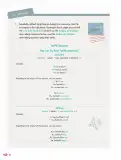
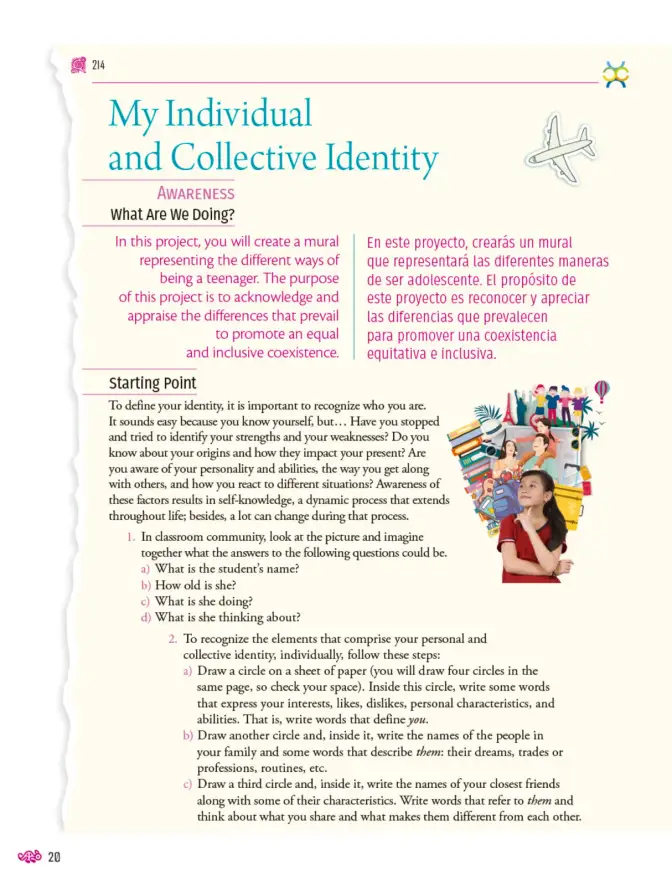
  1. In classroom community, look at the picture and imagine together what the answers to the following questions could be. a) What is the student's name? b) How old is she? c) What is she doing? d) What is she thinking about?

  2. To recognize the elements that comprise your personal and collective identity, individually, follow these steps: a) Draw a circle on a sheet of paper (you will draw four circles in the same page, so check your space). Inside this circle, write some words that express your interests, likes, dislikes, personal characteristics, and abilities. That is, write words that define you. b) Draw another circle and, inside it, write the names of the people in your family and some words that describe them: their dreams, trades or professions, routines, etc. c) Draw a third circle and, inside it, write the names of your closest friends along with some of their characteristics. Write words that refer to them and think about what you share and what makes them different from each other.

Glosario (8)

Awareness
Conciencia o conocimiento de uno mismo y del entorno.
Mural
Obra pictórica realizada sobre una pared o superficie grande.
Coexistence
Coexistencia; convivencia entre personas o grupos.
Self-knowledge
Autoconocimiento; conocimiento de la propia identidad.
Strengths
Fortalezas; cualidades positivas.
Weaknesses
Debilidades; aspectos a mejorar.
Origins
Orígenes; procedencia familiar o cultural.
Identity
Identidad; conjunto de rasgos que definen a una persona o grupo.

Preguntas para practicar

Have you stopped and tried to identify your strengths and your weaknesses?

Sí, es importante hacer una autoevaluación para reconocer en qué destacamos y qué podemos mejorar. Este ejercicio ayuda a construir una identidad sólida y a tomar decisiones personales.

Do you know about your origins and how they impact your present?

Conocer nuestros orígenes familiares y culturales nos permite entender nuestras costumbres, valores y forma de ver el mundo. Ese legado influye en nuestra identidad actual y en cómo nos relacionamos con los demás.

Are you aware of your personality and abilities, the way you get along with others, and how you react to different situations?

Reconocer nuestra personalidad y habilidades nos ayuda a relacionarnos mejor y a enfrentar situaciones diversas. La conciencia de estos aspectos favorece el autoconocimiento y la convivencia inclusiva.

Temas y conceptos clave

Identidad individual y colectivaAutoconocimientoDiversidad e inclusiónProyecto de muralIdentidadAutoconocimientoCoexistencia equitativa e inclusivaFortalezas y debilidadesOrígenesPersonalidadHabilidades
¿Te fue útil esta página?

Figuras de la página (2)

Ilustración de un avión de papel con líneas de movimiento.
Figura 1 image
Collage de una estudiante pensativa rodeada de símbolos culturales (Torre Eiffel, letras, libros, personas diversas, globos aerostáticos).
Figura 2 image

Preguntas que la gente también hace

¿Qué es la identidad individual y colectiva?
Consulta la solución completa arriba o explora el libro entero para temas relacionados.
¿Cómo puedo definir mi identidad personal?
Consulta la solución completa arriba o explora el libro entero para temas relacionados.
¿Qué actividades incluye el proyecto My Individual and Collective Identity?
Consulta la solución completa arriba o explora el libro entero para temas relacionados.
📌 Antes de leer esto
  • • Vocabulario básico en inglés sobre familia, amigos y características personales
  • • Comprensión de preguntas simples en inglés (What, How old, What is she doing)
Siguiente tema sugerido
Continuación del proyecto: cuarto círculo y elaboración del mural (pág. 22)
📝 Transcripción de la página (texto seleccionable) 2198 caracteres

My Individual and Collective Identity

AWARENESS What Are We Doing?

In this project, you will create a mural representing the different ways of being a teenager. The purpose of this project is to acknowledge and appraise the differences that prevail to promote an equal and inclusive coexistence.

starting Point

b) How old is she?

c What is she doing?

d) What is she thinking about?

En este proyecto, crearás un mural que representará las diferentes maneras de ser adolescente. El propósito de este proyecto es reconocer y apreciar las diferencias que prevalecen para promover una coexistencia equitativa e inclusiva.

To define your identity, it is important to recognize who you are.It sounds easy because you know yourself, but. .. Have you stopped and tried to identify your strengths and your weaknesses? Do you know about your origins and how they impact your present? Are you aware of your personality and abilities, the way you get along with others, and how you react to different situations? Awareness of these factors results in self-knowledge, a dynamic process that extends throughout life; besides, a lot can change during that process.

  1. In classroom community, look at the picture and imagine together what the answers to the following questions could be.a) What is the student's name?

  2. To recognize the elements that comprise your personal and collective identity, individually, follow these steps:

a) Draw a circle on a sheet of paper (you will draw four circles in the same page, so check your space). Inside this circle, write some words that express your interests, likes, dislikes, personal characteristics, and abilities. That is, write words that define you.

b) Draw another circle and, inside it, write the names of the people in your family and some words that describe them: their dreams, trades or professions, routines, etc.

Draw a third circle and, inside it, write the names of your closest friends along with some of their characteristics. Write words that refer to them and think about what you share and what makes them different from each other.

2144

č

![](page=0,bbox=[945, 198, 1078, 334])

![](page=0,bbox=[813, 684, 1100, 1051])

中

20

Ad

Otros libros recomendados

Ver todos →
Ad

Usamos cookies propias y de terceros para personalizar contenido, mostrar publicidad y analizar el tráfico. Las cookies necesarias siempre están activas.