
















A Visit to the Coral Reef: Marina and Delfin's Underwater Dream
Respuesta rápida
Lectura sobre el arrecife: anémonas, esponjas, erizos, estrellas de mar, almejas, tortugas, medusas y caballitos de mar son animales, no plantas. Marina despierta de su sueño.
Solución — Página 30
Uérakua anapu uantakua. Projects and Readings. Libro de Educación Telesecundaria Grado 1° Ciclo Escolar 2025 - 2026
Sobre esta página
Esta página es una lectura narrativa en inglés (no contiene ejercicios numerados). Por eso, la resolución consiste en traducir y comprender el texto, identificar el vocabulario clave y responder preguntas de comprensión.
Traducción del texto
—Dime, dime, Cangrejo, ¿esas hermosas formaciones son piedras? ¿O tal vez son plantas? —No, Marina, son animales —nos mostró Cangrejo, emocionado. —¡Mira, primo, cuántos peces! Y se ven increíbles con sus colores brillantes. Mi primo y yo no sabíamos dónde mirar... ¡Todo era tan increíble! —¡Algas coloridas! —grité emocionada mientras las señalaba. —Sí, y se mueven con las corrientes de agua. ¿Lo viste? —¿Y qué son esas plantitas, Cangrejo? —No son plantas, son animales que parecen plantas. Se llaman anémonas, y los peces se esconden dentro de ellas cuando están en peligro. Finalmente, Cangrejo nos mostró todo el arrecife. —¡Miren, niños, hay otros animales! ¡Son las esponjas, los erizos de mar y las estrellas de mar!
—¡Y las almejas! ¡Ah! Y muchos otros animales vienen a visitar el arrecife, como las tortugas. ¡Y también pasan algunas medusas! —¿Esos son caballitos de mar? —preguntó Delfín a Cangrejo mientras los señalaba. —Sí, sí —respondió Cangrejo—. ¿Sabías que esos animalitos son peces? —¡Guau! ¡Qué hermoso es un arrecife de coral! ¿Verdad, Delfín? De repente, un enorme tiburón nadó hacia los niños. Estaban muy asustados. Pero, en ese instante, Marina sintió que la sacudían suavemente, y la voz de su tía dijo: —Marina, despierta, nos vamos al arrecife. Delfín, despierta. —Sí, vamos. Estamos ansiosos por ver cómo es un arrecife de coral. ¿Verdad, primo?
Preguntas de comprensión (orientativas)
- ¿Qué animales del arrecife se mencionan? Peces, anémonas, esponjas, erizos de mar, estrellas de mar, almejas, tortugas, medusas, caballitos de mar y un tiburón.
- ¿Por qué las anémonas no son plantas? Porque son animales que parecen plantas; los peces se esconden dentro de ellas cuando están en peligro.
- ¿Qué pasa al final del sueño? Un tiburón se acerca y la tía de Marina la despierta para ir al arrecife.
Respuesta: La página enseña vocabulario marino en inglés y muestra que el arrecife es un ecosistema lleno de vida animal, no de plantas ni piedras.
Contenido de la página
A Visit to the Coral Reef
"Tell me, tell me, Crab, are those beautiful formations stones? Or maybe they're plants?"
"No, Marina, they're animals," Crab showed us, excited.
"Look, cousin, so many fish! And they look incredible with their shiny colors!"
My cousin and I didn't know where to look... Everything was so incredible!
"Colorful algae!" I shouted excitedly while I pointed at them.
"Yeah, and they move with the water currents. Did you see?"
"And what are those little plants, Crab?"
"They are not plants, they're animals that look like plants. They're called anemones, and fish hide inside them when they're in danger."
Finally, Crab showed us the whole reef.
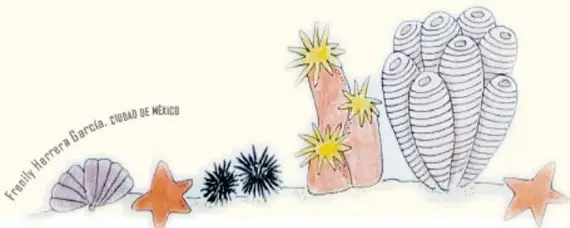
"Look, kids, there are other animals! They are the sponges, the sea urchins, and the starfish!"
"And the clams! Ah! And many other animals come to visit the reef, like turtles. And some jellyfish also pass by!"
"Are those sea horses?" Delfin asked Crab while pointing at them.
"Yes, yes," Crab answered. "Did you know that those little animals are fish?"
"Wow. How beautiful a coral reef is! Right, Delfin?"
Suddenly, a huge shark swam toward the kids. They were very scared. But, in that instant, Marina felt that she was softly shaken, and her aunt's voice said:
"Marina, wake up, we are leaving for the reef. Delfín, wake up."
"Yes, let's go. We're eager to see what a coral reef is like. Right, cousin?"
Ilustraciones
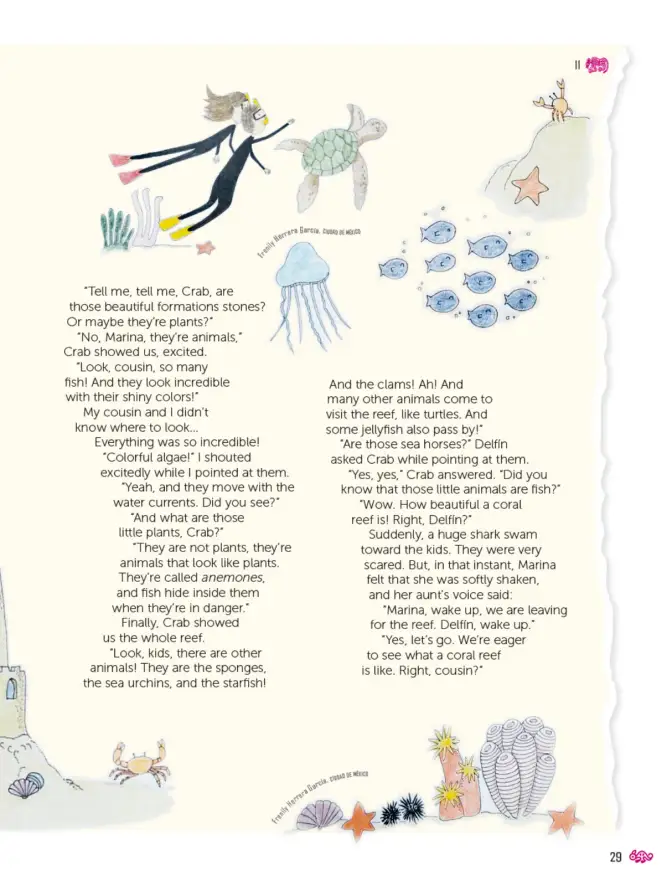
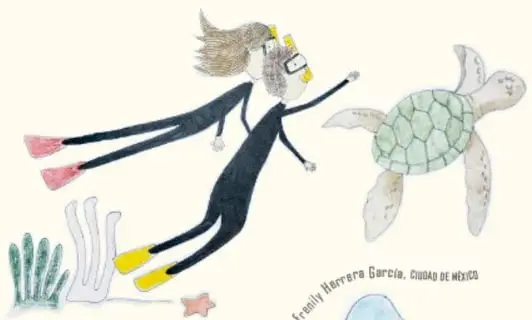
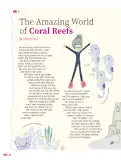
- Niña buceando con tortuga marina, algas y estrella de mar.
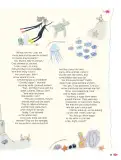
- Medusa azul y banco de peces.
- Cangrejo sobre una roca con estrella de mar.
- Fondo marino con almejas, erizos, esponjas y estrellas de mar.
Tabla
| English | Español | ¿Animal o planta? |
|---|---|---|
| anemones | anémonas | animal |
| sponges | esponjas | animal |
| sea urchins | erizos de mar | animal |
| starfish | estrellas de mar | animal |
| clams | almejas | animal |
| jellyfish | medusas | animal |
| sea horses | caballitos de mar | animal (pez) |
| algae | algas | planta |
Diagrama
mindmap
  root((Coral Reef))
    Animals
      Fish
      Anemones
      Sponges
      Sea urchins
      Starfish
      Clams
      Turtles
      Jellyfish
      Sea horses
    Not
      Stones
      Plants
Glosario (10)
- coral reef
- arrecife de coral
- anemones
- anémonas, animales que parecen plantas
- sponges
- esponjas marinas
- sea urchins
- erizos de mar
- starfish
- estrellas de mar
- clams
- almejas
- jellyfish
- medusas
- sea horses
- caballitos de mar
- algae
- algas
- currents
- corrientes de agua
Preguntas para practicar
What animals live in a coral reef according to the text?
According to the text, the coral reef is home to fish, anemones, sponges, sea urchins, starfish, clams, turtles, jellyfish and sea horses. All of them are animals, not plants or stones.
Why are anemones not plants?
Anemones are animals that look like plants. Fish hide inside them when they are in danger, which shows they are living animals and not plants.
What happens at the end of the story?
A huge shark swims toward the kids and they get scared. Then Marina feels someone shaking her and hears her aunt's voice telling her to wake up because they are leaving for the reef.
Temas y conceptos clave
Figuras de la página (2)
Preguntas que la gente también hace
¿Cuáles son los animales que viven en un arrecife de coral?
¿Cuál es la diferencia entre una anémona y una planta?
¿Cómo se dice esponja, erizo y estrella de mar en inglés?
- • Vocabulario básico en inglés sobre animales
- • Presente simple y presente continuo
- • Uso de comillas para diálogos
📝 Transcripción de la página (texto seleccionable) 1417 caracteres
"Tell me, tell me, Crab, are those beautiful formations stones?Or maybe they're plants?""No, Marina, they're animals,"Crab showed us, excited. "Look, cousin, so many fish! And they look incredible with their shiny colors!"My cousin and I didn't know where to look. Everything was so incredible! "Colorful algae!"I shouted excitedly while I pointed at them. "Yeah, and they move with the water currents. Did you see?" "And what are those little plants, Crab?" "They are not plants, they're animals that look like plants. They're called anemones, and fish hide inside them when they're in danger." Finally,Crab showed us the whole reef. "Look, kids, there are other animals! They are the sponges,the sea urchins, and the starfish!
And the clams!Ah!And many other animals come to visit the reef, like turtles. And some jellyfish also pass by!""Are those sea horses?"Delfin asked Crab while pointing at them."Yes, yes,"Crab answered."Did you know that those little animals are fish?" "Wow. How beautiful a coral reef is! Right, Delfin?" Suddenly.a huge shark swam toward the kids. They were very scared. But, in that instant, Marina felt that she was softly shaken, and her aunt's voice said: "Marina, wake up, we are leaving for the reef. Delfín, wake up." "Yes, let's go. We're eager to see what a coral reef is like. Right, cousin?"


29
Otros libros recomendados
Historia del pueblo mexicano. Multigrado Libro de Educación Telesecundaria Grado 1° Ciclo Escolar 2025 - 2026
SEP/CONALITEG
331 págs.
Colección Ximhai. Lenguajes. Libro de Educación Telesecundaria Grado 1° Ciclo Escolar 2025 - 2026
SEP/CONALITEG
323 págs.
Colección Ximhai. Ética, naturaleza y sociedades. Libro de Educación Telesecundaria Grado 1° Ciclo Escolar 2025 - 2026
SEP/CONALITEG
355 págs.
Uérakua anapu uantakua. Projects and Readings. Libro de Educación Telesecundaria Grado 3° Ciclo Escolar 2025 - 2026
SEP/CONALITEG
187 págs.
Uérakua anapu uantakua. Projects and Readings. Libro de Educación Telesecundaria Grado 2° Ciclo Escolar 2025 - 2026
SEP/CONALITEG
171 págs.
Colección Ximhai. De lo humano y lo comunitario. Libro de Educación Telesecundaria Grado 1° Ciclo Escolar 2025 - 2026
SEP/CONALITEG
259 págs.
Colección Ximhai. Nuestro libro de Proyectos. Tomo II. Libro de Educación Telesecundaria Grado 1° Ciclo Escolar 2025 - 2026
SEP/CONALITEG
267 págs.

Un libro sin recetas para la maestra y el maestro. Fase 6. Libro de Educación Telesecundaria Grado 1°, 2°, 3° Ciclo Escolar 2025 - 2026
SEP/CONALITEG
203 págs.