

















Is That Reading? — Reflexión sobre los hábitos de lectura
Respuesta rápida
El texto sostiene que no hay una única forma correcta de leer: cada quien lee a su ritmo, como quiere, puede, le gusta o necesita.
Solución — Página 65
Uérakua anapu uantakua. Projects and Readings. Libro de Educación Telesecundaria Grado 1° Ciclo Escolar 2025 - 2026
Sobre el texto
La página presenta el artículo "Is That Reading?!" de María de Jesús Prado Vite. Es un texto de opinión/reflexión en inglés cuyo propósito es cuestionar la creencia de que "leer de verdad" significa leer sin parar hasta terminar un libro.
Traducción del texto (español)
¿Eso es leer?
Por María de Jesús Prado Vite
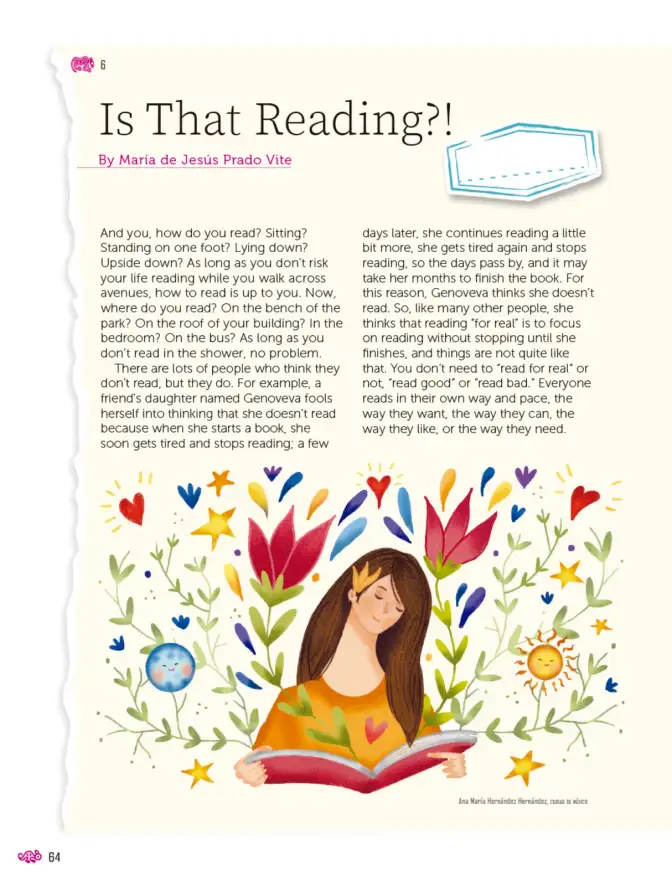
¿Y tú, cómo lees? ¿Sentado? ¿Parado en un pie? ¿Acostado? ¿Al revés? Mientras no arriesgues tu vida leyendo mientras cruzas avenidas, cómo leer depende de ti. Ahora, ¿dónde lees? ¿En la banca del parque? ¿En la azotea de tu edificio? ¿En el dormitorio? ¿En el autobús? Mientras no leas en la ducha, no hay problema.
Hay mucha gente que cree que no lee, pero sí lo hace. Por ejemplo, la hija de una amiga llamada Genoveva se engaña a sí misma pensando que no lee porque, cuando empieza un libro, pronto se cansa y deja de leer; unos días después continúa leyendo un poco más, se cansa otra vez y deja de leer, así pasan los días y puede tardar meses en terminar el libro. Por esta razón, Genoveva piensa que no lee. Entonces, como muchas otras personas, cree que leer "de verdad" es concentrarse en leer sin parar hasta terminar, y las cosas no son así. No necesitas "leer de verdad" o no, "leer bien" o "leer mal". Cada quien lee a su manera y a su ritmo, como quiere, como puede, como le gusta o como lo necesita.
Ideas principales
- No existe una sola forma correcta de leer: importa el cómo, el dónde y el ritmo personal.
- El caso de Genoveva ilustra el error de creer que quien no termina un libro de inmediato "no lee".
- Leer es una práctica flexible: cada persona lee como quiere, puede, le gusta o necesita.
Actividad sugerida (si el docente la pide)
Respuesta orientativa: El texto enseña que leer no exige terminar un libro de una sola vez; lo importante es mantener el hábito y disfrutarlo. Genoveva sí lee, solo lo hace por intervalos, y eso es válido. La idea central es respetar el propio ritmo y no compararse con otros lectores.
Contenido de la página
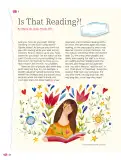
Is That Reading?!
By María de Jesús Prado Vite
And you, how do you read? Sitting? Standing on one foot? Lying down? Upside down? As long as you don't risk your life reading while you walk across avenues, how to read is up to you. Now, where do you read? On the bench of the park? On the roof of your building? In the bedroom? On the bus? As long as you don't read in the shower, no problem.
There are lots of people who think they don't read, but they do. For example, a friend's daughter named Genoveva fools herself into thinking that she doesn't read because when she starts a book, she soon gets tired and stops reading; a few days later, she continues reading a little bit more, she gets tired again and stops reading, so the days pass by, and it may take her months to finish the book. For this reason, Genoveva thinks she doesn't read. So, like many other people, she thinks that reading "for real" is to focus on reading without stopping until she finishes, and things are not quite like that. You don't need to "read for real" or not, "read good" or "read bad." Everyone reads in their own way and pace, the way they want, the way they can, the way they like, or the way they need.
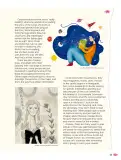
Ilustración: Ana María Hernández Hernández, Cuauhtémoc, México.
Tabla
| Aspecto | Lo que cree Genoveva | Lo que dice la autora |
|---|---|---|
| ¿Qué es leer? | Leer sin parar hasta terminar | Leer como cada quien puede y quiere |
| ¿Genoveva lee? | No, porque se cansa | Sí, aunque por intervalos |
| Ritmo | Debe ser continuo | Personal y flexible |
| Conclusión | Existe leer 'bien' o 'mal' | No existen esas categorías |
Diagrama
mindmap
  root((Is That Reading?))
    Como leemos
      Sentado
      Parado
      Acostado
      Al revés
    Donde leemos
      Parque
      Azotea
      Dormitorio
      Autobus
    Idea central
      Cada quien lee a su ritmo
      No hay lectura 'de verdad'
      Caso Genoveva
Glosario (7)
- upside down
- al revés, boca abajo
- bench
- banca, banco (asiento)
- roof
- techo, azotea
- fools herself
- se engaña a sí misma
- gets tired
- se cansa
- pace
- ritmo, paso
- for real
- de verdad, en serio
Preguntas para practicar
And you, how do you read? / ¿Y tú, cómo lees?
Respuesta personal. Ejemplo: I usually read lying on my bed at night, with soft music in the background. / Suelo leer acostado en mi cama por la noche, con música suave de fondo.
Where do you read? / ¿Dónde lees?
Respuesta personal. Ejemplo: I read on the bus on my way to school and in the school library. / Leo en el autobús camino a la escuela y en la biblioteca escolar.
Do you agree with the author's idea that everyone reads in their own way and pace? Why? / ¿Estás de acuerdo con la idea de la autora de que cada quien lee a su manera y a su ritmo? ¿Por qué?
Sí, porque cada persona tiene distintos tiempos, intereses y contextos. Forzar un solo ritmo puede hacer que alguien abandone la lectura; respetar el ritmo propio ayuda a mantener el hábito.
Temas y conceptos clave
Figuras de la página (2)

Preguntas que la gente también hace
¿Qué significa leer 'de verdad' según el texto?
¿Por qué Genoveva cree que no lee?
¿Cuál es la idea principal de 'Is That Reading?'
- • Vocabulario básico en inglés (verbos de acción, lugares)
- • Identificación de idea principal y secundaria
- • Uso de presente simple en inglés
📝 Transcripción de la página (texto seleccionable) 1317 caracteres
Is That Reading?!
By Maria de Jesús Prado Vite
And you, how do you read? Sitting?Standing on one foot? Lying down?Upside down? As long as you don't risk your life reading while you walk across avenues, how to read is up to you. Now,where do you read? On the bench of the park? On the roof of your building? In the bedroom? On the bus? As long as you don't read in the shower, no problem.
There are lots of people who think they don't read, but they do. For example, a friend's daughter named Genoveva fools herself into thinking that she doesn't read because when she starts a book, she soon gets tired and stops reading: a few
days later, she continues reading a little bit more, she gets tired again and stops reading, so the days pass by, and it may take her months to finish the book. For this reason, Genoveva thinks she doesn't read. So, like many other people, she thinks that reading"for real"is to focus on reading without stopping until she finishes, and things are not quite like that. You don't need to"read for real"or not, "read good"or"read bad."Everyone reads in their own way and pace, the way they want, the way they can, the way they like, or the way they need.
6


Ana Maria Hernández Hernández,cuunuD e wénc
64
Otros libros recomendados

Historia del pueblo mexicano. Multigrado Libro de Educación Telesecundaria Grado 1° Ciclo Escolar 2025 - 2026
SEP/CONALITEG
331 págs.

Colección Ximhai. Lenguajes. Libro de Educación Telesecundaria Grado 1° Ciclo Escolar 2025 - 2026
SEP/CONALITEG
323 págs.
Colección Ximhai. Ética, naturaleza y sociedades. Libro de Educación Telesecundaria Grado 1° Ciclo Escolar 2025 - 2026
SEP/CONALITEG
355 págs.
Uérakua anapu uantakua. Projects and Readings. Libro de Educación Telesecundaria Grado 3° Ciclo Escolar 2025 - 2026
SEP/CONALITEG
187 págs.
Uérakua anapu uantakua. Projects and Readings. Libro de Educación Telesecundaria Grado 2° Ciclo Escolar 2025 - 2026
SEP/CONALITEG
171 págs.
Colección Ximhai. De lo humano y lo comunitario. Libro de Educación Telesecundaria Grado 1° Ciclo Escolar 2025 - 2026
SEP/CONALITEG
259 págs.

Colección Ximhai. Nuestro libro de Proyectos. Tomo II. Libro de Educación Telesecundaria Grado 1° Ciclo Escolar 2025 - 2026
SEP/CONALITEG
267 págs.
Un libro sin recetas para la maestra y el maestro. Fase 6. Libro de Educación Telesecundaria Grado 1°, 2°, 3° Ciclo Escolar 2025 - 2026
SEP/CONALITEG
203 págs.