

















Simple Present vs. Present Progressive (Continuous)
Respuesta rápida
Simple present = hábitos. Present progressive = acciones en curso o hábitos temporales. Estructuras: do/does + verbo; am/is/are + verbo-ing.
Solución — Página 69
Uérakua anapu uantakua. Projects and Readings. Libro de Educación Telesecundaria Grado 1° Ciclo Escolar 2025 - 2026
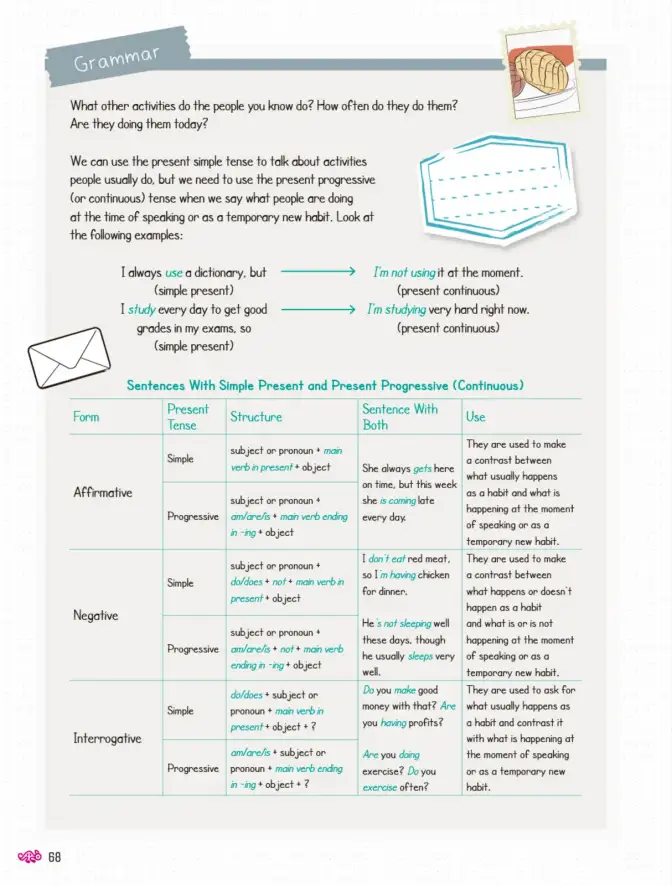
Página de gramática: Simple Present vs. Present Progressive
Esta página no contiene ejercicios con respuestas numéricas; es una lección teórica con ejemplos. A continuación se explica y se completa el contenido.
Actividad inicial (What other activities do the people you know do?)
Respuesta orientativa: My mother usually cooks dinner, but today she is ordering pizza. My brother plays soccer every Saturday, but right now he is studying for an exam. My friends often listen to music, but at this moment they are doing homework.
Regla central
Usamos el presente simple para actividades habituales y el presente progresivo (continuo) para lo que ocurre en el momento de hablar o como un hábito temporal nuevo.
- I always use a dictionary. (simple present) → I**'m not using** it at the moment. (present continuous)
- I study every day to get good grades. (simple present) → I**'m studying** very hard right now. (present continuous)
Cuadro: Sentences With Simple Present and Present Progressive (Continuous)
| Form | Present Tense | Structure | Sentence With Both | Use |
|---|---|---|---|---|
| Affirmative | Simple | subject or pronoun + main verb in present + object | She always gets here on time, but this week she is coming late every day. | Contrast between a habit and what is happening now or as a temporary new habit. |
| Affirmative | Progressive | subject or pronoun + am/are/is + main verb ending in -ing + object | (mismo ejemplo) | (mismo uso) |
| Negative | Simple | subject or pronoun + do/does + not + main verb in present + object | I don't eat red meat, so I**'m having** chicken for dinner. | Contrast between what happens or doesn't happen as a habit and what is or isn't happening now. |
| Negative | Progressive | subject or pronoun + am/are/is + not + main verb ending in -ing + object | He isn't sleeping well these days, though he usually sleeps very well. | (mismo uso) |
| Interrogative | Simple | do/does + subject or pronoun + main verb in present + object + ? | Do you make good money with that? Are you having profits? | Ask about habits and contrast with what is happening now. |
| Interrogative | Progressive | am/are/is + subject or pronoun + main verb ending in -ing + object + ? | Are you doing exercise? Do you exercise often? | (mismo uso) |
Respuesta: El presente simple describe rutinas; el presente progresivo describe acciones en curso o hábitos temporales.
Contenido de la página
Grammar
What other activities do the people you know do? How often do they do them? Are they doing them today?
We can use the present simple tense to talk about activities people usually do, but we need to use the present progressive (or continuous) tense when we say what people are doing at the time of speaking or as a temporary new habit. Look at the following examples:
- I always use a dictionary, but (simple present) → I**'m not using** it at the moment. (present continuous)
- I study every day to get good grades in my exams, so (simple present) → I**'m studying** very hard right now. (present continuous)
Sentences With Simple Present and Present Progressive (Continuous)
| Form | Present Tense | Structure | Sentence With Both | Use |
|---|---|---|---|---|
| Affirmative | Simple | subject or pronoun + main verb in present + object | She always gets here on time, but this week she is coming late every day. | They are used to make a contrast between what usually happens as a habit and what is happening at the moment of speaking or as a temporary new habit. |
| Affirmative | Progressive | subject or pronoun + am/are/is + main verb ending in -ing + object | (mismo ejemplo) | (mismo uso) |
| Negative | Simple | subject or pronoun + do/does + not + main verb in present + object | I don't eat red meat, so I**'m having** chicken for dinner. | They are used to make a contrast between what happens or doesn't happen as a habit and what is or is not happening at the moment of speaking or as a temporary new habit. |
| Negative | Progressive | subject or pronoun + am/are/is + not + main verb ending in -ing + object | He isn't sleeping well these days, though he usually sleeps very well. | (mismo uso) |
| Interrogative | Simple | do/does + subject or pronoun + main verb in present + object + ? | Do you make good money with that? Are you having profits? | They are used to ask for what usually happens as a habit and contrast it with what is happening at the moment of speaking or as a temporary new habit. |
| Interrogative | Progressive | am/are/is + subject or pronoun + main verb ending in -ing + object + ? | Are you doing exercise? Do you exercise often? | (mismo uso) |
Ejemplos resueltos
I always use a dictionary, but I'm not using it at the moment.
Simple present: I always use a dictionary (hábito). Present continuous: I**'m not using** it at the moment (acción en curso).
She always gets here on time, but this week she is coming late every day.
Simple present: She always gets here on time (hábito). Present continuous: she is coming late every day (hábito temporal nuevo).
I don't eat red meat, so I'm having chicken for dinner.
Simple present negativo: I don't eat red meat (hábito). Present continuous: I**'m having** chicken for dinner (acción actual).
He isn't sleeping well these days, though he usually sleeps very well.
Present continuous negativo: He isn't sleeping well these days (situación temporal). Simple present: he usually sleeps very well (hábito).
Do you make good money with that? Are you having profits?
Simple present interrogativo: Do you make good money with that? (hábito). Present continuous interrogativo: Are you having profits? (situación actual).
Are you doing exercise? Do you exercise often?
Present continuous interrogativo: Are you doing exercise? (ahora). Simple present interrogativo: Do you exercise often? (frecuencia).
Tabla
| Form | Present Tense | Structure | Sentence With Both | Use |
|---|---|---|---|---|
| Affirmative | Simple | subject or pronoun + main verb in present + object | She always gets here on time, but this week she is coming late every day. | Contrast between habit and what is happening now. |
| Affirmative | Progressive | subject or pronoun + am/are/is + main verb ending in -ing + object | (mismo ejemplo) | (mismo uso) |
| Negative | Simple | subject or pronoun + do/does + not + main verb in present + object | I don't eat red meat, so I'm having chicken for dinner. | Contrast between habit and what is or isn't happening now. |
| Negative | Progressive | subject or pronoun + am/are/is + not + main verb ending in -ing + object | He isn't sleeping well these days, though he usually sleeps very well. | (mismo uso) |
| Interrogative | Simple | do/does + subject or pronoun + main verb in present + object + ? | Do you make good money with that? Are you having profits? | Ask about habits and contrast with what is happening now. |
| Interrogative | Progressive | am/are/is + subject or pronoun + main verb ending in -ing + object + ? | Are you doing exercise? Do you exercise often? | (mismo uso) |
Diagrama
graph TD
  A[Presente simple] --> B[Hábitos y rutinas]
  A --> C[Verdades generales]
  D[Presente progresivo] --> E[Acción en el momento de hablar]
  D --> F[Hábito temporal nuevo]
  B --> G[always, usually, often]
  E --> H[now, at the moment]
  F --> I[these days, this week]
Glosario (5)
- present simple
- Tiempo verbal que expresa hábitos, rutinas y verdades generales.
- present progressive (continuous)
- Tiempo verbal que expresa acciones en curso en el momento de hablar o hábitos temporales.
- habit
- Acción que se repite con frecuencia.
- temporary new habit
- Rutina reciente que no es permanente.
- auxiliary
- Verbo auxiliar (do, does, am, is, are) que ayuda a formar negaciones y preguntas.
Preguntas para practicar
What other activities do the people you know do? How often do they do them? Are they doing them today?
My mother usually cooks dinner, but today she is ordering pizza. My brother plays soccer every Saturday, but right now he is studying for an exam. My friends often listen to music, but at this moment they are doing homework.
Temas y conceptos clave
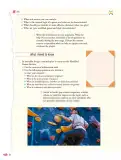
Figuras de la página (3)



Preguntas que la gente también hace
¿Cuál es la diferencia entre presente simple y presente progresivo en inglés?
¿Cómo se forma el presente progresivo en negativo e interrogativo?
¿Cuándo se usa el presente continuo para hábitos temporales?
- • Conocer pronombres personales en inglés
- • Identificar verbos en presente
- • Reconocer auxiliares do/does y am/is/are
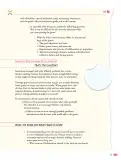
📝 Transcripción de la página (texto seleccionable) 2450 caracteres
Grammar
What other activities do the people you know do? How often do they do them?Are they doing them today?
We can use the present simple tense to talk about activities people usually do, but we need to use the present progressive (or continuous) tense when we say what people are doing at the time of speaking or as a temporary new habit. Look at the following examples:
I always use a dictionary, but (simple present)I study every day to get good grades in my exams, so (simple present)
I'm not usingit at the moment.(present continuous)→ I'm studying very hard right now.(present continuous)


Sentences With Simple Present and Present Progressive (Continuous)
| Form | Present Tense | Structure | Sentence With Both | Use |
| Affirmative | Simple | subject or pronoun + main venb in present+ object subject or pronoun + am/ane/is + main venb ending in -ing + object | She always gets here on time, but this week she is cominglate every day. | They are used to make a contrast between what usually happens as a habit and what is happening at the moment of speaking on as a temporary new habit. |
| Progressive | ||||
| Negative | Simple | subject or pronoun + do/does + not+ main venb in present + object | I don't eat red meat, so I'm having chicken for dinnen. | They are used to make a contrast between what happens or doesn't happen as a habit and what is or is not happening at the moment of speaking or as a temporary new habit. |
| Progressive | subject or pronoun + am/arelis+ not+main venb ending in -ing + object | |||
| Interrogative | Simple | do/does + subject on pronoun + main venb in present+ object+ ? | Do you make good money with that? Ane you having profits? Ane you doing exercise? Do you exercise often? | They are used to ask for what usually happens as a habit and contrast it with what is happening at the moment of speaking or as a temporary new habit. |
| Progressive | am/ane/is+ subject or pronoun + main venb ending in -ing+object +? |
乐
68

Otros libros recomendados

Historia del pueblo mexicano. Multigrado Libro de Educación Telesecundaria Grado 1° Ciclo Escolar 2025 - 2026
SEP/CONALITEG
331 págs.
Colección Ximhai. Lenguajes. Libro de Educación Telesecundaria Grado 1° Ciclo Escolar 2025 - 2026
SEP/CONALITEG
323 págs.
Colección Ximhai. Ética, naturaleza y sociedades. Libro de Educación Telesecundaria Grado 1° Ciclo Escolar 2025 - 2026
SEP/CONALITEG
355 págs.
Uérakua anapu uantakua. Projects and Readings. Libro de Educación Telesecundaria Grado 3° Ciclo Escolar 2025 - 2026
SEP/CONALITEG
187 págs.
Uérakua anapu uantakua. Projects and Readings. Libro de Educación Telesecundaria Grado 2° Ciclo Escolar 2025 - 2026
SEP/CONALITEG
171 págs.
Colección Ximhai. De lo humano y lo comunitario. Libro de Educación Telesecundaria Grado 1° Ciclo Escolar 2025 - 2026
SEP/CONALITEG
259 págs.

Colección Ximhai. Nuestro libro de Proyectos. Tomo II. Libro de Educación Telesecundaria Grado 1° Ciclo Escolar 2025 - 2026
SEP/CONALITEG
267 págs.
Un libro sin recetas para la maestra y el maestro. Fase 6. Libro de Educación Telesecundaria Grado 1°, 2°, 3° Ciclo Escolar 2025 - 2026
SEP/CONALITEG
203 págs.