















Saltar al contenido
MisLibrosTexto
Ad

Present Simple vs. Present Continuous: ejercicios de completar

📄 ejercicios ingles 🎓 otro · 1° TELESECUNDARIA México 🇲🇽 MX 🗣 Español
Página 70
70 de 187
Página 70 de Uérakua anapu uantakua. Projects and Readings.  Libro de Educación Telesecundaria Grado 1°  Ciclo Escolar 2025 - 2026
Anterior Página 70 / 187 Siguiente

Respuesta rápida

1.a) Do you usually drink / am drinking. 1.b) rains / is not raining. 1.c) are you going / am going / visit. 1.d) does your family do / go / are going. 1.e) study / am not studying. 2.a) I am having lunch late today. 2.b) we are reading a science magazine. 2.c) he is watching this one on the computer right now. 2.d) she is watering them at night. 2.e) I am not going to the gym this month.

📚 exercise ingles ⭐⭐ Dificultad 2/5 ⏱ 6 min lectura

Solución — Página 70

Uérakua anapu uantakua. Projects and Readings. Libro de Educación Telesecundaria Grado 1° Ciclo Escolar 2025 - 2026

1
Ejercicio 1

Completa con la forma correcta del verbo (presente simple o presente continuo).

a
Parte 1.a
  1. A: Do you usually drink milk? → hábito, presente simple con auxiliar do.
  2. B: Yes I do. Actually I am drinking a chocolate milkshake right now. → acción en este momento, presente continuo.
Respuesta

Do you usually drink milk? / I am drinking a chocolate milkshake right now.

b
Parte 1.b
  1. It always rains at this time of the year → rutina, presente simple, tercera persona rains.
  2. but today it is not raining at all → acción temporal, presente continuo negativo.
Respuesta

rains / is not raining.

c
Parte 1.c
  1. A: Where are you going now? → acción en progreso, presente continuo.
  2. B: I am going to my grandma's house. I visit her every Sunday. → acción en progreso + hábito.
Respuesta

are you going / am going / visit.

d
Parte 1.d
  1. A: What does your family do on weekends? → rutina, presente simple con does.
  2. B: We usually go to the mall; in fact, we are going there at this moment. → hábito + acción en progreso.
Respuesta

does your family do / go / are going.

e
Parte 1.e
  1. I study every evening after school → rutina, presente simple.
  2. but I am not studying today because I am on vacation → acción temporal, presente continuo negativo.
Respuesta

study / am not studying.

2
Ejercicio 2

Complementa la situación usando el verbo en presente continuo.

a
Parte 2.a
  1. I always have lunch early, but I am having lunch late today.
Respuesta

I am having lunch late today.

b
Parte 2.b
  1. We always read novels in class, but now we are reading a science magazine.
Respuesta

we are reading a science magazine.

c
Parte 2.c
  1. My dad usually watches the soccer finals on TV, but he is watching this one on the computer right now.
Respuesta

he is watching this one on the computer right now.

d
Parte 2.d
  1. She usually waters her plants in the morning, but today she is watering them at night.
Respuesta

she is watering them at night.

e
Parte 2.e
  1. I usually exercise, but I am not going to the gym this month because I need to recover from my accident.
Respuesta

I am not going to the gym this month.

Contenido de la página

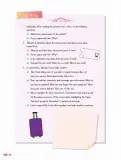
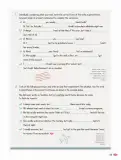
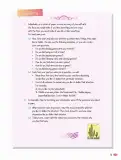
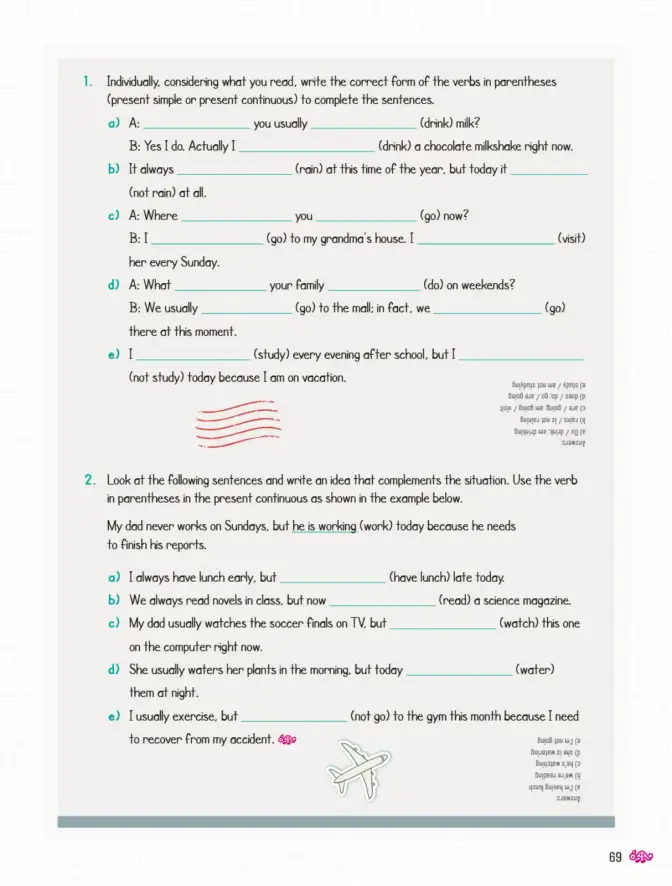
  1. Individually, considering what you read, write the correct form of the verbs in parentheses (present simple or present continuous) to complete the sentences.

a) A: ______ you usually ______ (drink) milk? B: Yes I do. Actually I ______ (drink) a chocolate milkshake right now.

b) It always ______ (rain) at this time of the year, but today it ______ (not rain) at all.

c) A: Where ______ you ______ (go) now? B: I ______ (go) to my grandma's house. I ______ (visit) her every Sunday.

d) A: What ______ your family ______ (do) on weekends? B: We usually ______ (go) to the mall; in fact, we ______ (go) there at this moment.

e) I ______ (study) every evening after school, but I ______ (not study) today because I am on vacation.

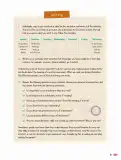
  1. Look at the following sentences and write an idea that complements the situation. Use the verb in parentheses in the present continuous as shown in the example below.

My dad never works on Sundays, but he is working (work) today because he needs to finish his reports.

a) I always have lunch early, but ______ (have lunch) late today.

b) We always read novels in class, but now ______ (read) a science magazine.

c) My dad usually watches the soccer finals on TV, but ______ (watch) this one on the computer right now.

d) She usually waters her plants in the morning, but today ______ (water) them at night.

e) I usually exercise, but ______ (not go) to the gym this month because I need to recover from my accident.

Ejemplos resueltos

My dad never works on Sundays, but he is working (work) today because he needs to finish his reports.

Se usa presente continuo is working porque la acción ocurre hoy, de forma temporal, aunque la rutina sea no trabajar los domingos.

Glosario (7)

usually
usualmente, por lo general
right now
en este momento
at this time of the year
en esta época del año
at all
en absoluto
in fact
de hecho
at this moment
en este momento
recover
recuperarse

Temas y conceptos clave

Presente simplePresente continuoContraste de tiempos verbalesHábitos y rutinasAcciones en progresoAdverbios de frecuenciaVerbos de estado
¿Te fue útil esta página?

Figuras de la página (2)

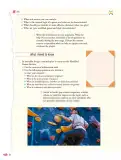
Ilustración de un avión de papel con líneas de movimiento.
Figura 1 image
Número de página 69 con un pequeño adorno.
Figura 2 image

Preguntas que la gente también hace

¿Cuándo se usa el presente simple y cuándo el presente continuo en inglés?
Consulta la solución completa arriba o explora el libro entero para temas relacionados.
¿Cómo se forma el presente continuo en negativo?
Consulta la solución completa arriba o explora el libro entero para temas relacionados.
¿Cuál es la diferencia entre 'I study' y 'I am studying'?
Consulta la solución completa arriba o explora el libro entero para temas relacionados.
📌 Antes de leer esto
  • • Conjugación básica de verbos en presente
  • • Uso de auxiliares do/does
  • • Formación del gerundio (-ing)
Siguiente tema sugerido
Pasado simple vs. pasado continuo
📝 Transcripción de la página (texto seleccionable) 1535 caracteres

1.Individually, considering what you read, write the correct form of the verbs in parentheses (present simple or present continuous) to complete the sentences.

a) A:you usully (drink) milk?

B:Yes I do. ActuallyI (drink) a chocolate milkshake right now.

b)It always (rain) at this time of the year, but today it (not rain) at ll.

c)A: Where you (go) now?

B:I_(go) to my grandma's house.I (visit) her every Sunday.

d)A: What _your family (do) on weekends? B: We usually (go) to the mall; in fact, we (go) there at this moment.

e)I (study) every evening after school, but I (not study) today because I am on vacation.

bupngs ou we/ As (a buo aue/o op/saop(p Is/ 6uo weuo/aue (ue /s uupe p/0 (samsuy

  1. Look at the following sentences and write an idea that complements the situation. Use the verb in parentheses in the present continuous as shown in the example below.

My dad never works on Sundays, but he is working (work) today because he needs to finish his reports.

a) I always have lunch early, but (have lunch) late today.

b) We always read novels in class, but now (read) a science magazine.

c) My dad usually watches the soccer finals on TV, but (watch) this one on the computer right now.

d)She usually waters her plants in the morning, but today (water)them at night.

e)Iusually exercise, but (not go) to the gym this month because I need to recover from my accident. 8

bugoō gou w, (a uarmsas(usa(upea au (yaun buiney e SJsu

![](page=0,bbox=[350, 718, 508, 809])

![](page=0,bbox=[587, 1329, 706, 1447])

69

Ad

Otros libros recomendados

Ver todos →
Ad

Usamos cookies propias y de terceros para personalizar contenido, mostrar publicidad y analizar el tráfico. Las cookies necesarias siempre están activas.