Saltar al contenido
MisLibrosTexto
Ad

Inquiry Design and Development: That's the Question!

📄 ejercicios ingles 🎓 otro · 1° TELESECUNDARIA México 🇲🇽 MX 🗣 Español
Página 72
72 de 187
Página 72 de Uérakua anapu uantakua. Projects and Readings.  Libro de Educación Telesecundaria Grado 1°  Ciclo Escolar 2025 - 2026
Anterior Página 72 / 187 Siguiente

Respuesta rápida

  1. Depende de la experiencia; generalmente es difícil al inicio y mejora con la práctica. 3. a) Meta y reglas; b) roles, espacios, tiempos y materiales; c) colaboración u oposición; d) decisiones tácticas y estratégicas. a) Sí, gradualmente; b) prever problemas y soluciones. 1. Reglas, roles, materiales, tiempo; 1.a) Libros, internet, videos, expertos.
📚 exercise ingles ⭐⭐ Dificultad 2/5 ⏱ 8 min lectura

Solución — Página 72

Uérakua anapu uantakua. Projects and Readings. Libro de Educación Telesecundaria Grado 1° Ciclo Escolar 2025 - 2026

2
Ejercicio 2

In assembly, after the game, answer: Was it easy or difficult for you to make decisions while you were playing the game?

  1. Identifico la decisión que tomé durante el juego (por ejemplo, elegir una jugada o cambiar de estrategia).
  2. Comparo esa decisión con las alternativas que tenía en ese momento.
  3. Evalúo si la información disponible era suficiente o si actué por impulso.

Respuesta orientativa: Fue difícil al principio porque no conocía bien las reglas y dudaba antes de actuar; sin embargo, con la práctica y la observación de mis compañeros, las decisiones se volvieron más rápidas y acertadas.

3
Ejercicio 3

With the help of your teacher, reflect on the internal logic of the game.

a
Parte 3.a
  1. Identifico la meta del juego (ganar, completar un reto, acumular puntos).
  2. Reviso los objetivos específicos y las reglas que los hacen posibles.

Respuesta orientativa: La meta es ganar el juego cumpliendo los objetivos; las reglas indican qué se puede y qué no se puede hacer para lograrlo.

b
Parte 3.b
  1. Reconozco los roles de cada jugador (líder, apoyo, oponente).
  2. Ubico los espacios, los tiempos y los materiales que se usan.

Respuesta orientativa: Cada jugador tiene un rol; el espacio delimita dónde se juega, el tiempo marca los turnos y los materiales son los recursos necesarios.

c
Parte 3.c
  1. Distingo si el juego exige colaboración o competencia.
  2. Identifico los sistemas de oposición (equipos rivales, reglas de bloqueo).

Respuesta orientativa: El juego puede requerir colaboración entre compañeros o confrontación entre oponentes; ambos sistemas condicionan la forma de jugar.

d
Parte 3.d
  1. Analizo las decisiones tácticas (inmediatas) y estratégicas (a largo plazo).
  2. Comparo las decisiones individuales con las colectivas antes y durante las acciones.

Respuesta orientativa: Las decisiones tácticas se toman en el momento, mientras que las estratégicas se planean antes; ambas pueden ser individuales o colectivas y afectan el resultado del juego.

Actividad: In communities, choose a game and identify its rules

a
Parte 3.a
  1. Elijo un juego conocido (por ejemplo, "stop" o "encantados").
  2. Identifico sus reglas básicas y propongo una regla nueva que se pueda añadir poco a poco.

Respuesta orientativa: Sí es posible introducir reglas gradualmente; por ejemplo, en "stop" se puede añadir que solo se permitan palabras de una categoría específica para agilizar la toma de decisiones.

b
Parte 3.b
  1. Pienso en problemas que la nueva regla podría causar (confusión, lentitud, desacuerdos).
  2. Propongo soluciones (explicar la regla antes de jugar, practicar una ronda de prueba).

Respuesta orientativa: La nueva regla podría generar dudas; se soluciona explicándola con claridad y haciendo una ronda de práctica para que todos la comprendan.

What I Do Know and What I Want to Know

1
Ejercicio 1

In community, figure out the aspects you will have to consider in your Modified Games Factory.

  1. Identifico los aspectos clave: reglas, roles, materiales, espacio y tiempo.
  2. Discuto qué se necesita para fomentar decisiones tácticas y estratégicas.

Respuesta orientativa: Se deben considerar las reglas, los roles, los materiales y el tiempo; para fomentar decisiones tácticas y estratégicas conviene empezar con juegos sencillos y aumentar la complejidad gradualmente.

a
Parte 1.a

What sources of information related to the topic do you know?

  1. Menciono fuentes como libros, internet, videos, expertos y la experiencia de compañeros.
  2. Evalúo cuáles son confiables y pertinentes.

Respuesta orientativa: Conozco fuentes como libros de texto, sitios web educativos, videos tutoriales y la experiencia de personas que han jugado antes; es importante verificar que la información sea confiable.

Contenido de la página

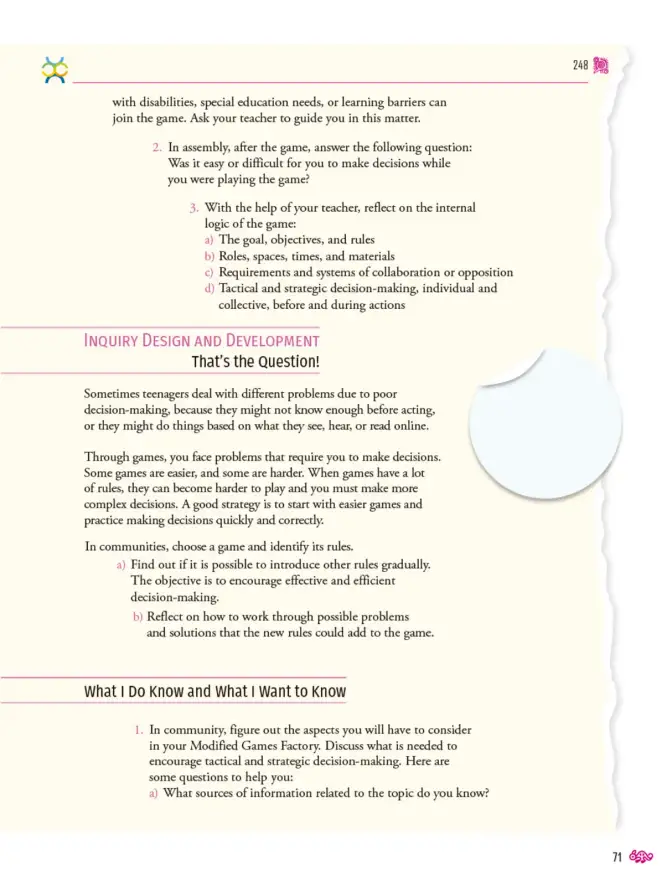
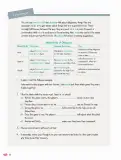
with disabilities, special education needs, or learning barriers can join the game. Ask your teacher to guide you in this matter.

  1. In assembly, after the game, answer the following question: Was it easy or difficult for you to make decisions while you were playing the game?

  2. With the help of your teacher, reflect on the internal logic of the game: a) The goal, objectives, and rules b) Roles, spaces, times, and materials c) Requirements and systems of collaboration or opposition d) Tactical and strategic decision-making, individual and collective, before and during actions

INQUIRY DESIGN AND DEVELOPMENT

That's the Question!

Sometimes teenagers deal with different problems due to poor decision-making, because they might not know enough before acting, or they might do things based on what they see, hear, or read online.

Through games, you face problems that require you to make decisions. Some games are easier, and some are harder. When games have a lot of rules, they can become harder to play and you must make more complex decisions. A good strategy is to start with easier games and practice making decisions quickly and correctly.

In communities, choose a game and identify its rules.

a) Find out if it is possible to introduce other rules gradually. The objective is to encourage effective and efficient decision-making.

b) Reflect on how to work through possible problems and solutions that the new rules could add to the game.

What I Do Know and What I Want to Know

  1. In community, figure out the aspects you will have to consider in your Modified Games Factory. Discuss what is needed to encourage tactical and strategic decision-making. Here are some questions to help you: a) What sources of information related to the topic do you know?

Glosario (6)

decision-making
proceso de elegir entre alternativas
internal logic
conjunto de reglas y dinámicas que estructuran un juego
tactical
relativo a decisiones inmediatas durante la acción
strategic
relativo a decisiones planeadas a largo plazo
collaboration
trabajo conjunto para lograr un objetivo
opposition
confrontación entre equipos o jugadores

Preguntas para practicar

Was it easy or difficult for you to make decisions while you were playing the game?

Fue difícil al inicio por la falta de familiaridad con las reglas, pero mejoró con la práctica.

What sources of information related to the topic do you know?

Libros, sitios web educativos, videos y la experiencia de compañeros.

Temas y conceptos clave

Toma de decisiones en juegosLógica interna del juegoFábrica de juegos modificadosDecisión tácticaDecisión estratégicaReglasRolesColaboraciónOposición
¿Te fue útil esta página?

Figuras de la página (1)

Número de página 71 y 248 en la parte superior derecha.
Figura 1 image

Preguntas que la gente también hace

¿Cómo influyen las reglas de un juego en la toma de decisiones?
Consulta la solución completa arriba o explora el libro entero para temas relacionados.
¿Qué es una decisión táctica y una estratégica en un juego?
Consulta la solución completa arriba o explora el libro entero para temas relacionados.
¿Cómo puedo modificar un juego para mejorar la toma de decisiones?
Consulta la solución completa arriba o explora el libro entero para temas relacionados.
📌 Antes de leer esto
  • • Conocimiento básico de reglas de juegos
  • • Vocabulario en inglés sobre juegos y decisiones
  • • Habilidad para trabajar en equipo
Siguiente tema sugerido
Diseño de un juego modificado: reglas y roles
📝 Transcripción de la página (texto seleccionable) 1824 caracteres

with disabilities, special education needs, or learning barriers can join the game. Ask your teacher to guide you in this matter.

  1. In assembly, after the game, answer the following question:Was it easy or difficult for you to make decisions while you were playing the game?

  2. With the help of your teacher, reflect on the internal logic of the game:a) The goal, objectives, and rules b) Roles, spaces, times, and materials c)Requirements and systems of collaboration or opposition d) Tactical and strategic decision-making, individual and collective, before and during actions

INQUIRY DESIGN AND DEVELOPMENT That's the Question!

Sometimes teenagers deal with different problems due to poor decision-making, because they might not know enough before acting,or they might do things based on what they see, hear, or read online.

Through games, you face problems that require you to make decisions.Some games are easier, and some are harder. When games have a lot of rules, they can become harder to play and you must make more complex decisions. A good strategy is to start with easier games and practice making decisions quickly and correctly.

In communities, choose a game and identify its rules.

a) Find out if it is possible to introduce other rules gradually.The objective is to encourage effective and effi cient decision-making.

b) Reflect on how to work through possible problems and solutions that the new rules could add to the game.

What I Do Know and What I Want to Know

  1. In community, figure out the aspects you will have to consider in your Modified Games Factory. Discuss what is needed to encourage tactical and strategic decision-making. Here are some questions to help you:a What sources of information related to the topic do you know?

8

248

![](page=0,bbox=[838, 621, 1125, 920])

71

Ad

Otros libros recomendados

Ver todos →
Ad

Usamos cookies propias y de terceros para personalizar contenido, mostrar publicidad y analizar el tráfico. Las cookies necesarias siempre están activas.