

















Experiment 1: Measuring the Height of Tall Objects with a Homemade Clinometer
Respuesta rápida
Se construye un clinómetro casero y se mide el ángulo de elevación \theta a 5 m de distancia. La altura es h = 5\tan(\theta) metros. Ejemplo: si \theta = 45^\circ, h = 5\,\text{m}.
Solución — Página 66
Uérakua anapu uantakua. Projects and Readings. Libro de Educación Telesecundaria Grado 2° Ciclo Escolar 2025 - 2026
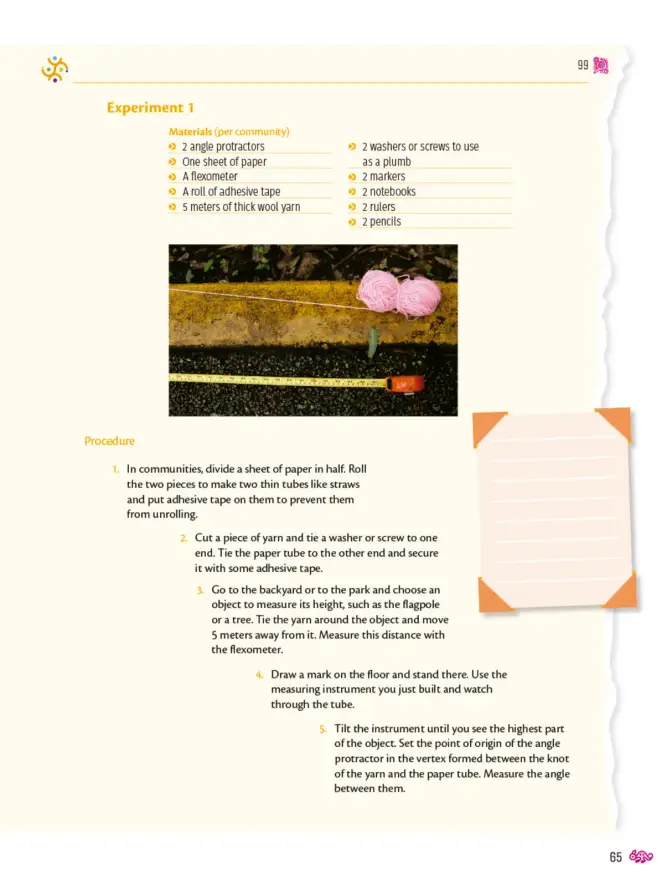
Experiment 1: Measuring the Height of Tall Objects
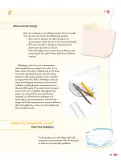
Materials (per community): 2 angle protractors, one sheet of paper, a flexometer, a roll of adhesive tape, 5 meters of thick wool yarn, 2 washers or screws (to use as a plumb), 2 markers, 2 notebooks, 2 rulers, 2 pencils.
Paso 1: Build the measuring instrument
- Divide una hoja de papel por la mitad y enrolla cada mitad para formar dos tubos delgados (como popotes).
- Fija los tubos con cinta adhesiva para que no se desenrollen.
- Corta un trozo de hilo y ata una arandela o tornillo en un extremo (plomada).
- Ata el tubo de papel al otro extremo del hilo y asegúralo con cinta adhesiva.
Respuesta orientativa: El instrumento construido es un clinómetro casero que permite medir ángulos de elevación.
Paso 2: Take measurements in the field
- Ve al patio o al parque y elige un objeto alto (poste de bandera, árbol).
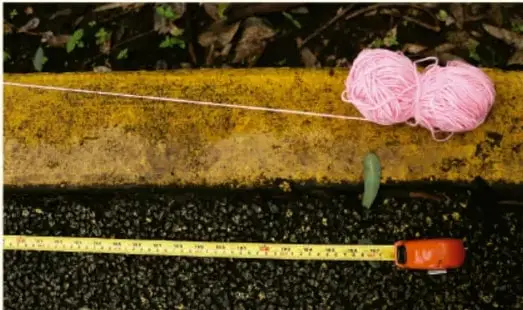
- Ata el hilo alrededor del objeto y aléjate 5 metros. Mide esa distancia con el flexómetro.
- Marca el suelo y colócate ahí. Mira a través del tubo.
- Inclina el instrumento hasta ver la parte más alta del objeto.
- Coloca el origen del transportador en el vértice formado entre el nudo del hilo y el tubo de papel. Mide el ángulo entre ellos.
Respuesta orientativa: Se obtiene un ángulo de elevación \theta y una distancia horizontal d = 5\,\text{m}.
Paso 3: Calculate the height
Usa la razón trigonométrica tangente: \tan(\theta) = \frac{h}{d} \Rightarrow h = d \cdot \tan(\theta)
Sustituyendo d = 5\,\text{m}: h = 5 \cdot \tan(\theta) \,\text{m}
Respuesta: La altura del objeto es h = 5\tan(\theta) metros, donde \theta es el ángulo medido con el transportador.
Ejemplo numérico
Si \theta = 45^\circ: h = 5 \cdot \tan(45^\circ) = 5 \cdot 1 = 5\,\text{m}
Respuesta: El objeto mide 5\,\text{m} de altura.
Contenido de la página
Experiment 1
Materials (per community)
- 2 angle protractors
- One sheet of paper
- A flexometer
- A roll of adhesive tape
- 5 meters of thick wool yarn
- 2 washers or screws to use as a plumb
- 2 markers
- 2 notebooks
- 2 rulers
- 2 pencils
Procedure
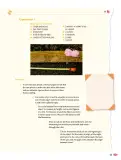
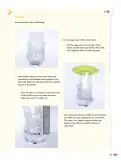
- In communities, divide a sheet of paper in half. Roll the two pieces to make two thin tubes like straws and put adhesive tape on them to prevent them from unrolling.
- Cut a piece of yarn and tie a washer or screw to one end. Tie the paper tube to the other end and secure it with some adhesive tape.
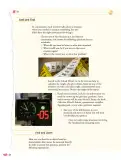
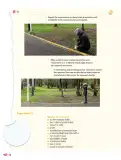
- Go to the backyard or to the park and choose an object to measure its height, such as the flagpole or a tree. Tie the yarn around the object and move 5 meters away from it. Measure this distance with the flexometer.
- Draw a mark on the floor and stand there. Use the measuring instrument you just built and watch through the tube.
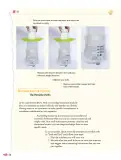
- Tilt the instrument until you see the highest part of the object. Set the point of origin of the angle protractor in the vertex formed between the knot of the yarn and the paper tube. Measure the angle between them.
Ejemplos resueltos
Si el ángulo medido es \theta = 45^\circ y la distancia es d = 5\,\text{m}, ¿cuál es la altura del objeto?
- Identificamos los datos: d = 5\,\text{m}, \theta = 45^\circ.
- Aplicamos la fórmula: h = d \cdot \tan(\theta).
- Sustituimos: h = 5 \cdot \tan(45^\circ).
- Como \tan(45^\circ) = 1, entonces h = 5 \cdot 1 = 5\,\text{m}.
Respuesta: La altura es 5\,\text{m}.
Tabla
| Material | Cantidad | Uso |
|---|---|---|
| Transportadores de ángulos | 2 | Medir el ángulo de elevación |
| Hoja de papel | 1 | Formar los tubos del visor |
| Flexómetro | 1 | Medir la distancia horizontal |
| Cinta adhesiva | 1 rollo | Fijar tubos e hilo |
| Hilo de lana grueso | 5 m | Plomada y sujeción |
| Arandelas o tornillos | 2 | Plomada |
| Marcadores | 2 | Marcar el suelo |
| Cuadernos | 2 | Registrar datos |
| Reglas | 2 | Trazar y medir |
| Lápices | 2 | Anotar |
Diagrama
graph TD
A[Construir clinómetro] --> B[Elegir objeto alto]
B --> C[Atar hilo y alejarse 5 m]
C --> D[Medir ángulo θ con transportador]
D --> E[Aplicar h = 5·tan(θ)]
E --> F[Obtener altura del objeto]
Fórmulas y ecuaciones
h = d \cdot \tan(\theta)
\tan(\theta) = \frac{h}{d}
h = d \cdot \tan(\theta)
h = 5 \cdot \tan(\theta)
Glosario (6)
- angle protractor
- transportador de ángulos, instrumento para medir ángulos
- flexometer
- flexómetro, cinta métrica metálica
- plumb
- plomada, peso colgado de un hilo para indicar la vertical
- yarn
- hilo o estambre grueso
- vertex
- vértice, punto donde se unen dos lados de un ángulo
- angle of elevation
- ángulo de elevación, ángulo entre la horizontal y la línea de visión hacia arriba
Preguntas para practicar
Why is it useful to measure heights indirectly using angles instead of climbing the object?
Porque muchos objetos altos como árboles, postes o edificios son inaccesibles o peligrosos de escalar. Con un clinómetro casero y la razón tangente se obtiene la altura sin necesidad de subir. Además, el método es económico y reproducible en cualquier comunidad.
What sources of error could affect your measurement?
Errores al medir la distancia con el flexómetro, al leer el ángulo en el transportador, al sostener el instrumento sin que la plomada quede vertical, o al no mirar exactamente la parte más alta del objeto. Repetir la medición varias veces y promediar reduce el error.
Temas y conceptos clave
Figuras de la página (1)
Preguntas que la gente también hace
¿Cómo se construye un clinómetro casero paso a paso?
¿Cómo se calcula la altura de un árbol usando trigonometría?
¿Qué es el ángulo de elevación y cómo se mide?
- • Uso del transportador
- • Concepto de ángulo
- • Razones trigonométricas básicas (tangente)
- • Medición con flexómetro
📝 Transcripción de la página (texto seleccionable) 1153 caracteres
Experiment 1
Materials (per community)
2 angle protractors 2 washers or screws to use One sheet of paper asa plumb )A flexometer 2 markers )Aroll of adhesive tape 2 notebooks 5 meters of thick wool yarn 2 rulers 2 pencils
Procedure
1.In communities, divide a sheet of paper in half. Roll the two pieces to make two thin tubes like straws and put adhesive tape on them to prevent them from unrolling.
Cut a piece of yarn and tie a washer or screw to one end. Tie the paper tube to the other end and secure it with some adhesive tape.
Go to the backyard or to the park and choose an object to measure its height, such as the flagpole or a tree. Tie the yarn around the object and move 5 meters away from it. Measure this distance with the flexometer.
4.Draw a mark on the floor and stand there. Use the measuring instrument you just built and watch through the tube.
5.Tilt the instrument until you see the highest part of the object. Set the point of origin of the angle protractor in the vertex formed between the knot ofthe yarn and the paper tube. Measure the angle between them.
8
99

65
乐
Otros libros recomendados

Colección Sk´asolil. Lenguajes. Libro de Educación Telesecundaria Grado 2° Ciclo Escolar 2025 - 2026
SEP/CONALITEG
323 págs.

Colección Sk´asolil. Saberes y pensamiento científico. Libro de Educación Telesecundaria Grado 2° Ciclo Escolar 2025 - 2026
SEP/CONALITEG
339 págs.

Colección Sk´asolil. Ética, naturaleza y sociedades. Libro de Educación Telesecundaria Grado 2° Ciclo Escolar 2025 - 2026
SEP/CONALITEG
355 págs.
Uérakua anapu uantakua. Projects and Readings. Libro de Educación Telesecundaria Grado 3° Ciclo Escolar 2025 - 2026
SEP/CONALITEG
187 págs.

Colección Sk´asolil. De lo humano y lo comunitario. Libro de Educación Telesecundaria Grado 2° Ciclo Escolar 2025 - 2026
SEP/CONALITEG
259 págs.

Colección Sk´asolil. Nuestro libro de Proyectos. Tomo II. Libro de Educación Telesecundaria Grado 2° Ciclo Escolar 2025 - 2026
SEP/CONALITEG
259 págs.
Colección Sk´asolil. Nuestro libro de Proyectos. Tomo I. Libro de Educación Telesecundaria Grado 2° Ciclo Escolar 2025 - 2026
SEP/CONALITEG
291 págs.

Colección Sk´asolil. Nuestro libro de Proyectos. Tomo III. Libro de Educación Telesecundaria Grado 2° Ciclo Escolar 2025 - 2026
SEP/CONALITEG
291 págs.