Saltar al contenido
MisLibrosTexto
Ad

Building and/or Proving: The Possible Paths – Units, Dimensions and Scientific Notation

📄 ejercicios ciencias-naturales 🎓 otro · 2° TELESECUNDARIA México 🇲🇽 MX 🗣 Español
Página 83
83 de 171
Página 83 de Uérakua anapu uantakua. Projects and Readings.  Libro de Educación Telesecundaria Grado 2°  Ciclo Escolar 2025 - 2026
Anterior Página 83 / 171 Siguiente

Respuesta rápida

Proyecto: póster sobre unidades, dimensiones, notación científica e instrumentos; presentación oral en tres fases (antes, durante) destacando fuentes, técnica artística y la importancia de las unidades de medida.

📚 exercise ciencias-naturales ⭐⭐ Dificultad 2/5 ⏱ 6 min lectura

Solución — Página 83

Uérakua anapu uantakua. Projects and Readings. Libro de Educación Telesecundaria Grado 2° Ciclo Escolar 2025 - 2026

1
Ejercicio 1

In assembly, share your findings and receive feedback through each other's comments.

  1. Cada equipo presenta en plenaria los hallazgos de su investigación previa (unidades, dimensiones, notación científica, instrumentos).
  2. Se abre una ronda de comentarios: cada compañero aporta una observación y una sugerencia de mejora.
  3. Se registran las observaciones en el cuaderno para incorporarlas al póster.

Respuesta orientativa: Compartir hallazgos permite validar la información con los pares, detectar errores y enriquecer el proyecto con perspectivas distintas antes de elaborar el producto final.

2
Ejercicio 2

Talk about the different measurement units you found.

  1. Se enlistan las unidades encontradas: longitud (m, cm, km), masa (kg, g), tiempo (s, min, h), temperatura (K, °C), cantidad de sustancia (mol), corriente (A), intensidad luminosa (cd).
  2. Se clasifican en fundamentales (SI) y derivadas (m/s, kg/m³, N, J, Pa).
  3. Se comparan con unidades no métricas de uso cotidiano (pulgada, libra, galón).

Respuesta orientativa: Existen unidades fundamentales del SI y unidades derivadas; conocerlas permite expresar cualquier magnitud de forma universal y comparable entre países y disciplinas.

3
Ejercicio 3

In communities, establish why it is necessary to use different units and include them in the measuring instruments. Draw a conclusion.

  1. Cada magnitud requiere una unidad coherente con su naturaleza y escala: no se mide la distancia entre ciudades en milímetros ni la masa de una pastilla en toneladas.
  2. Los instrumentos se calibran en la unidad adecuada: regla (cm/mm), balanza (g/kg), termómetro (°C/K), cronómetro (s).
  3. Conclusión: usar unidades distintas y estandarizadas evita ambigüedades, permite comparar resultados y garantiza precisión y reproducibilidad científica.

Respuesta orientativa: La diversidad de unidades responde a la diversidad de magnitudes y escalas; su estandarización en el SI hace posible la comunicación científica universal.

Ad
4
Ejercicio 4

Sketch your poster design to verify that you have included everything you need. Ask your teacher if you need their support.

  1. Bocetar en una hoja la distribución: título, introducción, unidades y dimensiones, notación científica, instrumentos, aplicaciones, conclusiones y fuentes.
  2. Verificar que cada sección tenga contenido y que exista un hilo conductor.
  3. Solicitar retroalimentación del docente antes de la versión final.

Respuesta orientativa: El boceto funciona como lista de cotejo visual: si falta una sección en el esquema, faltará en el póster final.

5
Ejercicio 5

Compose your poster. Be creative!

  1. Trasladar el boceto aprobado a cartulina o formato digital.
  2. Usar títulos claros, imágenes, colores y una técnica artística (collage, infografía, dibujo).
  3. Revisar ortografía, citar fuentes y firmar el trabajo.

Respuesta orientativa: Un póster creativo y bien organizado comunica con claridad la investigación y demuestra dominio del tema.

6
Ejercicio 6

In communities, present your work and remember to include the following:

a
Parte 6.a

Before the presentation

  1. Preparar el material y señalar los puntos clave del póster que se destacarán.
  2. Planear y ensayar la presentación para que fluya; ordenar los puntos por importancia.

Respuesta orientativa: La preparación previa reduce la ansiedad y asegura que todos los integrantes dominen su parte.

b
Parte 6.b

During the presentation

  1. Compartir las fuentes, comentar la dificultad para hallar la información y las estrategias de búsqueda y recolección de datos empleadas.
  2. Mencionar los materiales usados y la técnica artística, sus rasgos clave y por qué se eligió.
  3. Incluir un breve panorama del problema no elegido y señalar similitudes entre los problemas y sus soluciones.
  4. Explicar la importancia de las unidades de medida y comentar cómo sería investigar diversos fenómenos si no existieran.

Respuesta orientativa: Sin unidades de medida sería imposible cuantificar, comparar o reproducir experimentos; la ciencia depende de un lenguaje métrico común.

Contenido de la página

BUILDING AND/OR PROVING

The Possible Paths

Assess the use and development of systems of units and dimensions, scientific notation, and measuring instruments in everyday life and in science and technology. Also, reflect on the importance of knowing the data you are using for your project. Identify applications and uses of this data in various areas of science or everyday life.

  1. In assembly, share your findings and receive feedback through each other's comments.
  2. Talk about the different measurement units you found.
  3. In communities, establish why it is necessary to use different units and include them in the measuring instruments. Draw a conclusion.
  4. Sketch your poster design to verify that you have included everything you need. Ask your teacher if you need their support.
  5. Compose your poster. Be creative!

COMMUNICATION

I Got It

It's time to show your poster to your classmates.

  1. In communities, present your work and remember to include the following: a) Before the presentation:
    • Prepare the material to present your work and identify the important points on your poster to highlight them.
    • Plan and rehearse your presentation so that it flows smoothly; identify the most important points in order to explain them. b) During the presentation:
    • Share your sources, comment on how difficult it was to find the information, and how you used some search and data collection strategies.
    • Mention what material you used to create your poster and if you used an artistic technique. Mention the key features of this technique and why you chose it.
    • Include in your presentation a brief overview of the problem not chosen. Identify similarities between the problems and their solutions.
    • Explain the importance of having units of measurement. Comment on what you think the investigation of various events would be like if they did not exist.

Ejemplos resueltos

Expresa 0.00045 m en notación científica.

Se corre el punto decimal 4 lugares a la derecha: 0.00045 = 4.5 \times 10^{-4} m.

Convierte 3.2 km a metros.

3.2 \, \text{km} \times 1000 = 3200 \, \text{m} = 3.2 \times 10^{3} \, \text{m}.

Tabla

Magnitud Unidad SI Símbolo Instrumento
Longitud metro m regla / flexómetro
Masa kilogramo kg balanza
Tiempo segundo s cronómetro
Temperatura kelvin K termómetro
Cantidad de sustancia mol mol balanza analítica
Corriente eléctrica ampere A amperímetro
Intensidad luminosa candela cd fotómetro

Diagrama

flowchart TD
  A[Investigar unidades y dimensiones] --> B[Compartir hallazgos]
  B --> C[Analizar unidades y conclusiones]
  C --> D[Bocetar póster]
  D --> E[Elaborar póster]
  E --> F[Preparar presentación]
  F --> G[Presentar en comunidad]

Fórmulas y ecuaciones

a \times 10^{n}, \quad 1 \le a < 10

a \times 10^{n}, \quad 1 \le a < 10

1 \, \text{km} = 1000 \, \text{m}

1 \, \text{kg} = 1000 \, \text{g}

Glosario (5)

Unit
Cantidad estandarizada de una magnitud usada como referencia para medir.
Dimension
Naturaleza física de una magnitud (longitud, masa, tiempo, etc.).
Scientific notation
Forma de escribir números como $a \times 10^{n}$ con $1 \le a < 10$.
Measuring instrument
Herramienta calibrada para determinar el valor de una magnitud.
Poster
Producto visual que sintetiza y comunica los resultados de una investigación.

Preguntas para practicar

Why is it necessary to use different units of measurement?

Porque cada magnitud tiene una naturaleza y escala distinta; usar la unidad adecuada garantiza precisión y comparabilidad.

What would scientific investigation be like without units of measurement?

Sería imposible cuantificar, replicar experimentos o comunicar resultados de forma universal; la ciencia perdería rigor.

Temas y conceptos clave

Sistemas de unidades y dimensionesNotación científicaInstrumentos de mediciónComunicación de resultados científicosUnidad de medidaDimensiónNotación científicaInstrumento de mediciónPóster científicoPresentación oral

Fuentes y referencias

  • BIPM – Sistema Internacional de Unidades (SI)
  • NIST – Guide for the Use of the International System of Units
¿Te fue útil esta página?

Figuras de la página (3)

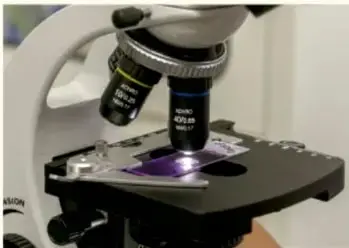
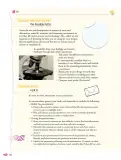
Microscopio óptico observando una muestra, ejemplo de instrumento de medición científica.
Figura 1 image
Círculo decorativo vacío, probable espacio para ilustración o nota.
Figura 2 image
Sobre de carta, ícono de la sección Communication.
Figura 3 image

Preguntas que la gente también hace

¿Qué son las unidades fundamentales y derivadas del SI?
Consulta la solución completa arriba o explora el libro entero para temas relacionados.
¿Cómo se escribe un número en notación científica?
Consulta la solución completa arriba o explora el libro entero para temas relacionados.
¿Por qué es importante estandarizar las unidades de medida?
Consulta la solución completa arriba o explora el libro entero para temas relacionados.
📌 Antes de leer esto
  • • Magnitudes físicas básicas
  • • Operaciones con potencias de 10
  • • Uso de regla, balanza y cronómetro
Siguiente tema sugerido
Aplicaciones de la notación científica en la investigación científica
📝 Transcripción de la página (texto seleccionable) 2003 caracteres

BUILDING AND/OR PROVING The Possible Paths

Assess the use and development of systems of units and dimensions, scientific notation, and measuring instruments in everyday life and in science and technology. Also, reflect on the importance of knowing the data you are using for your project.Identify applications and uses of this data in various areas of science or everyday life.

  1. In assembly, share your findings and receive feedback through each other's comments.

  2. Talk about the different measurement units you found.

  3. In communities, establish why it is necessary to use different units and include them in the measuring instruments. Draw a conclusion.

Sketch your poster design to verify that you have included everything you need.Ask your teacher if you need their support.

  1. Compose your poster. Be creative!

COMMUNICATION I Got It

It's time to show your poster to your classmates.

  1. In communities, present your work and remember to include the following:a) Before the presentation:

i repare the material to present your work and identify the important points on your poster to highlight them.

i Plan and rehearse your presentation so that it flows smoothly, identify the most important points in order to explain them.

b) During the presentation:

i Share your sources, comment on how difficult it was to find the information,and how you used some search and data collection strategies.

Mention what material you used to create your poster and if you used an artistic technique. Mention the key features of this technique and why you chose it.

Include in your presentation a brief overview of the problem not chosen.Identify similarities between the problems and their solutions.

Explain the importance of having units of measurement. Comment on what you think the investigation of various events would be like if they did not exist.

136

🔥

![](page=0,bbox=[818, 206, 1103, 485])

![](page=0,bbox=[186, 550, 535, 798])

![](page=0,bbox=[844, 850, 994, 963])

A

82
Ad

Otros libros recomendados

Ver todos →
Ad

Usamos cookies propias y de terceros para personalizar contenido, mostrar publicidad y analizar el tráfico. Las cookies necesarias siempre están activas.