















Página — Uerakua Anapu Uantakua Projects And Readings 2 (pág. 87)
Solución no disponible aún
Esta página está en proceso de revisión.
Pídela y la resolveremos antes. Sin registro.
📝 Transcripción de la página (texto seleccionable) 1926 caracteres
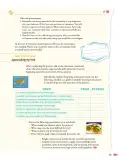
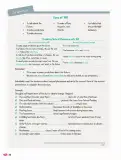
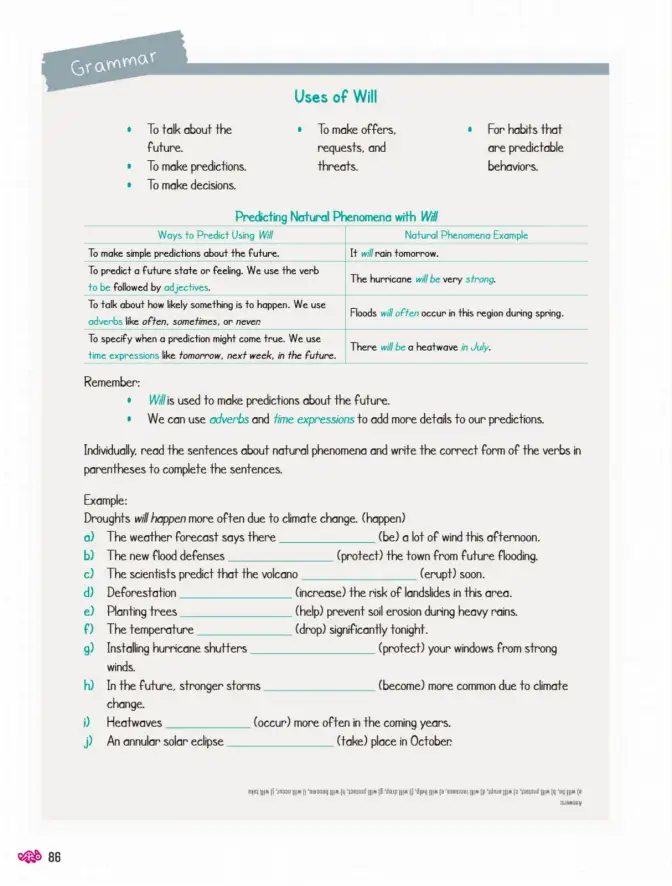
Uses of Will
0To talk about the 0To make offers,0For habits that future.requests, and are predictable 编To make predictions.threats.behaviors.
To make decisions.
Remember:
福Willis used to make predictions about the future.
8We can use adverbs and time expressions to add more details to our predictions.
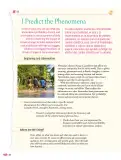
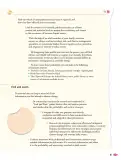
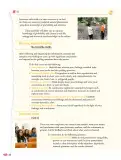
Individually, read the sentences about natural phenomena and write the correct form of the verbs in parentheses to complete the sentences.
Example:
Droughts will happen more often due to climate change. (happen)
a)The weather forecast says there (be) a lot of wind this afternoon.
b)The new flood defenses (protect) the town from future flooding.
c)The scientists predict that the volcano (erupt) soon.
d)Deforestation (increase) the risk of landslides in this area.
e)Planting trees (help) prevent soil erosion during heavy rains.
f)The temperature (drop) significantly tonight.
g)Instaling hurricane shutters (protect) your windows from strong winds.
h)In the future, stronger storms (become) more common due to climate change.
i Heatwaves (occur) more often in the coming years.
j) An annular solar ecipse (take) place in October
Grammar
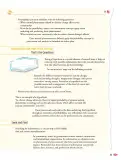
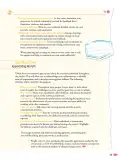
Predicting Natural Phenomena with Will
| Ways to Predict Using Will | Natural Phenomena Example |
| To make simple predictions about the future | It will rain tomorrow. |
| To predict a future state or feeling. We use the verb to be followed by adjectives. | The hurricane will be very strong. |
| To talk about how likely something is to happen. We use adverbs like often, sometimes, or never | Floods will often occur in this region during spring. |
| To specify when a prediction might come true. We use time expressions like tomorrow, next week, in the future. | There will be a heatwave in July. |
SIBMSUY
86
Otros libros recomendados

Uérakua anapu uantakua. Projects and Readings. Libro de Educación Telesecundaria Grado 3° Ciclo Escolar 2025 - 2026
SEP/CONALITEG
187 págs.

Colección Sk´asolil. De lo humano y lo comunitario. Libro de Educación Telesecundaria Grado 2° Ciclo Escolar 2025 - 2026
SEP/CONALITEG
259 págs.

Colección Sk´asolil. Nuestro libro de Proyectos. Tomo II. Libro de Educación Telesecundaria Grado 2° Ciclo Escolar 2025 - 2026
SEP/CONALITEG
259 págs.

Colección Sk´asolil. Nuestro libro de Proyectos. Tomo I. Libro de Educación Telesecundaria Grado 2° Ciclo Escolar 2025 - 2026
SEP/CONALITEG
291 págs.

Colección Sk´asolil. Nuestro libro de Proyectos. Tomo III. Libro de Educación Telesecundaria Grado 2° Ciclo Escolar 2025 - 2026
SEP/CONALITEG
291 págs.

Colección Sk´asolil. Múltiples lenguajes. Libro de Educación Telesecundaria Grado 2° Ciclo Escolar 2025 - 2026
SEP/CONALITEG
163 págs.

Uérakua anapu uantakua. Projects and Readings. Libro de Educación Telesecundaria Grado 1° Ciclo Escolar 2025 - 2026
SEP/CONALITEG
187 págs.

Uérakua anapu uantakua. Projects and Readings. Libro de Educación Secundaria Grado 3° Ciclo Escolar 2025 - 2026
SEP/CONALITEG
187 págs.