Saltar al contenido
MisLibrosTexto
Ad

What Experiment Is It? - Reading

📄 ejercicios ingles 🎓 otro · 3° TELESECUNDARIA México 🇲🇽 MX 🗣 Español
Página 162
162 de 187
Página 162 de Uérakua anapu uantakua. Projects and Readings.  Libro de Educación Telesecundaria Grado 3°  Ciclo Escolar 2025 - 2026
Anterior Página 162 / 187 Siguiente

Respuesta rápida

2.I: b) Volcano Eruption. 2.II: d) Lava Lamp.

📚 exercise ingles ⭐ Dificultad 1/5 ⏱ 5 min lectura

Solución — Página 162

Uérakua anapu uantakua. Projects and Readings. Libro de Educación Telesecundaria Grado 3° Ciclo Escolar 2025 - 2026

1
Ejercicio 1

Work in pairs. Read the following experiment instructions.

Respuesta orientativa: Se leen las instrucciones de los cuatro experimentos. Cada uno describe materiales y procedimientos: Making Slime (pegamento, agua, colorante y almidón líquido), Volcano Eruption (vinagre y bicarbonato), Growing Crystals (sal de Epsom y agua caliente) y Homemade Lava Lamp (agua, aceite, colorante y sal).

2
Ejercicio 2

Now, determine which experiment is referred to in each reported command. Underline the correct option.

i
Parte 2.i

Enunciado: Mix vinegar with baking soda in a small container.

  1. Se busca en las instrucciones la mezcla de vinagre con bicarbonato.
  2. En Volcano Eruption se lee: "Mix 200 ml of vinegar with a tablespoon of baking soda in a small container".
  3. Coincide exactamente con la instrucción reportada.
Respuesta

b) Volcano Eruption.

2
Ejercicio 2

II

Enunciado: Fill a clear plastic bottle.

  1. Se busca la acción de llenar una botella de plástico transparente.
  2. En Homemade Lava Lamp se lee: "Fill half a clear plastic bottle with water".
  3. Coincide con la instrucción reportada.
Respuesta

d) Lava Lamp.

Contenido de la página

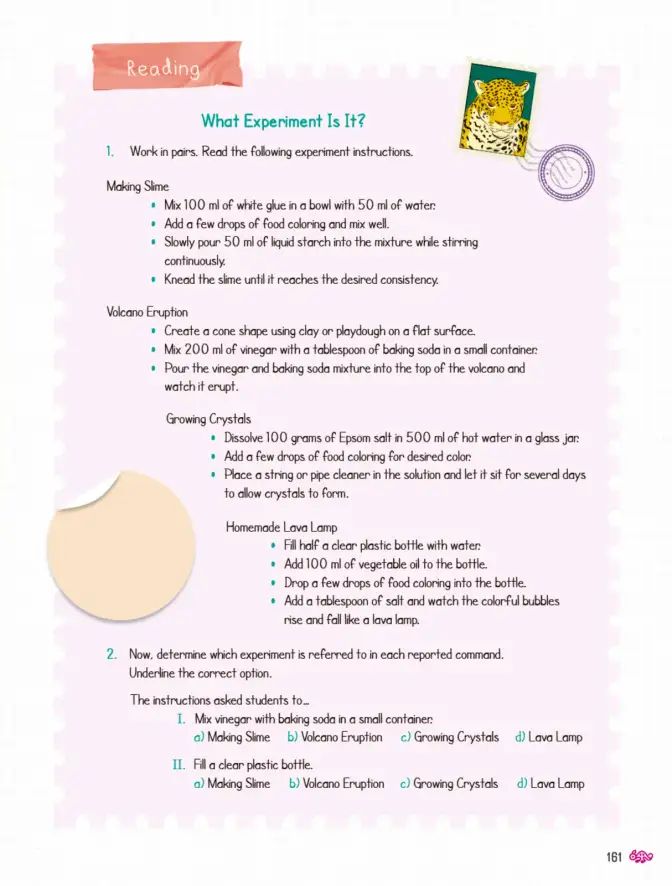
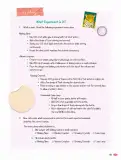
What Experiment Is It?

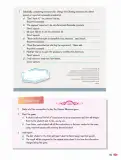
1. Work in pairs. Read the following experiment instructions.

Making Slime

  • Mix 100 ml of white glue in a bowl with 50 ml of water.
  • Add a few drops of food coloring and mix well.
  • Slowly pour 50 ml of liquid starch into the mixture while stirring continuously.
  • Knead the slime until it reaches the desired consistency.

Volcano Eruption

  • Create a cone shape using clay or playdough on a flat surface.
  • Mix 200 ml of vinegar with a tablespoon of baking soda in a small container.
  • Pour the vinegar and baking soda mixture into the top of the volcano and watch it erupt.

Growing Crystals

  • Dissolve 100 grams of Epsom salt in 500 ml of hot water in a glass jar.
  • Add a few drops of food coloring for desired color.
  • Place a string or pipe cleaner in the solution and let it sit for several days to allow crystals to form.

Homemade Lava Lamp

  • Fill half a clear plastic bottle with water.
  • Add 100 ml of vegetable oil to the bottle.
  • Drop a few drops of food coloring into the bottle.
  • Add a tablespoon of salt and watch the colorful bubbles rise and fall like a lava lamp.

2. Now, determine which experiment is referred to in each reported command. Underline the correct option.

The instructions asked students to...

I. Mix vinegar with baking soda in a small container: a) Making Slime b) Volcano Eruption c) Growing Crystals d) Lava Lamp

II. Fill a clear plastic bottle. a) Making Slime b) Volcano Eruption c) Growing Crystals d) Lava Lamp

Glosario (8)

slime
masa viscosa y elástica hecha con pegamento y almidón
vinegar
vinagre, líquido ácido usado en experimentos
baking soda
bicarbonato de sodio
Epsom salt
sal de Epsom, usada para formar cristales
lava lamp
lámpara de lava, objeto decorativo con burbujas
knead
amasar
stirring
revolviendo
erupt
entrar en erupción

Temas y conceptos clave

Reading comprehensionScience experimentsFollowing instructionsImperative verbsSequencing stepsIdentifying main ideaReported commands
¿Te fue útil esta página?

Preguntas que la gente también hace

¿Cómo se hace slime en inglés?
Consulta la solución completa arriba o explora el libro entero para temas relacionados.
¿Qué experimento usa vinagre y bicarbonato?
Consulta la solución completa arriba o explora el libro entero para temas relacionados.
¿Cómo se hace una lámpara de lava casera?
Consulta la solución completa arriba o explora el libro entero para temas relacionados.
📌 Antes de leer esto
  • • Vocabulario básico de materiales e ingredientes en inglés
  • • Verbos en imperativo (mix, add, pour, fill)
  • • Comprensión lectora de instrucciones
Siguiente tema sugerido
Writing instructions for a science experiment
📝 Transcripción de la página (texto seleccionable) 1582 caracteres

What Experiment Is It?

1. Work in pairs. Read the following experiment instructions.

Making Slime

•Mix100ml of white glue in a bowl with 50 ml of water

•Add a few drops of food coloring and mix well.

Slowly pour 50 ml of liquid starch into the mixture while stirring continuously.

•Knead the slime until it reaches the desired consistency.

Volcano Eruption

Create a cone shape using clay or playdough on a flat surface.

Mix 200 ml of vinegar with a tablespoon of baking soda in a small container

Pour the vinegar and baking soda mixture into the top of the volcano and watch it erupt.

Growing Crystals

• Dissolve 100 grams of Epsom salt in 500 ml of hot water in a glass jar

•Add a few drops of food coloring for desired color:

•Place a string or pipe cleaner in the solution and let it sit for several days to allow crystals to form.

Homemade Lava Lamp

•Fll half a clear plastic botHle with water:

•Add 100 ml of vegetable oil to the botHle.

•Drop a few drops of food coloring into the bottle.

Add a tablespoon of salt and watch the colorful bubbles rise and fallike a lava lamp.

2. Now, determine which experiment is referred to in each reported command.Underline the correct option.

The instructions asked students to.

I. Mix vinegar with baking soda in a small container

a) Making Slime b) Volcano Eruption c)Growing Crystals d)Lava Lamp

II. Fill a clear plastic botHle.

a)Making Slime b) Volcano Eruption c)Growing Crystals d)Lava Lamp

Reading

![](page=0,bbox=[825, 108, 1074, 362])

![](page=0,bbox=[82, 843, 354, 1125])

161

乐
Ad

Otros libros recomendados

Ver todos →
Ad

Usamos cookies propias y de terceros para personalizar contenido, mostrar publicidad y analizar el tráfico. Las cookies necesarias siempre están activas.