















Saltar al contenido
MisLibrosTexto
Ad

Vocabulary: Sequence Words and Cause/Effect Connectors

📄 ejercicios ingles 🎓 otro · 3° TELESECUNDARIA México 🇲🇽 MX 🗣 Español
Página 42
42 de 187
Página 42 de Uérakua anapu uantakua. Projects and Readings.  Libro de Educación Telesecundaria Grado 3°  Ciclo Escolar 2025 - 2026
Anterior Página 42 / 187 Siguiente

Respuesta rápida

1.a First; 1.b Second/Then; 1.c Next/Then; 1.d After that/Then; 1.e Furthermore/Then; 1.f Finally/At the end. 2.a Egg floats in A, sinks in B. 2.b Glass A, salt increases density. 3.a the result; 3.b because; 3.c Therefore; 3.d As a result; 3.e because.

📚 exercise ingles ⭐⭐ Dificultad 2/5 ⏱ 8 min lectura

Solución — Página 42

Uérakua anapu uantakua. Projects and Readings. Libro de Educación Telesecundaria Grado 3° Ciclo Escolar 2025 - 2026

1
Ejercicio 1

Individually, considering everyone else, write on the line one suitable word to give a correct sequence to the instructions. More than one option is possible.

Experiment About Density

a
Parte 1.a

Enunciado: ______, place two glasses of the same size, with approximately 250 ml of water each.

  1. Es el primer paso del experimento.
  2. El conector de secuencia inicial más adecuado es First.
Respuesta

First

b
Parte 1.b

Enunciado: ______, fill \frac{3}{4} of the glasses.

  1. Es el segundo paso.
  2. El conector de secuencia correspondiente es Second (o Then).
Respuesta

Second / Then

c
Parte 1.c

Enunciado: ______, label them as glass A and glass B.

  1. Es un paso posterior.
  2. Se usa Next (o Then).
Respuesta

Next / Then

d
Parte 1.d

Enunciado: ______, add two tablespoons of salt to glass A.

  1. Paso que continúa la secuencia.
  2. Se usa After that (o Then).
Respuesta

After that / Then

e
Parte 1.e

Enunciado: ______, perfectly dissolve the salt.

  1. Paso que agrega información adicional.
  2. Se usa Furthermore (o Then).
Respuesta

Furthermore / Then

f
Parte 1.f

Enunciado: ______, immerse an egg into each glass.

  1. Es el último paso del experimento.
  2. Se usa Finally (o At the end).
Respuesta

Finally / At the end
2
Ejercicio 2

Comment on the following questions:

a
Parte 2.a

Enunciado: What difference can you observe?

  1. En el vaso A el agua tiene sal disuelta; en el vaso B es agua pura.
  2. El huevo flota en el vaso A y se hunde en el vaso B.
Respuesta

The egg floats in glass A (salt water) and sinks in glass B (fresh water).

b
Parte 2.b

Enunciado: Which glass has greater density and why?

  1. La densidad del agua salada es mayor que la del agua dulce.
  2. Al añadir sal aumenta la masa sin aumentar mucho el volumen.
Respuesta

Glass A has greater density because the dissolved salt increases the mass of the water, making the egg float.

3
Ejercicio 3

Complete the sentences with the correct option to show result or consequence.

a
Parte 3.a

Enunciado: If you mix salt, water, juice, and honey ______ is homemade electrolyte water.

  1. Se expresa el resultado de la mezcla.
  2. El conector de resultado es the result.
Respuesta

the result

b
Parte 3.b

Enunciado: Plants grow ______ of the Sun's heat and light.

  1. Se indica la causa del crecimiento.
  2. El conector de causa es because.
Respuesta

because

c
Parte 3.c

Enunciado: When water is heated, the molecules move quickly. ______ the water boils.

  1. Se muestra la consecuencia del movimiento molecular.
  2. El conector de consecuencia es Therefore.
Respuesta

Therefore

d
Parte 3.d

Enunciado: ______ of studying hard, you aced your test!

  1. Se expresa la causa del buen resultado.
  2. El conector es As a result.
Respuesta

As a result

e
Parte 3.e

Enunciado: Tsunamis happen ______ tectonic plates shift.

  1. Se indica la causa de los tsunamis.
  2. El conector causal es because.
Respuesta

because

Contenido de la página

Vocabulary

When you describe the steps of an experiment, use a sequence of words like these: first, second, at the end, furthermore, finally, then, next, and after that.

  1. Individually, considering everyone else, write on the line one suitable word to give a correct sequence to the instructions. More than one option is possible.

Experiment About Density

a) ______, place two glasses of the same size, with approximately 250 ml of water each.

b) ______, fill \frac{3}{4} of the glasses.

c) ______, label them as glass A and glass B.

d) ______, add two tablespoons of salt to glass A.

e) ______, perfectly dissolve the salt.

f) ______, immerse an egg into each glass.

  1. Comment on the following questions:

a) What difference can you observe?

b) Which glass has greater density and why?

There are words and adverbs that can be used to show an action, result, or consequence, like the following: as a result, so, because, therefore, consequently, for this reason, and cause.

Examples: Because of the rainy weather, we cancelled the project presentation. The Moon's gravitational pull causes the ocean's tides.

  1. Complete the sentences with the correct option to show result or consequence.

a) If you mix salt, water, juice, and honey ______ is homemade electrolyte water.

b) Plants grow ______ of the Sun's heat and light.

c) When water is heated, the molecules move quickly. ______ the water boils.

d) ______ of studying hard, you aced your test!

e) Tsunamis happen ______ tectonic plates shift.

Answers: a) the result; b) because; c) therefore; d) As a result; e) because

Ejemplos resueltos

Because of the rainy weather, we cancelled the project presentation.

El conector because of introduce la causa (lluvia) que provocó la cancelación.

The Moon's gravitational pull causes the ocean's tides.

El verbo causes indica que la atracción gravitacional de la Luna produce las mareas.

Tabla

Sequence Word Use
First First step
Second / Then Second step
Next Following step
After that Later step
Furthermore Additional step
Finally / At the end Last step

Diagrama

flowchart TD
    A[First: place two glasses with 250 ml water] --> B[Second: fill 3/4 of the glasses]
    B --> C[Next: label them A and B]
    C --> D[After that: add salt to glass A]
    D --> E[Furthermore: dissolve the salt]
    E --> F[Finally: immerse an egg into each glass]

Fórmulas y ecuaciones

\text{density} = \frac{\text{mass}}{\text{volume}}

\frac{3}{4}

Glosario (15)

first
primero, conector de secuencia inicial
second
segundo, conector de secuencia
then
luego, después
next
después, a continuación
after that
después de eso
furthermore
además
finally
finalmente
at the end
al final
as a result
como resultado
because
porque, debido a
therefore
por lo tanto
consequently
en consecuencia
density
densidad
dissolve
disolver
immerse
sumergir

Preguntas para practicar

What difference can you observe?

The egg floats in the salt water (glass A) and sinks in the fresh water (glass B).

Which glass has greater density and why?

Glass A has greater density because the dissolved salt increases the mass of the water without significantly increasing its volume.

Temas y conceptos clave

VocabularySequence wordsCause and effect connectorsDensity experimentfirst, second, then, next, after that, furthermore, finally, at the endas a result, so, because, therefore, consequently, for this reason, causedensitydissolveimmerse
¿Te fue útil esta página?

Figuras de la página (2)

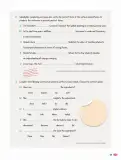
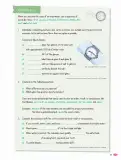
Sello postal con diseño circular y líneas onduladas.
Figura 1 image
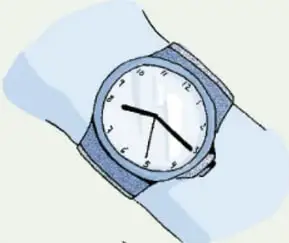
Ilustración de un reloj de pulsera con correa azul y esfera blanca.
Figura 2 image

Preguntas que la gente también hace

¿Cómo se describe un experimento paso a paso en inglés?
Consulta la solución completa arriba o explora el libro entero para temas relacionados.
¿Cuál es la diferencia entre because, so y therefore?
Consulta la solución completa arriba o explora el libro entero para temas relacionados.
¿Por qué el huevo flota en agua con sal?
Consulta la solución completa arriba o explora el libro entero para temas relacionados.
📌 Antes de leer esto
  • • Vocabulario básico de inglés
  • • Concepto de densidad
  • • Uso de conectores en español
Siguiente tema sugerido
Writing a lab report using sequence and cause-effect connectors
📝 Transcripción de la página (texto seleccionable) 1553 caracteres

Vocabulary

When you describe the steps of an experiment, use a sequence of words like these: first, second, at the end, furthermore, finall, then,next, and after that.

1.Individually, considering everyone else, write on the line one suitable word to give a correct sequence to the instructions. More than one option is possible.

Experiment About Density

a), place two glasses of the same size,with approximately 250 ml of water each.

b), fill of the glasses.

c) label them as glass A and glass B.

d),add two tablespoons of salt to glass A.

e) perfectly dissolve the salt.

f), immerse an egg into each glass.

2. Comment on the following questions:

a) What difference can you observe?

b) Which glass has greater density and why?

There are words and adverbs that can be used to show an action, result, or consequence, like the following: as a result, so, because, therefore, consequently, for this reason, and cause.

Examples: Because of the rainy weather; we cancelled the project presentation.The Moon's gravitational pull causes the ocean's tides.

  1. Complete the sentences with the correct option to show result or consequence.

a) If you mix salt, water; juice, and honey is homemade electrolyte water

b) Plants grow of the Sun's heat and light.

c)When water is heated, the molecules move quickly,the water boils.

d)of studying hard, you aced your test!

e)Tsunamis happen tectonic plates shift.

![](page=0,bbox=[858, 102, 1062, 211])

![](page=0,bbox=[765, 407, 1054, 650])

MaxJovan Longo Resendiz, ESTADDDEMExiCo

a

41

8

Ad

Otros libros recomendados

Ver todos →
Ad

Usamos cookies propias y de terceros para personalizar contenido, mostrar publicidad y analizar el tráfico. Las cookies necesarias siempre están activas.