















Saltar al contenido
MisLibrosTexto
Ad

Solubilidad y conductividad eléctrica de sustancias

📄 ejercicios quimica 🎓 otro · 3° TELESECUNDARIA México 🇲🇽 MX 🗣 Español
Página 46
46 de 187
Página 46 de Uérakua anapu uantakua. Projects and Readings.  Libro de Educación Telesecundaria Grado 3°  Ciclo Escolar 2025 - 2026
Anterior Página 46 / 187 Siguiente

Respuesta rápida

  1. Solubles: sal, vinagre, alcohol, azúcar, bicarbonato, café. Insolubles: talco. 6.a Control: solo agua destilada. 6.b La sal se disuelve hasta saturar. 6.c Tabla de solubilidad. 6.d La luz se enciende con iones. 6.e Vinagre y agua de planchar conducen; alcohol no.
📚 exercise quimica ⭐⭐ Dificultad 2/5 ⏱ 8 min lectura

Solución — Página 46

Uérakua anapu uantakua. Projects and Readings. Libro de Educación Telesecundaria Grado 3° Ciclo Escolar 2025 - 2026

5
Ejercicio 5

Once you get the conductivity meter, test the solubility of the materials and include those that were mentioned in your interview.

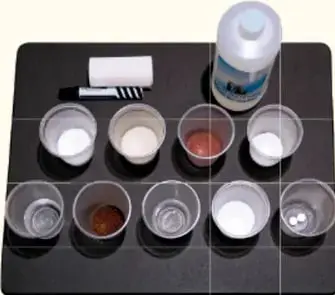
  1. Reúne los materiales de la lista: 10 cucharadas de sal, 50 ml de vinagre, 50 ml de alcohol, 3 cucharadas de talco, 10 cucharadas de azúcar, 10 cucharadas de bicarbonato, 2 tabletas de ácido acetilsalicílico, colorante en polvo, 1 l de agua destilada o de planchar, 50 g de café instantáneo y otras sustancias de uso diario.
  2. Etiqueta cada vaso con el nombre de la sustancia usando el marcador indeleble.
  3. Añade una porción de cada sustancia a un vaso con agua y agita.
  4. Observa y anota si la sustancia se disuelve (soluble) o no (insoluble).

Respuesta orientativa:

Sustancia ¿Soluble en agua?
Sal Sí
Vinagre Sí (miscible)
Alcohol Sí (miscible)
Talco No
Azúcar Sí
Bicarbonato Sí
Ácido acetilsalicílico Poco soluble
Colorante en polvo Depende del tipo
Café instantáneo Sí
6
Ejercicio 6

Place the glasses as follows:

a
Parte 6.a

Glass 1 will be the control, which means that it only contains water for the iron (distilled water).

  1. Llena el vaso 1 únicamente con agua destilada.
  2. No agregues ninguna sustancia.
Respuesta

El vaso 1 es el control; solo contiene agua destilada, que no conduce electricidad.

b
Parte 6.b

Pour ironing water into glass 2 until it covers a quarter of the container. Add salt until saturation point is reached; that is, until the salt is no longer dissolved. Answer in your notebook how easy it was to dissolve the salt and then saturate the water with salt.

  1. Vierte agua de planchar en el vaso 2 hasta cubrir un cuarto del recipiente.
  2. Agrega sal poco a poco y agita.
  3. Continúa agregando sal hasta que ya no se disuelva y se deposite en el fondo (saturación).

Respuesta orientativa: La sal se disuelve con facilidad al principio porque el agua tiene espacio para acomodar los iones. Al acercarse a la saturación, cada vez cuesta más disolverla y finalmente la sal se precipita en el fondo.

c
Parte 6.c

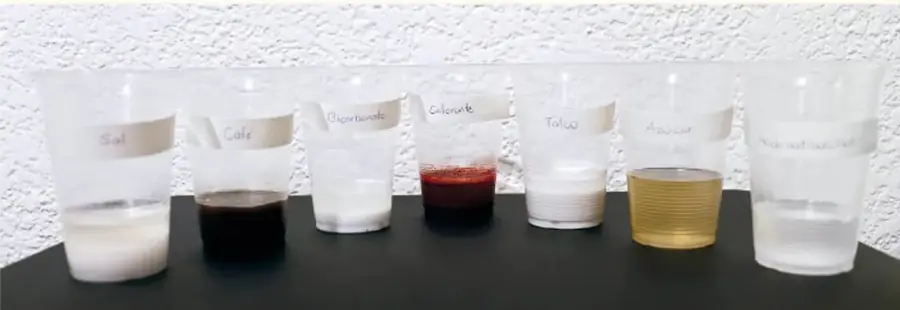
Repeat the previous steps with the other solid substances: talcum powder, sugar, baking soda, instant coffee, and acetylsalicylic acid. Write down whether the substances were soluble or not.

  1. Repite el procedimiento en vasos separados con talco, azúcar, bicarbonato, café instantáneo y ácido acetilsalicílico.
  2. Registra en tu cuaderno si cada sustancia se disolvió o no.

Respuesta orientativa:

Sustancia ¿Soluble?
Talco No
Azúcar Sí
Bicarbonato Sí
Café instantáneo Sí
Ácido acetilsalicílico Parcialmente
d
Parte 6.d

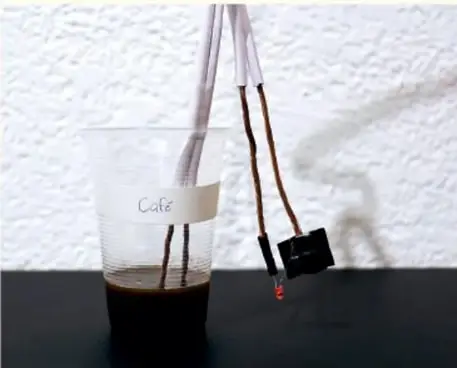
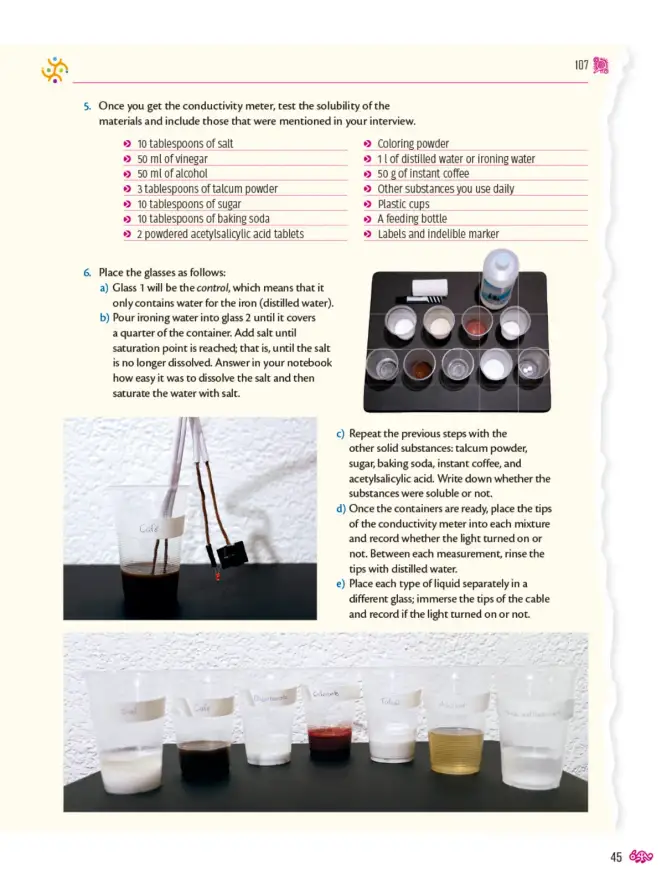
Once the containers are ready, place the tips of the conductivity meter into each mixture and record whether the light turned on or not. Between each measurement, rinse the tips with distilled water.

  1. Introduce las puntas del medidor de conductividad en cada mezcla.
  2. Anota si la luz se encendió o no.
  3. Enjuaga las puntas con agua destilada entre cada medición.

Respuesta orientativa: La luz se enciende en las disoluciones que contienen iones libres (sal, bicarbonato, vinagre) y permanece apagada en las que no los liberan (azúcar, alcohol, talco).

e
Parte 6.e

Place each type of liquid separately in a different glass; immerse the tips of the cable and record if the light turned on or not.

  1. Coloca cada líquido (vinagre, alcohol, agua de planchar) en un vaso diferente.
  2. Sumerge las puntas del cable y registra si la luz se enciende.

Respuesta orientativa: El vinagre y el agua de planchar encienden la luz porque contienen iones disueltos; el alcohol puro no la enciende porque no se ioniza.

Contenido de la página

  1. Once you get the conductivity meter, test the solubility of the materials and include those that were mentioned in your interview.
  • 10 tablespoons of salt
  • 50 ml of vinegar
  • 50 ml of alcohol
  • 3 tablespoons of talcum powder
  • 10 tablespoons of sugar
  • 10 tablespoons of baking soda
  • 2 powdered acetylsalicylic acid tablets
  • Coloring powder
  • 1 l of distilled water or ironing water
  • 50 g of instant coffee
  • Other substances you use daily
  • Plastic cups
  • A feeding bottle
  • Labels and indelible marker
  1. Place the glasses as follows:

a) Glass 1 will be the control, which means that it only contains water for the iron (distilled water).

b) Pour ironing water into glass 2 until it covers a quarter of the container. Add salt until saturation point is reached; that is, until the salt is no longer dissolved. Answer in your notebook how easy it was to dissolve the salt and then saturate the water with salt.

c) Repeat the previous steps with the other solid substances: talcum powder, sugar, baking soda, instant coffee, and acetylsalicylic acid. Write down whether the substances were soluble or not.

d) Once the containers are ready, place the tips of the conductivity meter into each mixture and record whether the light turned on or not. Between each measurement, rinse the tips with distilled water.

e) Place each type of liquid separately in a different glass; immerse the tips of the cable and record if the light turned on or not.

Tabla

Sustancia ¿Soluble en agua? ¿Conduce electricidad?
Sal Sí Sí
Vinagre Sí Sí
Alcohol Sí No
Talco No No
Azúcar Sí No
Bicarbonato Sí Sí
Ácido acetilsalicílico Parcial Débil
Café instantáneo Sí Débil

Glosario (5)

Solubilidad
Capacidad de una sustancia para disolverse en otra.
Saturación
Punto en que una disolución ya no admite más soluto disuelto.
Conductividad
Capacidad de una disolución para conducir la corriente eléctrica.
Control
Muestra de referencia que no contiene la variable estudiada.
Electrolito
Sustancia que en disolución produce iones y conduce electricidad.

Preguntas para practicar

How easy was it to dissolve the salt and then saturate the water with salt?

Al inicio la sal se disuelve rápidamente porque el agua tiene moléculas disponibles para rodear los iones. Conforme se agrega más sal, la disolución se acerca a la saturación y el soluto empieza a depositarse en el fondo, por lo que se vuelve cada vez más difícil disolverla.

Temas y conceptos clave

Solubilidad de sustanciasConductividad eléctrica de disolucionesSaturación de una disoluciónSolubilidadSaturaciónConductividadElectrolitoControl experimental
¿Te fue útil esta página?

Figuras de la página (3)

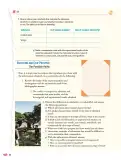
Vasos de plástico con distintas sustancias y un frasco de agua, sobre una bandeja negra.
Figura 1 image
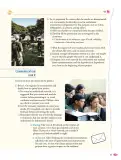
Vaso con café y un medidor de conductividad casero con cables y foco.
Figura 2 image
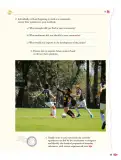
Serie de vasos etiquetados con sal, café, bicarbonato, colorante, talco, azúcar y ácido acetilsalicílico.
Figura 3 image

Preguntas que la gente también hace

¿Por qué la sal conduce electricidad en agua pero el azúcar no?
Consulta la solución completa arriba o explora el libro entero para temas relacionados.
¿Qué significa que una disolución esté saturada?
Consulta la solución completa arriba o explora el libro entero para temas relacionados.
¿Cómo se puede medir la conductividad eléctrica de un líquido en casa?
Consulta la solución completa arriba o explora el libro entero para temas relacionados.
📌 Antes de leer esto
  • • Concepto de mezcla y disolución
  • • Diferencia entre soluto y disolvente
  • • Nociones básicas de electricidad y circuitos
Siguiente tema sugerido
Electrolitos y no electrolitos: interpretación de la conductividad
📝 Transcripción de la página (texto seleccionable) 1583 caracteres
  1. Once you get the conductivity meter, test the solubility of the materials and include those that were mentioned in your interview.

10 tablespoons of salt 50ml of vinegar

50 ml of alcohol

3 tablespoons of talcum powder )10 tablespoons of sugar 》10 tablespoons of baking soda 2 powdered acetylsalicylic acid tablets

6. Place the glasses as follows:

a) Glass 1 will be the control, which means that it only contains water for the iron (distilled water).

b) Pour ironing water into glass 2 until it covers a quarter of the container. Add salt until saturation point is reached; that is, until the salt is no longer dissolved. Answerin your notebook how easy it was to dissolve the salt and then saturate the water with salt.

7Coloring powder

1 l of distilled water or ironing water 50 g of instant coffee

Other substances you use daily 》Plastic cups

A feeding bottle

Labels and indelible marker

C)Repeat the previous steps with the other solid substances: talcum powder,sugar, baking soda, instant coffee, and acetylsalicylic acid. Write down whether the substances were soluble or not.

d) Once the containers are ready, place the tips of the conductivity meter into each mixture and record whether the light turned on or not. Between each measurement, rinse the tips with distilled water.

e)Place each type of liquid separately in a different glass; immerse the tips of the cable and record if the light turned on or not.

107

![](page=0,bbox=[114, 749, 571, 1117])

![](page=0,bbox=[656, 448, 991, 743])

![](page=0,bbox=[115, 1138, 1060, 1463])

45

Ad

Otros libros recomendados

Ver todos →
Ad

Usamos cookies propias y de terceros para personalizar contenido, mostrar publicidad y analizar el tráfico. Las cookies necesarias siempre están activas.