
Worksheet 6 - Pronunciation + Mastering 'th' sound (voiceless)
Solución — Página 30
Ingles · 2ro BGU · 2024
WORKSHEET 6
PRONUNCIATION
| Categoría | Contenido |
|---|---|
| General objective | Develop clear and effective English pronunciation skills, enabling learners to communicate confidently and be readily understood in both academic and real-world contexts. |
| Learning objective | Understand and correctly pronounce words with "th" sound in English to communicate clearly. |
| Descriptor | Recognize and differentiate sounds and letters for correct spelling and pronunciation while appreciating the value of clear and precise communication to understand others. |
| Performance indicators | • Recognize words with "th" sounds and pronounce them correctly. • Write some words just by listening to them. |
TITLE: MASTERING "th" SOUND
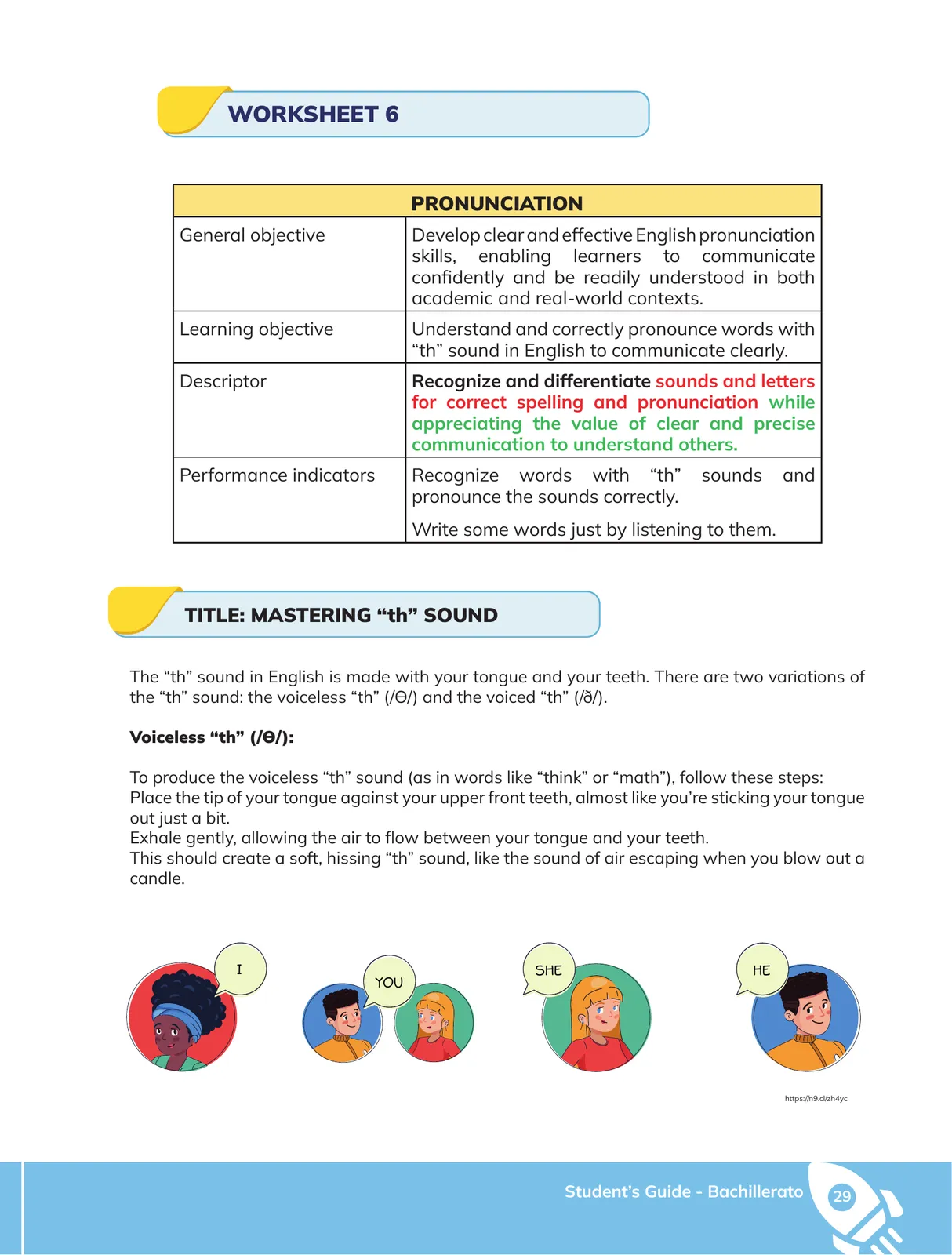
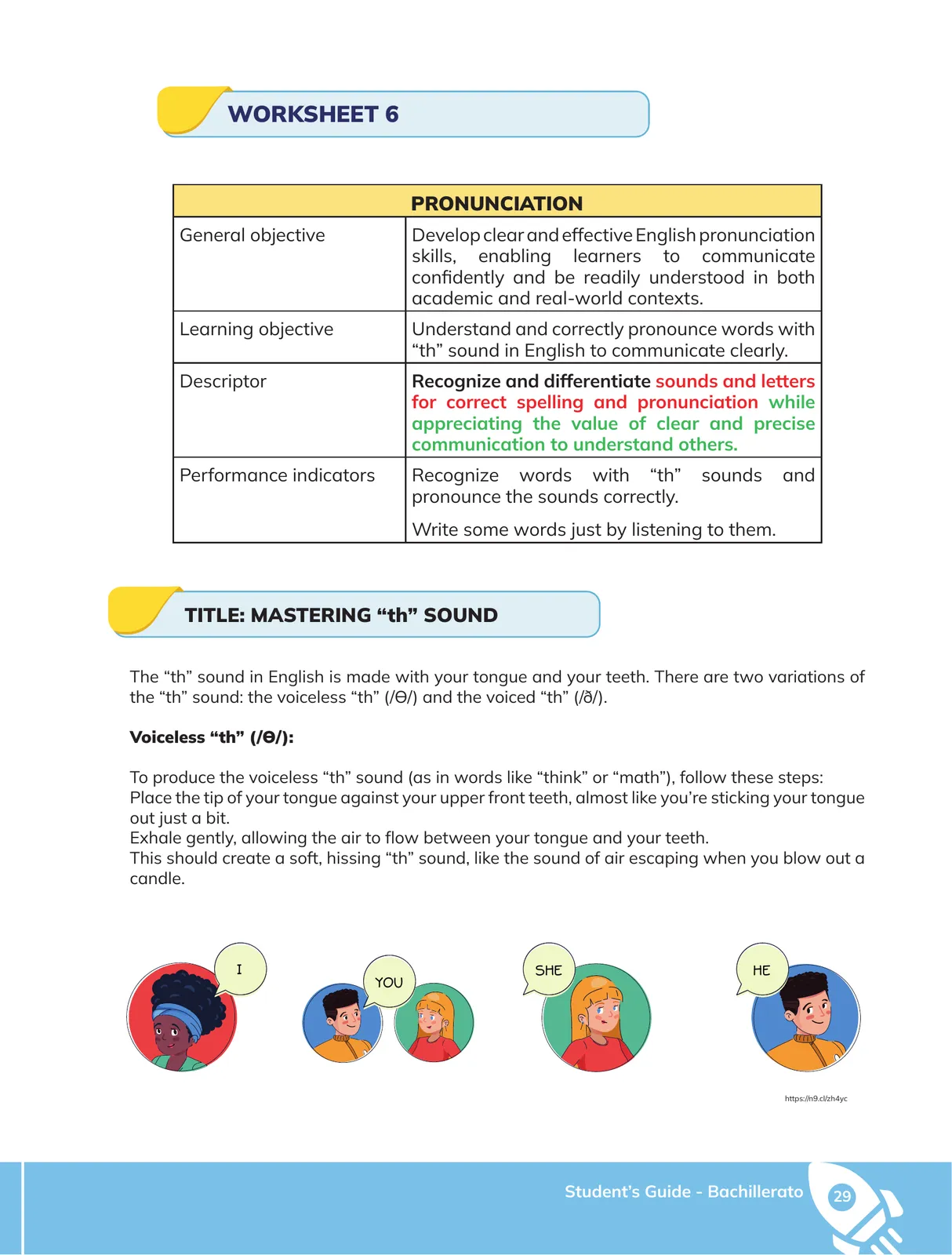
The "th" sound in English is made with your tongue and your teeth. There are two variations of the "th" sound:
- Voiceless "th" /θ/
- Voiced "th" /ð/
Voiceless "th" /θ/
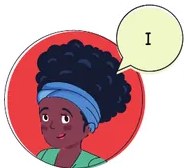
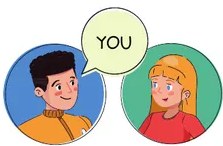
To produce the voiceless "th" sound (as in words like think or math), follow these steps:
- Place the tip of your tongue against your upper front teeth, almost like you're sticking your tongue out just a bit.
- Exhale gently, allowing the air to flow between your tongue and your teeth.
- This should create a soft, hissing "th" sound, like the sound of air escaping when you blow out a candle.
Ejemplo 1
Cómo producir /θ/ (voiceless th).
- Punta de la lengua contra los dientes incisivos superiores.
- Exhalar suavemente sin vibración vocal.
- Producir sonido silbante.
Diagrama 1
Pasos para producir el sonido /θ/.
flowchart TD
  A[Position tongue] --> B[Tip touches upper front teeth]
  B --> C[Exhale gently]
  C --> D[Air flows between tongue and teeth]
  D --> E[Soft hissing 'th' sound]
Tablas
| Variante | Símbolo IPA | Ejemplos |
|---|---|---|
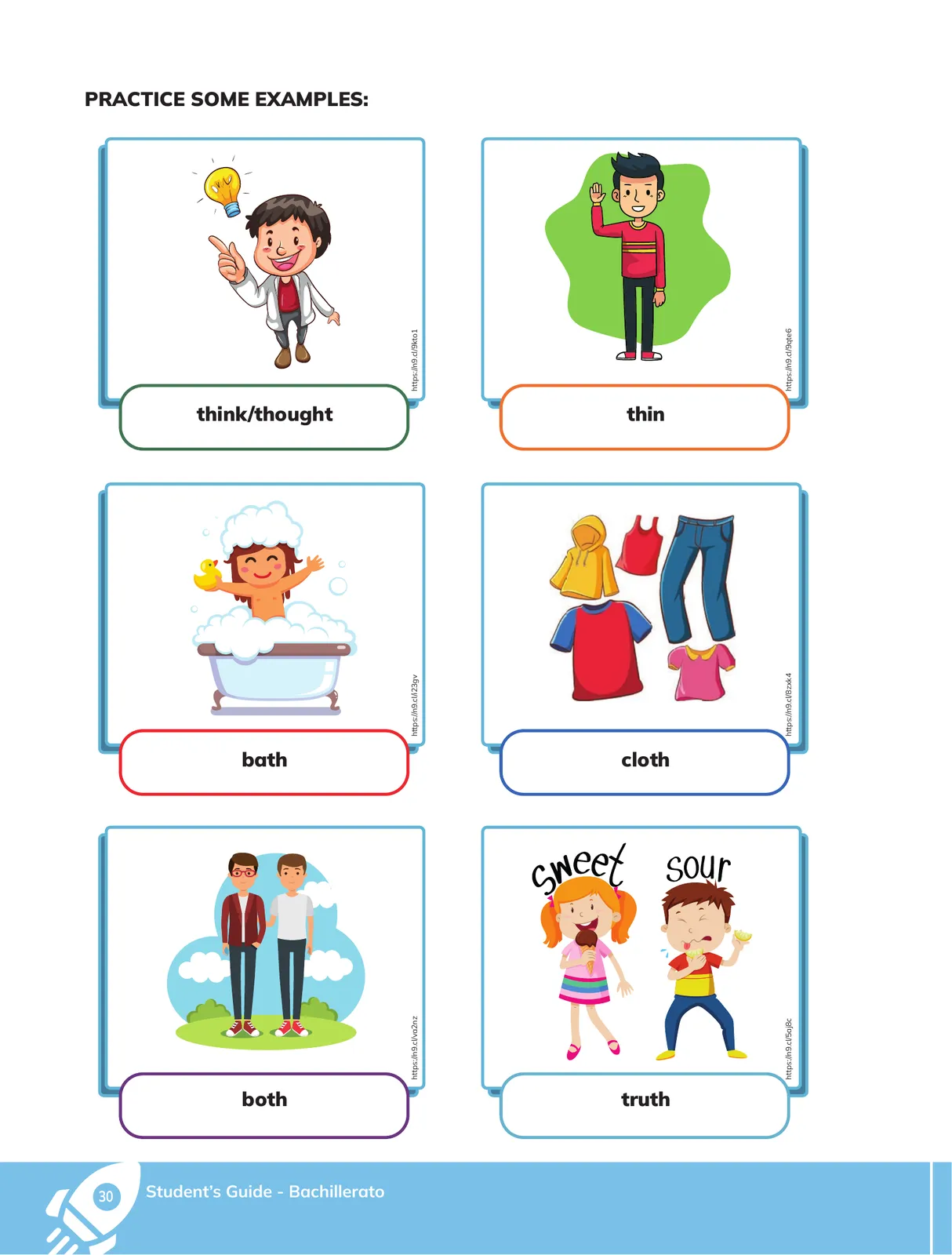
| Voiceless 'th' (sorda) | /θ/ | think, math, thin, both |
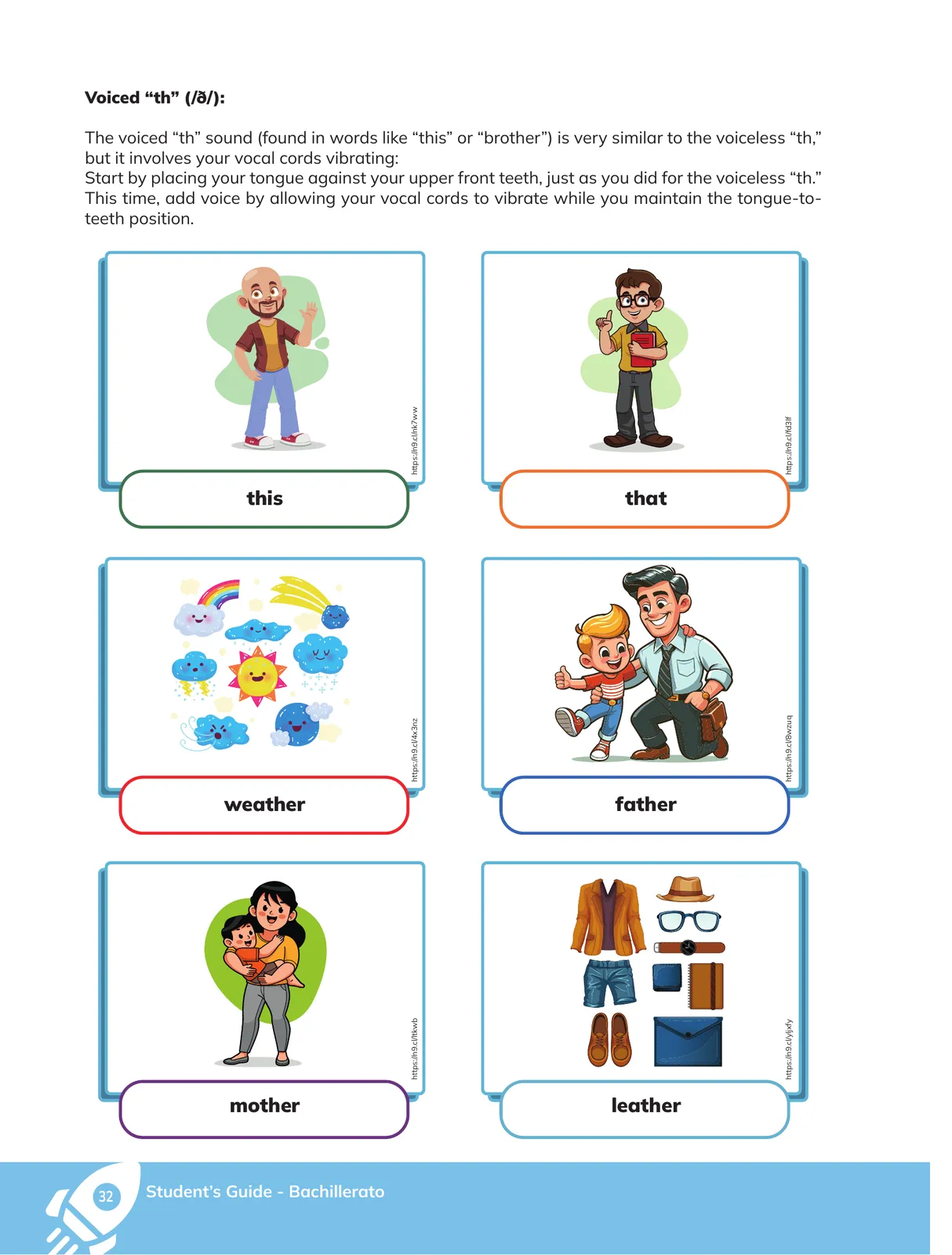
| Voiced 'th' (sonora) | /ð/ | this, that, mother, brother |
Glosario
- voiceless: Sordo: sonido producido sin vibración de las cuerdas vocales.
- voiced: Sonoro: sonido producido con vibración de las cuerdas vocales.
- tongue: Lengua (órgano del habla).
- teeth: Dientes.
- hissing: Silbante (como el sonido del aire al escapar).
Fuentes
Figuras de la página (5)


- • Ver pág. 4: Worksheet 6 - Mastering 'th' sound en la tabla de contenidos.
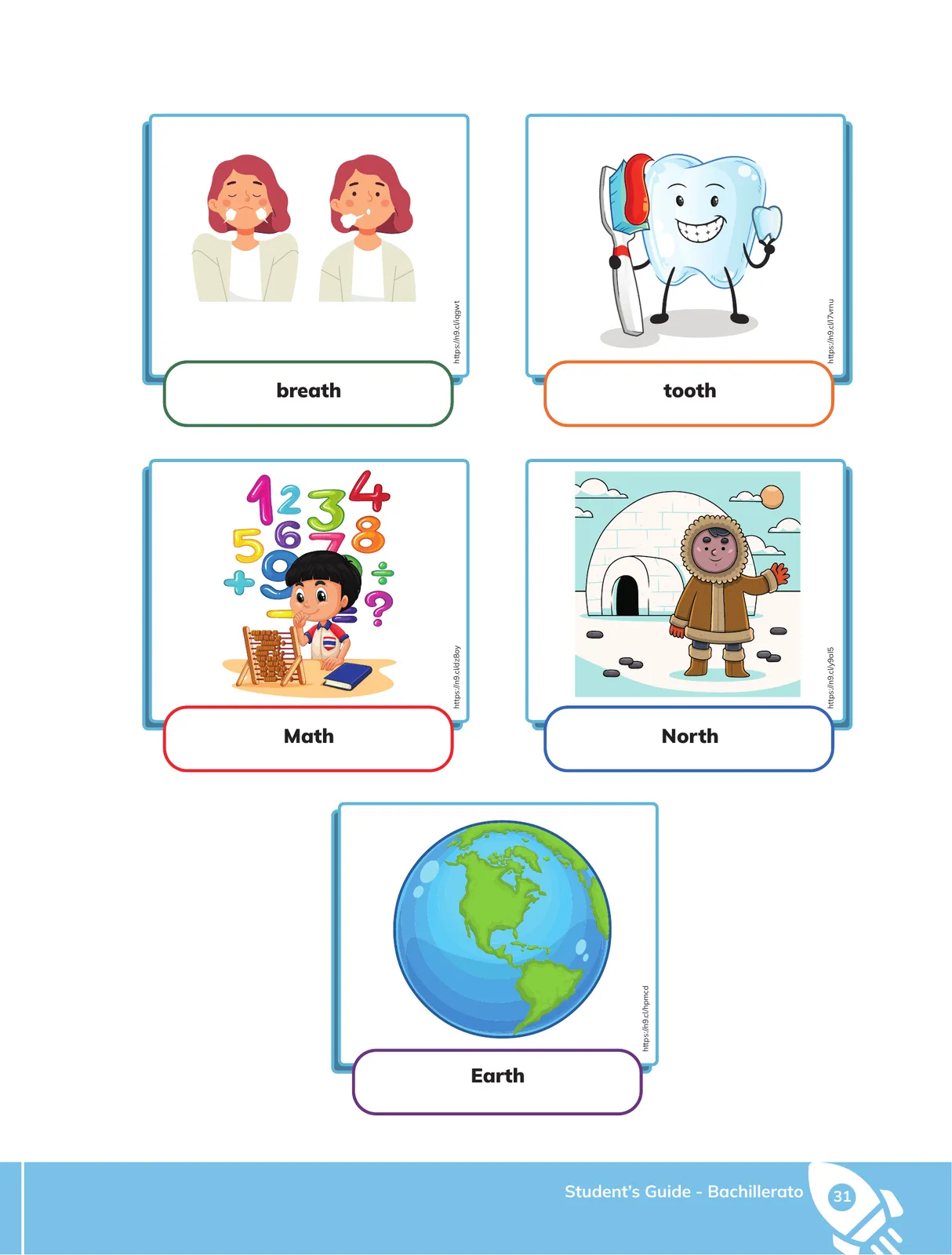
- • Ver pág. 31: Tarjetas de práctica con palabras que contienen 'th'.
📝 Transcripción de la página (texto seleccionable) 1304 caracteres
/ WORKSHEET 6 )
General objective Develop clear and effective English pronunciation skills, enabling learners to communicate confidently and be readily understood in both academic and real-world contexts.
Learning objective Understand and correctly pronounce words with “th” sound in English to communicate clearly.
Descriptor Recognize and differentiate sounds and letters for correct spelling and pronunciation while appreciating the value of clear and precise communication to understand others.
Performance indicators Recognize words with “th” sounds and pronounce the sounds correctly.
Write some words just by listening to them.
7 me MASTERING “th” SOUND )
The “th” sound in English is made with your tongue and your teeth. There are two variations of the “th” sound: the voiceless “th” (/8/) and the voiced “th” (/8/).
Voiceless “th” (/0/):
To produce the voiceless “th” sound (as in words like “think” or “math”), follow these steps: Place the tip of your tongue against your upper front teeth, almost like you're sticking your tongue out just a bit.
Exhale gently, allowing the air to flow between your tongue and your teeth.
This should create a soft, hissing “th” sound, like the sound of air escaping when you blow out a
candle. https://n9.clízháyc
Student's Guide - Bachillerato

Otros libros recomendados
Ingles · 2 EGB · 2024
Ministerio de Educación del Ecuador
48 págs.
Ciencias Naturales · 2 EGB · 2025
Ministerio de Educación del Ecuador
146 págs.
Lengua Y Literatura · 2 EGB · 2025
Ministerio de Educación del Ecuador
246 págs.
Lengua Y Literatura · 2 EGB · 2024
Ministerio de Educación del Ecuador
70 págs.
Matematica · 6 EGB · 2025
Ministerio de Educación del Ecuador
218 págs.
Estudios Sociales · 6 EGB · 2025
Ministerio de Educación del Ecuador
226 págs.
Ingles · 6 EGB · 2024
Ministerio de Educación del Ecuador
50 págs.
Etnoeducacion · 6 EGB · 2024
Ministerio de Educación del Ecuador
100 págs.