
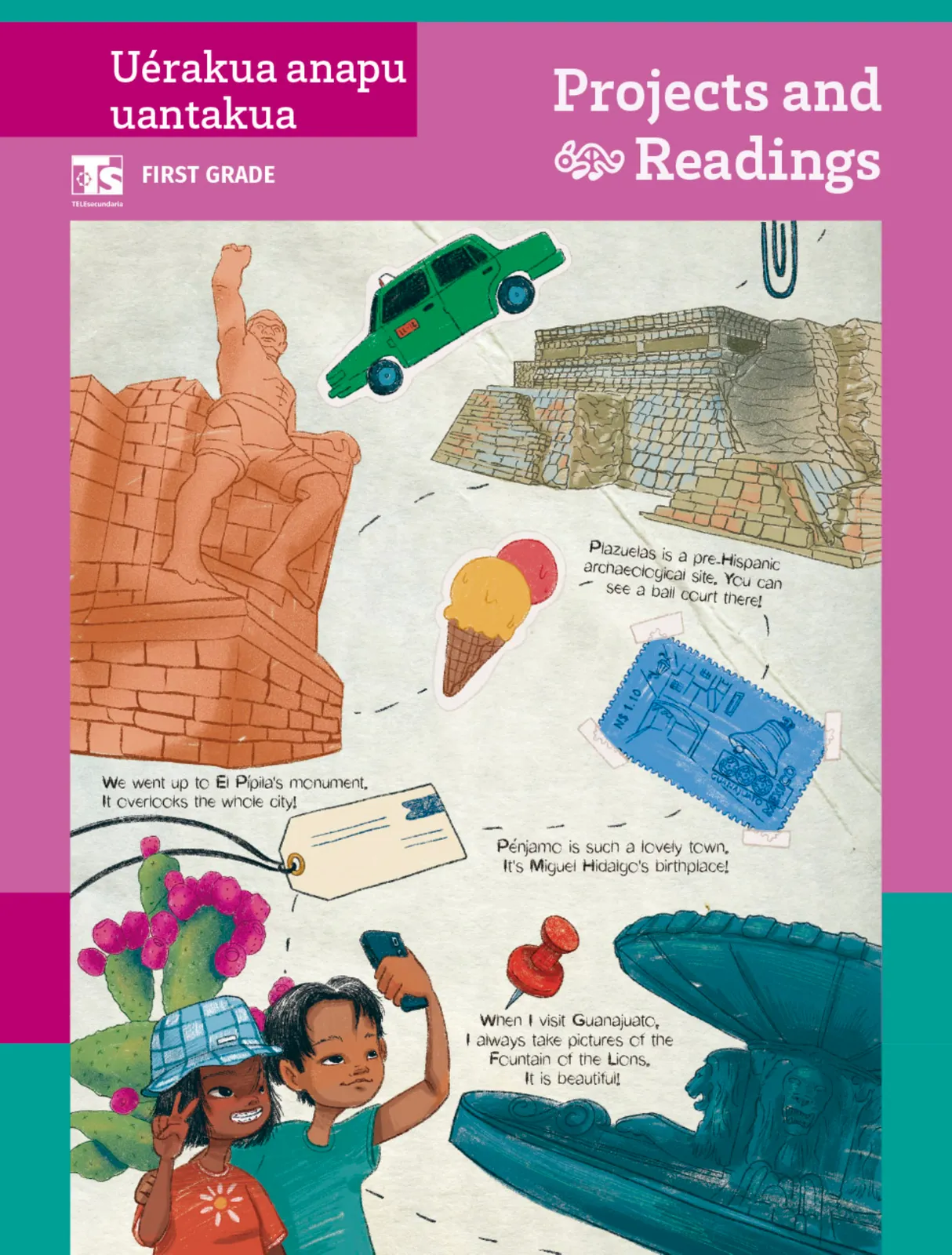
Página — Uerakua Anapu Uantakua Projects And Readings 1 (pág. 86)
Solución no disponible aún
Esta página está en proceso de revisión.
Pídela y la resolveremos antes. Sin registro.
📝 Transcripción de la página (texto seleccionable) 1817 caracteres
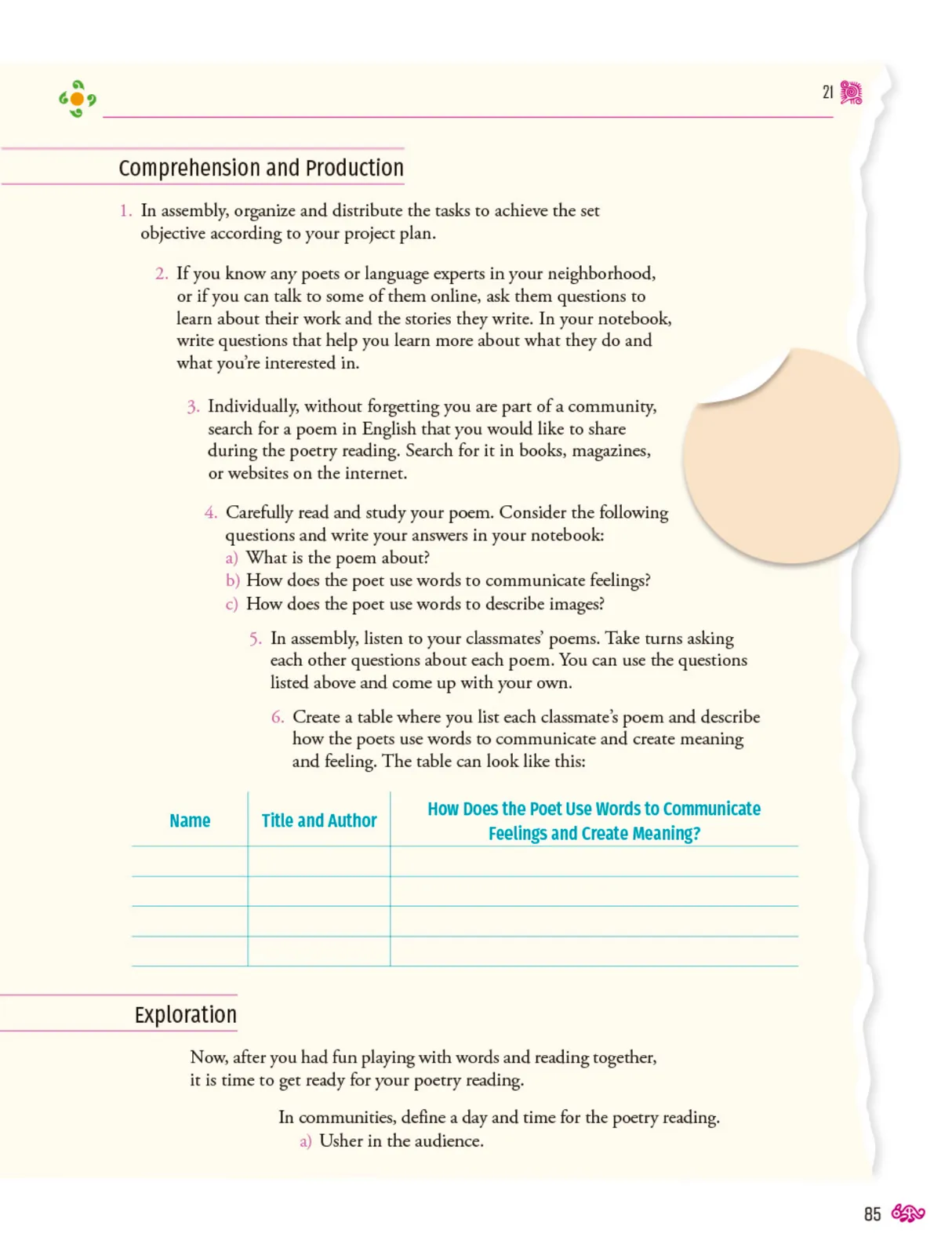
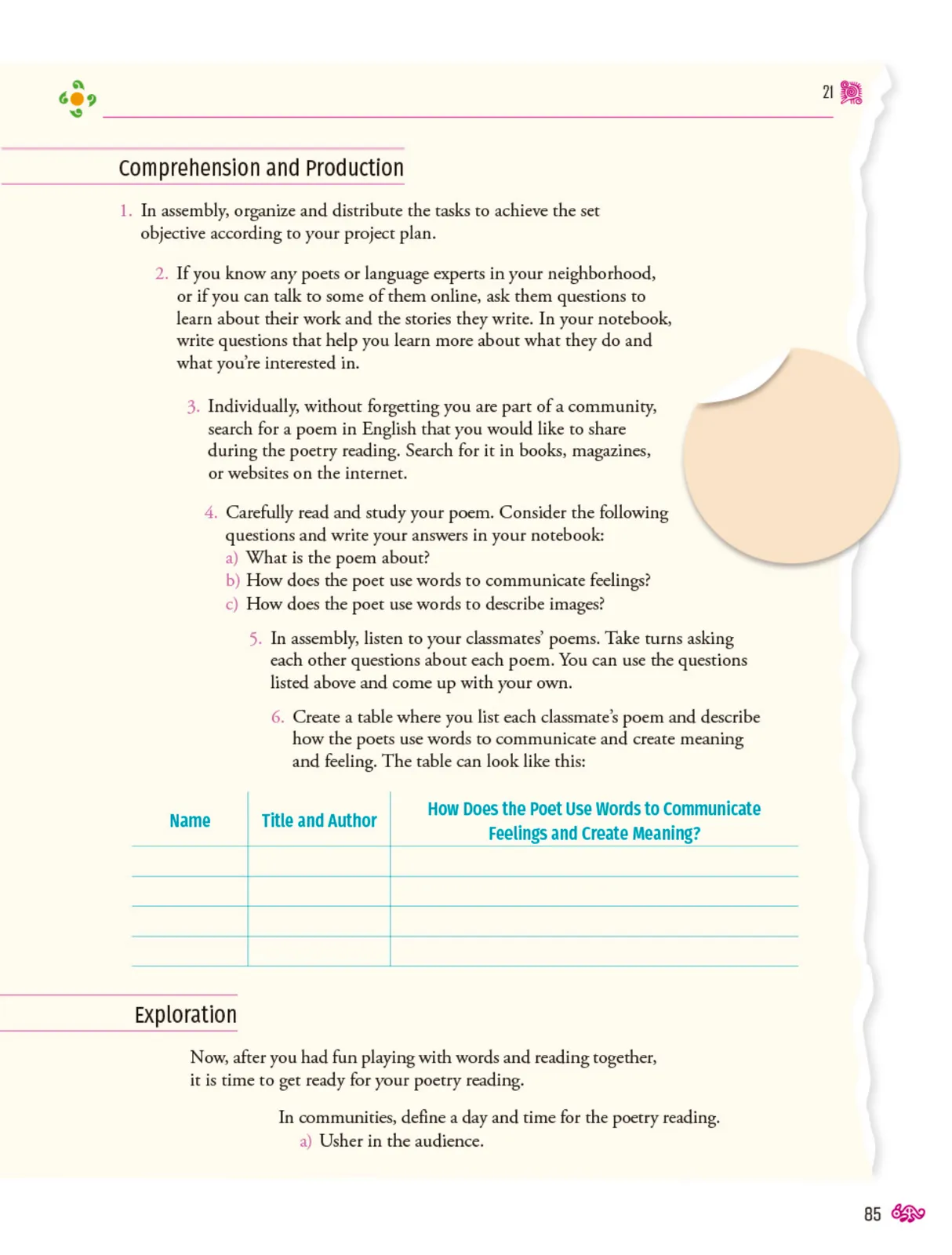
Comprehension and Production
In assembly, organize and distribute the tasks to achieve the set objective according to your project plan.
If you know any poets or language experts in your neighborhood,or if you can talk to some of them online, ask them questions to learn about their work and the stories they write. In your notebook,write questions that help you learn more about what they do and what you're interested in.
Individually, without forgetting you are part of a community,search for a poem in English that you would like to share during the poetry reading. Search for it in books, magazines,or websites on the internet.
4.Carefully read and study your poem. Consider the following questions and write your answers in your notebook:a) What is the poem about?
b) How does the poet use words to communicate feelings?
c) How does the poet use words to describe images?
In assembly, listen to your classmates' poems. Take turns asking each other questions about each poem. You can use the questions listed above and come up with your own.
Create a table where you list each classmate's poem and describe how the poets use words to communicate and create meaning and feeling. The table can look like this:
Exploration
Now, after you had fun playing with words and reading together,it is time to get ready for your poetry reading.
In communities, define a day and time for the poetry reading.a) Usher in the audience.
21

| Name | Title and Author | How Does the Poet Use Words to Communicate Feelings and Create Meaning? |
85
Otros libros recomendados
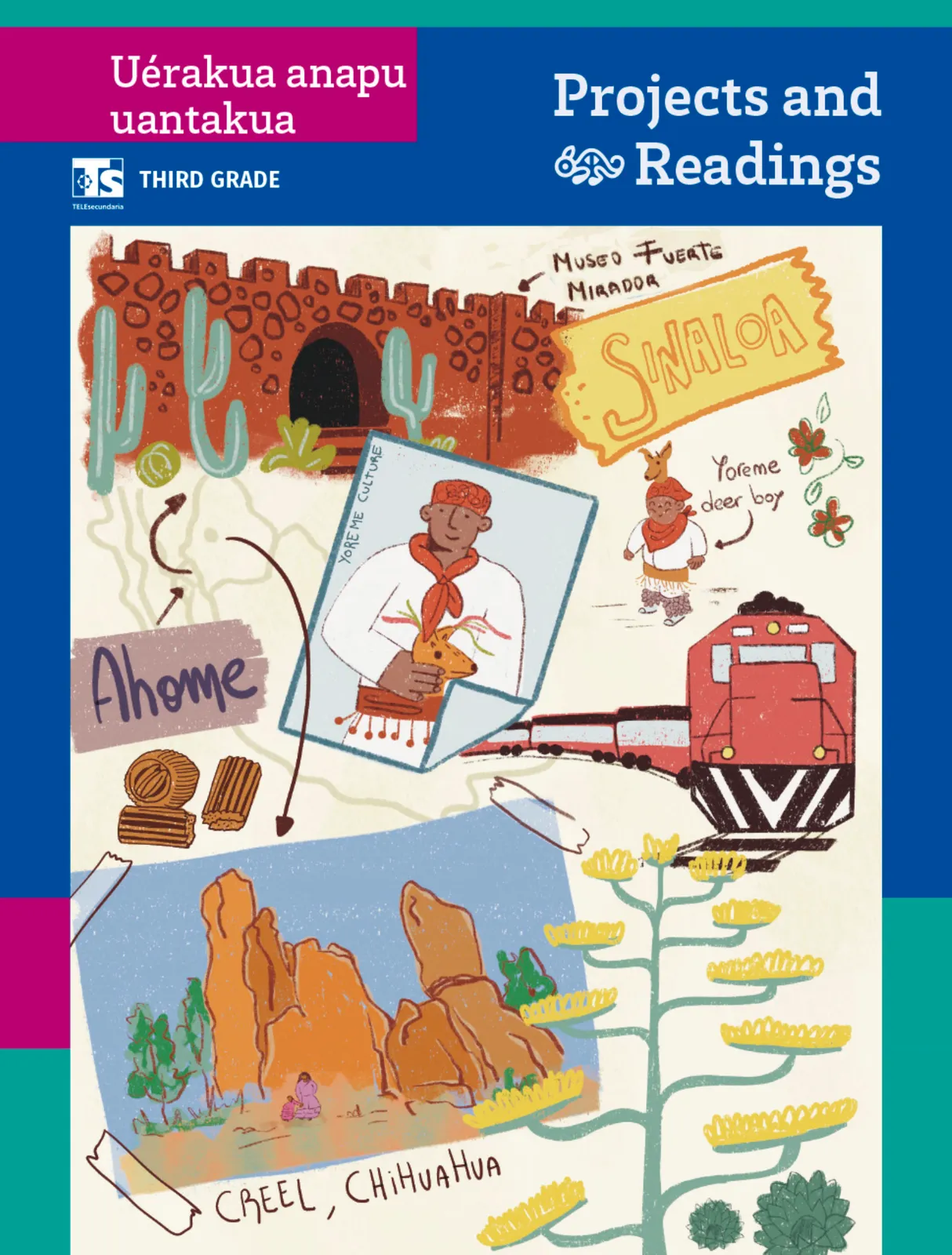
Uérakua anapu uantakua. Projects and Readings. Libro de Educación Telesecundaria Grado 3° Ciclo Escolar 2025 - 2026
SEP/CONALITEG
187 págs.
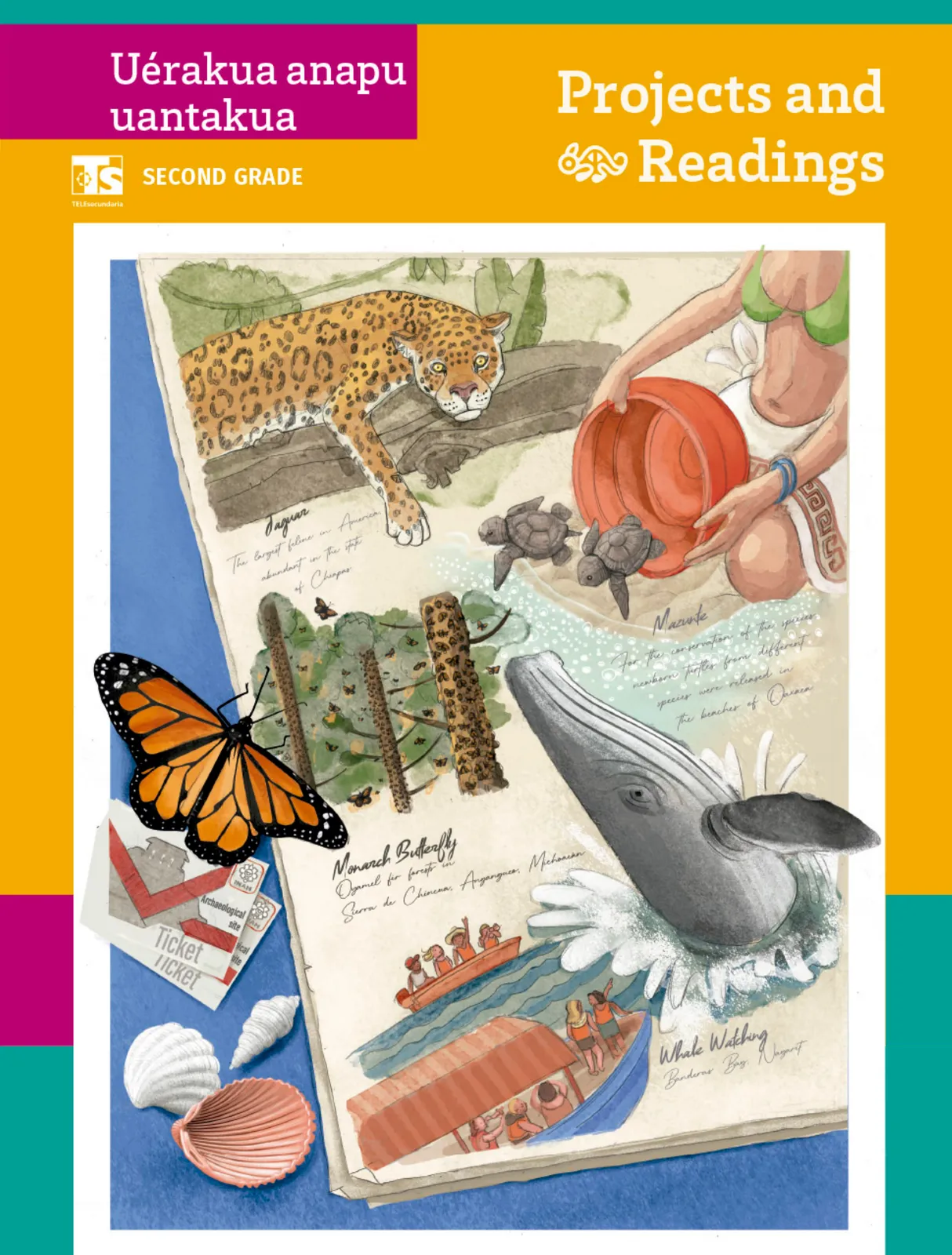
Uérakua anapu uantakua. Projects and Readings. Libro de Educación Telesecundaria Grado 2° Ciclo Escolar 2025 - 2026
SEP/CONALITEG
171 págs.
Colección Ximhai. De lo humano y lo comunitario. Libro de Educación Telesecundaria Grado 1° Ciclo Escolar 2025 - 2026
SEP/CONALITEG
259 págs.
Colección Ximhai. Nuestro libro de Proyectos. Tomo II. Libro de Educación Telesecundaria Grado 1° Ciclo Escolar 2025 - 2026
SEP/CONALITEG
267 págs.
Un libro sin recetas para la maestra y el maestro. Fase 6. Libro de Educación Telesecundaria Grado 1°, 2°, 3° Ciclo Escolar 2025 - 2026
SEP/CONALITEG
203 págs.
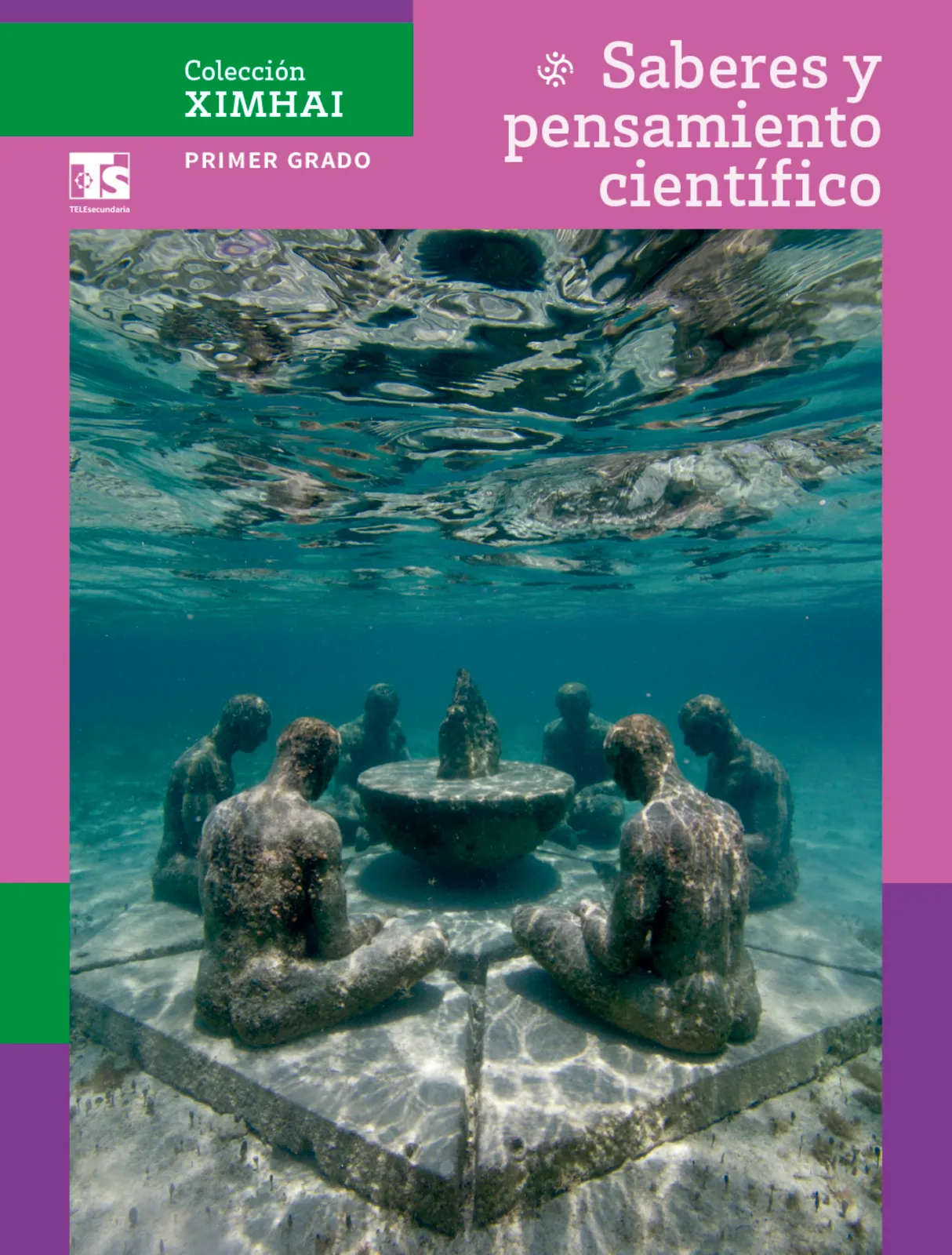
Colección Ximhai. Saberes y pensamiento científico. Libro de Educación Telesecundaria Grado 1° Ciclo Escolar 2025 - 2026
SEP/CONALITEG
339 págs.
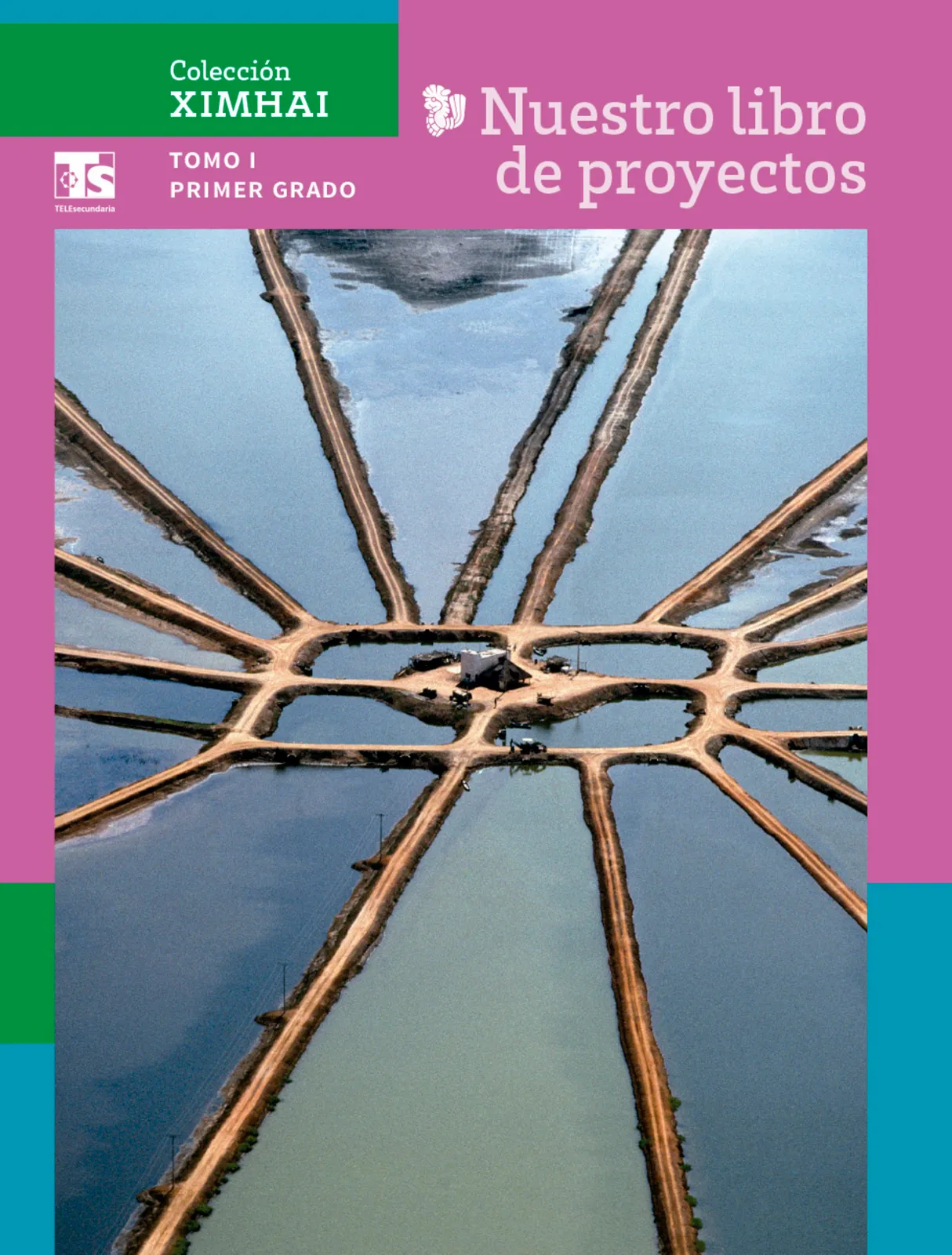
Colección Ximhai. Nuestro libro de Proyectos. Tomo I. Libro de Educación Telesecundaria Grado 1° Ciclo Escolar 2025 - 2026
SEP/CONALITEG
307 págs.
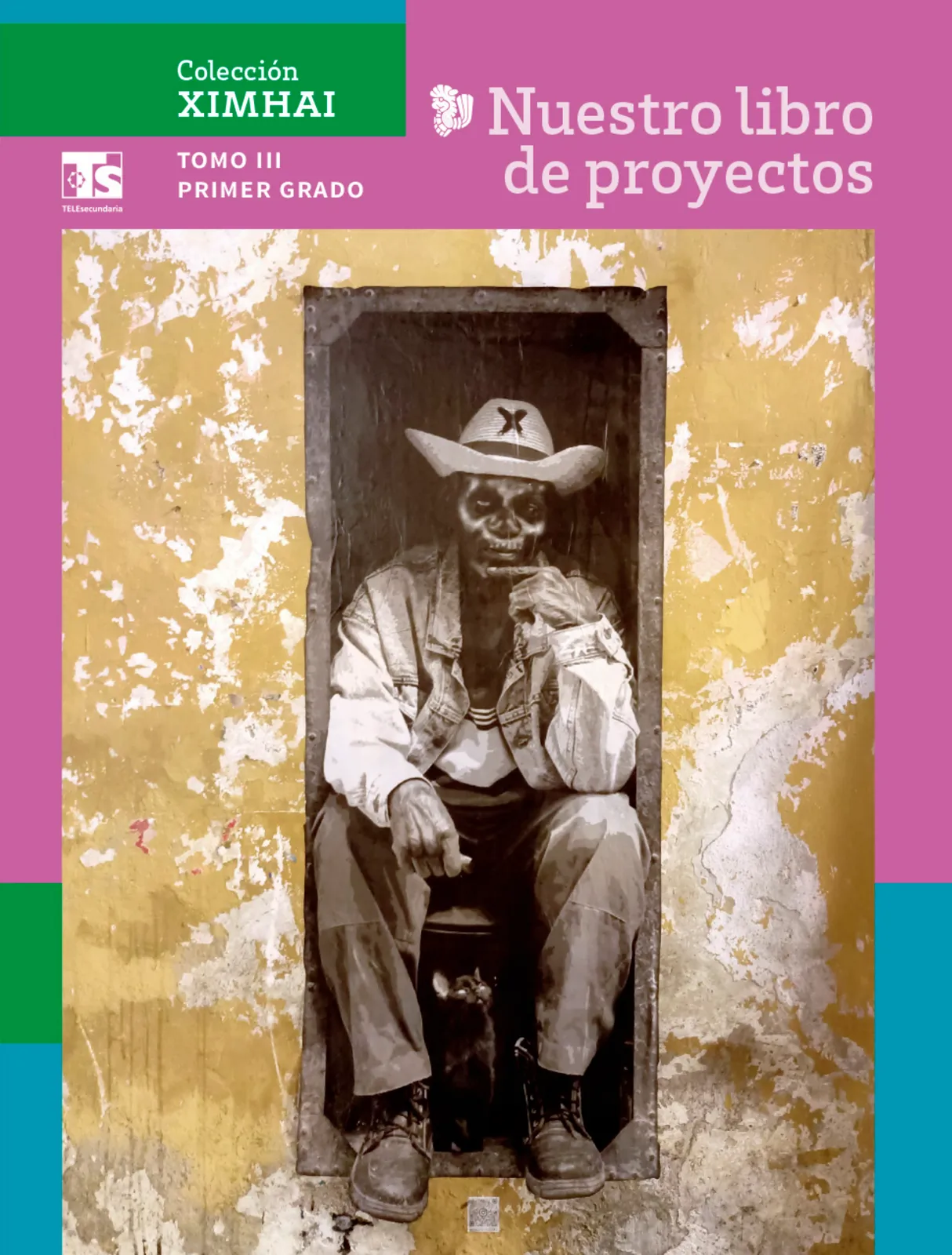
Colección Ximhai. Nuestro libro de Proyectos. Tomo III. Libro de Educación Telesecundaria Grado 1° Ciclo Escolar 2025 - 2026
SEP/CONALITEG
275 págs.