















Saltar al contenido
MisLibrosTexto
Ad

Inquiry Design and Development: That's the Question! - The ball and simple machines

📄 ejercicios ciencias-naturales 🎓 otro · 1° TELESECUNDARIA México 🇲🇽 MX 🗣 Español
Página 90
90 de 187
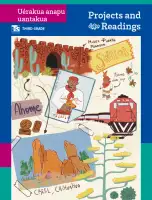
Página 90 de Uérakua anapu uantakua. Projects and Readings.  Libro de Educación Telesecundaria Grado 1°  Ciclo Escolar 2025 - 2026
Anterior Página 90 / 187 Siguiente

Respuesta rápida

2.a pelota pesada; 2.b precisión; 2.c manos; 2.d golpe bajo con mano o pie; 2.e sí, la pelota amplía la acción corporal; 3.a coordinación, resistencia, velocidad; 3.b máquina simple cambia fuerza; 3.c herramienta facilita tarea; 3.d de piedra a materiales sintéticos; 3.e deporte, terapia, física; 1.a juego ritual mesoamericano; 1.b fabricación y reglas; 1.c planificar y contrastar fuentes; 1.d materiales e ingeniería.

📚 exercise ciencias-naturales ⭐⭐ Dificultad 2/5 ⏱ 8 min lectura

Solución — Página 90

Uérakua anapu uantakua. Projects and Readings. Libro de Educación Telesecundaria Grado 1° Ciclo Escolar 2025 - 2026

2
Ejercicio 2

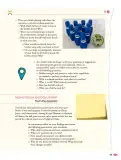
When you finish playing, talk about the experience and answer these questions:

a
Parte 2.a

With which ball was it easier to knock the bottles down? Why?

Respuesta orientativa: Fue más fácil con la pelota más pesada y de mayor tamaño, porque tiene más masa y, al impactar, transmite mayor cantidad de movimiento (momento lineal) a las botellas. Una pelota ligera rebota o se desvía con facilidad.

b
Parte 2.b

What was more important to knock the bottles down, strength or precision?

Respuesta orientativa: La precisión fue más importante, ya que un golpe bien dirigido a la base o al centro de las botellas las derriba aunque no se aplique mucha fuerza. La fuerza excesiva sin puntería suele fallar el objetivo.

c
Parte 2.c

Did you throw the ball with your hands or with your feet?

Respuesta orientativa: Se lanzó con las manos, porque permiten mayor control de dirección y velocidad que los pies. Los pies se usan más para patear, lo que reduce la precisión.

d
Parte 2.d

How would you knock down the bottles using only your hand or foot?

Respuesta orientativa: Con la mano se golpearía con la palma o el puño en dirección a la base de las botellas; con el pie se daría una patada frontal o lateral apuntando al centro del grupo. En ambos casos se busca un impacto bajo y firme.

e
Parte 2.e

Do you think you delegated a function of your body to the ball to knock the bottles down? Why?

Respuesta orientativa: Sí, porque la pelota actúa como una extensión del brazo o del pie: recibe la energía del movimiento corporal y la transmite a las botellas. Es un ejemplo de cómo una herramienta amplía la acción del cuerpo.

3
Ejercicio 3

As a result of this exchange, write your questions or suggestions for improving the game in your notebook. Then, in communities, search in reliable sources for the answers to the following questions:

a
Parte 3.a

Besides strength and precision, what other capabilities are needed to perform mechanical work?

Respuesta orientativa: Se necesitan coordinación motriz, resistencia física, velocidad, equilibrio y capacidad de anticipación. También influyen la técnica y la experiencia previa.

b
Parte 3.b

What is a simple machine, and what is it used for?

Respuesta orientativa: Una máquina simple es un dispositivo que cambia la magnitud o la dirección de una fuerza para realizar trabajo con menor esfuerzo. Ejemplos: palanca, polea, plano inclinado, rueda, cuña y tornillo.

c
Parte 3.c

What is a tool? What tools do you know?

Respuesta orientativa: Una herramienta es un objeto o instrumento que se usa para facilitar una tarea manual o mecánica. Ejemplos: martillo, destornillador, pinzas, llave inglesa, serrucho y taladro.

d
Parte 3.d

How has the ball evolved?

Respuesta orientativa: La pelota ha evolucionado desde esferas de piedra, madera o caucho natural hasta balones de cuero, goma sintética y materiales plásticos. Los cambios buscan mayor durabilidad, rebote y precisión.

e
Parte 3.e

What can a ball be used for?

Respuesta orientativa: Se usa en deportes y juegos, pero también en fisioterapia, educación física, transporte de objetos rodantes y experimentos de física. Incluso sirve como modelo para estudiar movimiento y energía.

1
Ejercicio 1

(Inquiry Design and Development)

In community, reflect on your findings and answer the following questions in your notebook:

a
Parte 1.a

What didn't you know and were surprised to learn?

Respuesta orientativa: Sorprende que el juego de pelota en Mesoamérica tuviera un carácter religioso y ritual, no solo deportivo. También llama la atención que se usaran pelotas de caucho natural mucho antes que en Europa.

b
Parte 1.b

What new questions do you have?

Respuesta orientativa: ¿Cómo fabricaban las pelotas de caucho? ¿Qué reglas tenían? ¿Cómo se relaciona el juego con la astronomía y los ciclos agrícolas?

c
Parte 1.c

How would you improve your abilities when investigating and participating in communities?

Respuesta orientativa: Planificando preguntas claras, consultando fuentes confiables, contrastando información y participando activamente en equipos. También es útil registrar hallazgos y compartirlos.

d
Parte 1.d

Why do you think the ball has evolved? What has made these changes possible?

Respuesta orientativa: Ha evolucionado por la necesidad de mejorar el rendimiento deportivo, la seguridad y la durabilidad. Los avances en materiales, química e ingeniería han hecho posibles estos cambios.

Contenido de la página

2. When you finish playing, talk about the experience and answer these questions:

a) With which ball was it easier to knock the bottles down? Why?

b) What was more important to knock the bottles down, strength or precision?

c) Did you throw the ball with your hands or with your feet?

d) How would you knock down the bottles using only your hand or foot?

e) Do you think you delegated a function of your body to the ball to knock the bottles down? Why?

3. As a result of this exchange, write your questions or suggestions for improving the game in your notebook. Then, in communities, search in reliable sources for the answers to the following questions:

a) Besides strength and precision, what other capabilities are needed to perform mechanical work?

b) What is a simple machine, and what is it used for?

c) What is a tool? What tools do you know?

d) How has the ball evolved?

e) What can a ball be used for?

INQUIRY DESIGN AND DEVELOPMENT

That's the Question!

The ball has been used since ancient times. In Greece and Rome, it was used in games. It was also present in China, Japan, and Mesoamerica. Among the pre-Hispanic civilizations of Mexico, the ball game was not only a sports activity but also part of the cultural practices and religious rituals.

  1. In community, reflect on your findings and answer the following questions in your notebook:

a) What didn't you know and were surprised to learn?

b) What new questions do you have?

c) How would you improve your abilities when investigating and participating in communities?

d) Why do you think the ball has evolved? What has made these changes possible?

Glosario (5)

simple machine
Dispositivo que cambia la magnitud o dirección de una fuerza para realizar trabajo.
tool
Instrumento que facilita una tarea manual o mecánica.
mechanical work
Trabajo realizado por una fuerza al desplazar un objeto.
precision
Capacidad de dirigir un movimiento exactamente al punto deseado.
Mesoamerica
Región cultural de México y Centroamérica antes de la llegada de los españoles.

Preguntas para practicar

¿Qué aprendiste sobre el juego de pelota en Mesoamérica?

Que era una actividad deportiva, cultural y religiosa, practicada con pelotas de caucho natural.

¿Por qué es importante la precisión en el trabajo mecánico?

Porque dirigir correctamente la fuerza permite realizar la tarea con menor esfuerzo y mayor eficacia.

Temas y conceptos clave

Indagación sobre la pelotaMáquinas simplesHerramientasEvolución de la pelotaJuego de pelota mesoamericanoFuerzaPrecisiónTrabajo mecánicoMáquina simpleHerramientaEvolución tecnológica

Fuentes y referencias

  • Libros de texto de Telesecundaria
  • Enciclopedias de historia y física
  • Sitios web educativos confiables
¿Te fue útil esta página?

Figuras de la página (3)

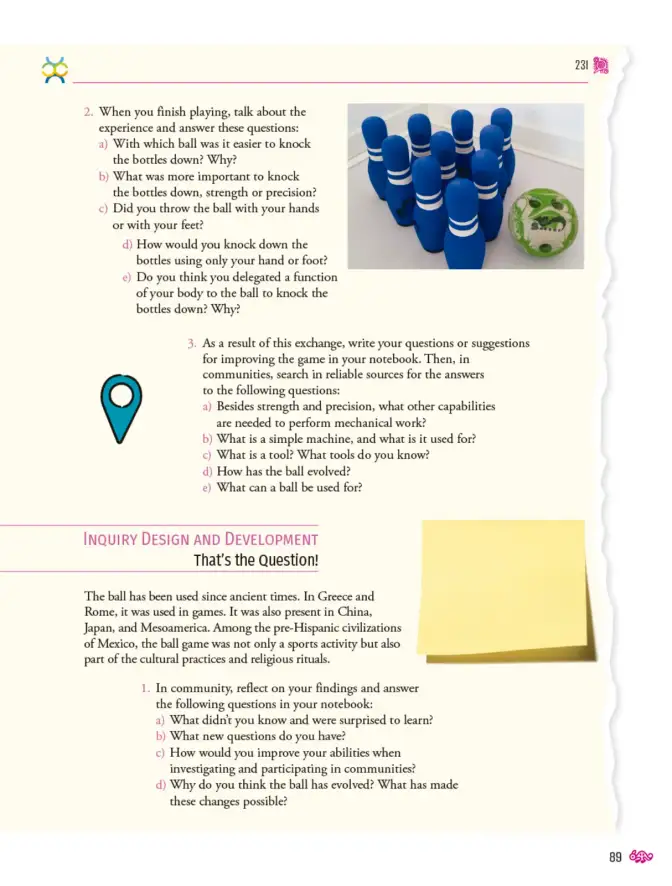
Botellas azules de boliche y una pelota verde con dibujos, sobre una superficie clara.
Figura 1 image
Icono de un pin de ubicación azul con círculo blanco.
Figura 2 image
Nota adhesiva amarilla sobre fondo blanco.
Figura 3 image

Preguntas que la gente también hace

¿Qué es una máquina simple y para qué sirve?
Consulta la solución completa arriba o explora el libro entero para temas relacionados.
¿Cómo ha evolucionado la pelota a lo largo de la historia?
Consulta la solución completa arriba o explora el libro entero para temas relacionados.
¿Qué capacidades se necesitan para realizar trabajo mecánico?
Consulta la solución completa arriba o explora el libro entero para temas relacionados.
📌 Antes de leer esto
  • • Noción de fuerza y movimiento
  • • Observación de objetos cotidianos
  • • Lectura en inglés básico
Siguiente tema sugerido
Máquinas simples y trabajo mecánico
📝 Transcripción de la página (texto seleccionable) 1742 caracteres
  1. When you finish playing, talk about the experience and answer these questions:a) With which ball was it easier to knock the bottles down? Why? b) What was more important to knock the bottles down, strength or precision?C)Did you throw the ball with your hands or with your feet? d) How would you knock down the bottles using only your hand or foot? e)Do you think you delegated a function of your body to the ball to knock the bottles down? Why?

  2. As a result of this exchange, write your questions or suggestions for improving the game in your notebook. Then, in communities, search in reliable sources for the answers to the following questions:a) Besides strength and precision, what other capabilities are needed to perform mechanical work? b)What is a simple machine, and what is it used for? c)What is a tool? What tools do you know? d) How has the ball evolved? e)What can a ball be used for?

INQUIRY DESIGN AND DEVELOPMENT That's the Question!

The ball has been used since ancient times. In Greece and Rome, it was used in games. It was also present in China,Japan, and Mesoamerica. Among the pre-Hispanic civilizations of Mexico, the ball game was not only a sports activity but also part of the cultural practices and religious rituals.

  1. In community, reflect on your findings and answer the following questions in your notebook:a) What didn't you know and were surprised to learn?b) What new questions do you have? c) How would you improve your abilities when investigating and participating in communities?d) Why do you think the ball has evolved? What has made these changes possible?

8

231

![](page=0,bbox=[627, 185, 1052, 484])

![](page=0,bbox=[177, 672, 257, 800])

![](page=0,bbox=[755, 936, 1076, 1193])

89

Ad

Otros libros recomendados

Ver todos →
Ad

Usamos cookies propias y de terceros para personalizar contenido, mostrar publicidad y analizar el tráfico. Las cookies necesarias siempre están activas.