

















Planeación del álbum y presente continuo
Respuesta rápida
Cuatro etapas: elegir, investigar, elaborar y presentar el álbum; presente continuo: afirmativa (am/is/are + -ing), negativa (con not) e interrogativa (auxiliar al inicio).
Solución — Página 178
Uérakua anapu uantakua. Projects and Readings Libro de Educación Secundaria Grado 1° Ciclo Escolar 2025 - 2026
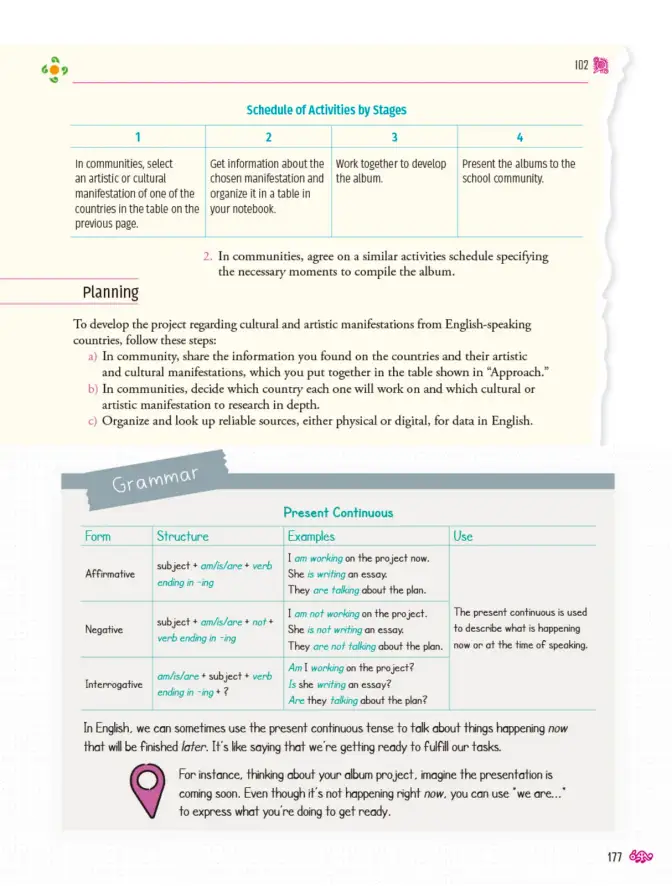
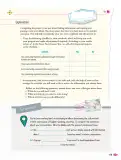
Schedule of Activities by Stages (Calendario de actividades por etapas)
| Etapa 1 | Etapa 2 | Etapa 3 | Etapa 4 |
|---|---|---|---|
| En comunidades, seleccionar una manifestación artística o cultural de uno de los países de la tabla de la página anterior. | Obtener información sobre la manifestación elegida y organizarla en una tabla del cuaderno. | Trabajar juntos para elaborar el álbum. | Presentar los álbumes a la comunidad escolar. |
Paso 2
Enunciado (traducción): En comunidades, acuerden un calendario de actividades similar que especifique los momentos necesarios para compilar el álbum.
Respuesta orientativa: Ejemplo: semana 1, elegir manifestación; semana 2, investigar y organizar en tabla; semanas 3 y 4, elaborar páginas del álbum; semana 5, ensayar y presentar a la escuela.
Planning (Planeación)
Para desarrollar el proyecto sobre manifestaciones culturales y artísticas de países angloparlantes, sigue estos pasos:
- a) En comunidad, comparte la información que encontraste sobre los países y sus manifestaciones artísticas y culturales, la cual reuniste en la tabla mostrada en "Approach".
- b) En comunidades, decidan en qué país trabajará cada quien y qué manifestación cultural o artística investigar a fondo.
- c) Organicen y busquen fuentes confiables, físicas o digitales, con datos en inglés.
Respuesta orientativa: Ejemplo de decisión: un equipo investiga el reggae de Jamaica usando libros de la biblioteca y sitios confiables; otro, la música de The Beatles del Reino Unido.
Grammar: Present Continuous (Presente continuo)
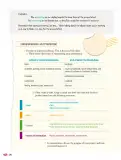
Se usa para describir lo que está sucediendo ahora o al momento de hablar.
- Afirmativa: sujeto + am/is/are + verbo terminado en -ing. Ejemplos: "I am working on the project now" (Estoy trabajando en el proyecto ahora); "She is writing an essay" (Ella está escribiendo un ensayo); "They are talking about the plan" (Ellos están hablando del plan).
- Negativa: sujeto + am/is/are + not + verbo en -ing. Ejemplos: "I am not working on the project"; "She is not writing an essay"; "They are not talking about the plan".
- Interrogativa: am/is/are + sujeto + verbo en -ing + ?. Ejemplos: "Am I working on the project?"; "Is she writing an essay?"; "Are they talking about the plan?".
En inglés, a veces se usa el presente continuo para hablar de cosas que ocurren ahora y terminarán después: es como decir que nos estamos preparando para cumplir nuestras tareas. Por ejemplo, pensando en tu álbum, imagina que la presentación está próxima: aunque no esté sucediendo justo ahora, puedes usar "we are..." para expresar lo que haces para prepararte.
Respuesta orientativa: Ejemplo: "We are making the album pages this week" (Estamos haciendo las páginas del álbum esta semana) o "I am looking for photos of Jamaica" (Estoy buscando fotos de Jamaica).
Contenido de la página
Página 178 de 187 (página impresa 102, folio 177)
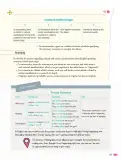
Schedule of Activities by Stages (Calendario de actividades por etapas)
| 1 | 2 | 3 | 4 |
|---|---|---|---|
| In communities, select an artistic or cultural manifestation of one of the countries in the table on the previous page. | Get information about the chosen manifestation and organize it in a table in your notebook. | Work together to develop the album. | Present the albums to the school community. |
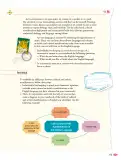
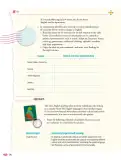
- In communities, agree on a similar activities schedule specifying the necessary moments to compile the album. (Acuerden un calendario similar para compilar el álbum.)
Planning (Planeación)
To develop the project regarding cultural and artistic manifestations from English-speaking countries, follow these steps:
- a) In community, share the information you found on the countries and their artistic and cultural manifestations, which you put together in the table shown in "Approach."
- b) In communities, decide which country each one will work on and which cultural or artistic manifestation to research in depth.
- c) Organize and look up reliable sources, either physical or digital, for data in English.
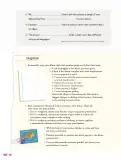
Grammar — Present Continuous
| Form | Structure | Examples | Use |
|---|---|---|---|
| Affirmative | subject + am/is/are + verb ending in -ing | I am working on the project now. She is writing an essay. They are talking about the plan. | The present continuous is used to describe what is happening now or at the time of speaking. |
| Negative | subject + am/is/are + not + verb ending in -ing | I am not working on the project. She is not writing an essay. They are not talking about the plan. | (mismo uso) |
| Interrogative | am/is/are + subject + verb ending in -ing + ? | Am I working on the project? Is she writing an essay? Are they talking about the plan? | (mismo uso) |
In English, we can sometimes use the present continuous tense to talk about things happening now that will be finished later. It's like saying that we're getting ready to fulfill our tasks. For instance, thinking about your album project, imagine the presentation is coming soon. Even though it's not happening right now, you can use "we are..." to express what you're doing to get ready.
Ejemplos resueltos
¿Cómo se dice "Estoy trabajando en el proyecto ahora"?
"I am working on the project now": I + am + work-ing; forma afirmativa del presente continuo.
¿Cómo se pregunta "¿Está ella escribiendo un ensayo?"?
"Is she writing an essay?": Is + she + writing + ?; forma interrogativa con el auxiliar al inicio.
Tablas (2)
| Etapa 1 | Etapa 2 | Etapa 3 | Etapa 4 |
|---|---|---|---|
| Seleccionar una manifestación de un país de la tabla anterior. | Investigar la manifestación y organizarla en una tabla. | Elaborar juntos el álbum. | Presentar los álbumes a la comunidad escolar. |
| Forma | Estructura | Ejemplos | Uso |
|---|---|---|---|
| Afirmativa | subject + am/is/are + verb-ing | I am working on the project now. She is writing an essay. They are talking about the plan. | Describe lo que sucede ahora o al momento de hablar. |
| Negativa | subject + am/is/are + not + verb-ing | I am not working. She is not writing an essay. They are not talking about the plan. | (idem) |
| Interrogativa | am/is/are + subject + verb-ing + ? | Am I working on the project? Is she writing an essay? Are they talking about the plan? | (idem) |
Fórmulas y ecuaciones
Afirmativa: subject + am/is/are + verb-ing
Negativa: subject + am/is/are + not + verb-ing
Interrogativa: Am/Is/Are + subject + verb-ing + ?
Glosario (6)
- present continuous
- presente continuo; tiempo para acciones en desarrollo ahora
- stage
- etapa; fase de un proceso por pasos
- in depth
- a fondo; con profundidad y detalle
- compile
- compilar; reunir materiales en un solo trabajo
- get ready
- prepararse; estar listos para algo
- affirmative/negative/interrogative
- formas afirmativa, negativa e interrogativa de un tiempo verbal
Preguntas para practicar
¿Qué país y manifestación investigarás a fondo?
El reggae de Jamaica, porque su ritmo e historia conectan la música con la identidad cultural del país.
¿Para qué sirve el presente continuo además de acciones presentes?
También describe preparaciones: cosas que empiezan ahora y terminarán después, como "we are making the album".
Temas y conceptos clave
Figuras de la página (1)

Preguntas que la gente también hace
¿Cómo se forma el presente continuo en inglés?
¿Cuándo se usa el presente continuo?
¿Cómo se hace la negativa del presente continuo?
- • Tabla de países angloparlantes (página 177)
- • Verbo to be (am/is/are)
📝 Transcripción de la página (texto seleccionable) 2342 caracteres
- In communities, agree on a similar activities schedule specifying the necessary moments to compile the album.
Planning
To develop the project regarding cultural and artistic manifestations from English-speaking countries, follow these steps:
a) In community, share the information you found on the countries and their artistic and cultural manifestations, which you put together in the table shown in "Approach."b) In communities, decide which country each one will work on and which cultural or artistic manifestation to research in depth.
c) Organize and look up reliable sources, either physical or digital, for data in English.
Grammar
In English, we can sometimes use the present continuous tense to talk about things happening now that will be finished later. It's like saying that we're getting ready to fulfill our tasks.
For instance, thinking about your album project, imagine the presentation is coming soon. Even though it's not happening right now, you can use'we are."to express what you're doing to get ready.
102
Schedule of Activities by Stages
| 1 | 2 | 3 | 4 |
| In communities, select an artistic or cultural manifestation of one of the countries in the table on the previous page. | Get information about the chosen manifestation and organize it in a table in your notebook. | Work together to develop the album. | Present the albums to the school community. |
Present Continuous
| Form | Structure | Examples | Use |
| Affirmative | subject + am/is/are + verb ending in -ing | I am wonking on the project now. She is writingan essay. They are talking about the plan. | The present continuous is used to describe what is happening now or at the time of speaking. |
| Negative | subject + am/is/are + not + venb ending in -ing | I am not wonking on the project. She is nof wniting an essay. They are not talking about the plan. | |
| Interrogative | am/is/ane + subject + venb ending in -ing +? | Am I working on the project? Is she wniting an essay? Are they talking about the plan? |

17785
Otros libros recomendados
Colección Ximhai. Ética, naturaleza y sociedades. Libro de Educación Secundaria Grado 1° Ciclo Escolar 2025 - 2026
SEP/CONALITEG
355 págs.

Historia del pueblo mexicano. Libro de Educación Secundaria Grado 1° Ciclo Escolar 2025 - 2026
SEP/CONALITEG
331 págs.
Colección Ximhai. Lenguajes. Libro de Educación Secundaria Grado 1° Ciclo Escolar 2025 - 2026
SEP/CONALITEG
323 págs.
Fichas de Matemática 1 · 2024
MINEDU
100 págs.
Cuaderno de fichas Personal Social 1. Primer grado de secundaria · 2016
MINEDU
19 págs.
Comprensión lectora : manual para el docente de primer grado de Secundaria 2018 · 2018
MINEDU
194 págs.
Comprensión lectora 1 : manual para el docente de primer grado de Secundaria · 2017
MINEDU
130 págs.
Fichas de aprendizaje de Comunicación 1 · 2024
Julia Liliana Quiroz Espinoza y equipo
100 págs.