















Saltar al contenido
MisLibrosTexto
Ad

Mexican Revolution: Listening and Grammar (Simple Past & Past Perfect)

📄 ejercicios ingles 🎓 secundaria · 2° Secundaria México 🇲🇽 MX 🗣 Español
Página 155
155 de 171
Página 155 de Uérakua anapu uantakua. Projects and Readings.  Libro de Educación Secundaria Grado 2°  Ciclo Escolar 2025 - 2026
Anterior Página 155 / 171 Siguiente

Respuesta rápida

Orden: 1, 2, 3, 4, 5, 6, 7, 8, 9, 10, 11, 12. Regulares: worked, studied, rebelled, played, liked. Irregulares: sang, swam, began.

📚 exercise ingles ⭐⭐ Dificultad 2/5 ⏱ 8 min lectura

Solución — Página 155

Uérakua anapu uantakua. Projects and Readings. Libro de Educación Secundaria Grado 2° Ciclo Escolar 2025 - 2026

1
Ejercicio 1

Listen to the video "Mexican Revolution" and order the events chronologically. Follow the example.

  1. Identifico el evento del ejemplo: New railroads were built, industries grew, and foreign investment increased corresponde al número 1 (etapa porfirista).
  2. Ordeno los hechos según la línea de tiempo de la Revolución Mexicana (1910-1920).
  3. Asigno los números del 1 al 12 a cada enunciado.
Respuesta

( 1 ) New railroads were built, industries grew, and foreign investment increased. ( 2 ) Wealth and power were concentrated; most people lived in poverty and worked like slaves. ( 3 ) Díaz's army was defeated and he fled to France. ( 4 ) Zapata, Orozco, and Villa complained that Madero was working too slowly. ( 5 ) Pascual Orozco and Francisco Villa led the revolutionary forces in the north. ( 6 ) Huerta formed a military dictatorship. ( 7 ) Huerta had Venustiano Carranza and Álvaro Obregón as enemies. ( 8 ) Carranza organized the Constitutional Convention that created the Constitution of 1917. ( 9 ) Villa and Zapata rebelled against Carranza. ( 10 ) Carranza became a hated man. ( 11 ) The people who suffered the most, the peasants, finally got their own land. ( 12 ) Obregón won the presidency.


2
Ejercicio 2

Grammar: complete the rules and examples about simple past and past perfect.

  1. El simple past se usa para acciones terminadas en el pasado; el past perfect (had + past participle) para una acción anterior a otra acción pasada.
  2. En oraciones afirmativas del simple past se usa la forma pasada del verbo; en negativas e interrogativas se usa el auxiliar did + verbo en forma base.
  3. Los verbos se dividen en regulares (terminan en -ed) e irregulares (cambian de forma).

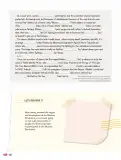
Irregular verbs: sing → sang; swim → swam; begin → began.

Respuesta

Regular verbs: work → worked; study → studied; rebel → rebelled; play → played; like → liked.

Contenido de la página

Listening

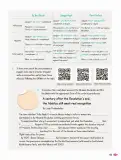
To get a general idea about the further development of the Mexican Revolution, watch the video "Mexican Revolution" by following the QR/link on the right. Then, order the events chronologically. Follow the example:

https://bit.ly/4cSzy44

( ) Huerta formed a military dictatorship. ( ) Zapata, Orozco, and Villa complained that Madero was working too slowly. ( ) Pascual Orozco and Francisco Villa led the revolutionary forces in the north. ( ) Obregón won the presidency. ( ) Díaz's army was defeated and he fled to France. ( ) The people who suffered the most, the peasants, finally got their own land. ( 1 ) New railroads were built, industries grew, and foreign investment increased. ( ) Huerta had Venustiano Carranza and Álvaro Obregón as enemies. ( ) Carranza organized the Constitutional Convention that created the Constitution of 1917. ( ) Villa and Zapata rebelled against Carranza. ( ) Carranza became a hated man. ( ) Wealth and power were concentrated; most people lived in poverty and worked like slaves.
Grammar

We use the verb to be in simple past tense to talk about feelings, situations, or how things were in the past; we use the simple past tense to talk about an action that happened in the past; we use the past perfect tense to talk about an action that happened before another action in the past.

Remember that in the simple past tense we use the past form of the verbs only in affirmative sentences, and the auxiliary did and verb in base form in negative and interrogative sentences.

Remember also that verbs in English are divided into regular and irregular verbs.

Regular verbs Irregular verbs
work → worked sing → sang
study → studied swim → swam
rebel → rebelled begin → began
play → played
like → liked

Ejemplos resueltos

Order the events chronologically (example).

El evento New railroads were built, industries grew, and foreign investment increased se marca con (1) porque corresponde al Porfiriato, etapa previa a la Revolución.

Tabla

Regular verbs Irregular verbs
work → worked sing → sang
study → studied swim → swam
rebel → rebelled begin → began
play → played
like → liked

Diagrama

timeline
    title Mexican Revolution Timeline
    1876-1911 : Porfiriato
    1910 : Start of the Revolution
    1911 : Díaz defeated
    1913 : Huerta dictatorship
    1914 : Carranza and Obregón vs Huerta
    1917 : Constitution of 1917
    1920 : Obregón presidency

Glosario (5)

simple past
Tiempo verbal que expresa acciones terminadas en el pasado.
past perfect
Tiempo verbal que indica una acción ocurrida antes de otra acción pasada (had + participio).
regular verb
Verbo que forma su pasado agregando -ed.
irregular verb
Verbo que cambia de forma en pasado sin seguir la regla -ed.
auxiliary did
Verbo auxiliar usado en negativas e interrogativas del pasado simple.

Preguntas para practicar

Why is it important to order historical events chronologically?

Ordering events chronologically helps us understand cause and effect in history. It allows us to see how one event led to another, such as how the Porfiriato led to the Mexican Revolution.

Temas y conceptos clave

ListeningGrammarMexican RevolutionSimple PastPast Perfectcronologíaverbos regularesverbos irregularesauxiliar didhad + past participle

Fuentes y referencias

  • https://bit.ly/4cSzy44
¿Te fue útil esta página?

Figuras de la página (3)

Código QR que enlaza al video 'Mexican Revolution'.
Figura 1 image
Ilustración de un cactus en un paisaje desértico.
Figura 2 image
Figura 3 de Uérakua anapu uantakua. Projects and Readings.  Libro de Educación Secundaria Grado 2°  Ciclo Escolar 2025 - 2026
Figura 3 image

Preguntas que la gente también hace

¿Cómo se ordenan cronológicamente los eventos de la Revolución Mexicana?
Consulta la solución completa arriba o explora el libro entero para temas relacionados.
¿Cuál es la diferencia entre pasado simple y pasado perfecto en inglés?
Consulta la solución completa arriba o explora el libro entero para temas relacionados.
¿Cuáles son los verbos regulares e irregulares más comunes en inglés?
Consulta la solución completa arriba o explora el libro entero para temas relacionados.
📌 Antes de leer esto
  • • Vocabulario básico de historia
  • • Uso del verbo to be en pasado
  • • Reconocimiento de verbos en inglés
Siguiente tema sugerido
Past continuous y past perfect continuous
📝 Transcripción de la página (texto seleccionable) 1666 caracteres

Listening

e Mexican Revolution, watch the video"Mexican Revolution"by following the QR/link on the right. Then, order the events chronologically. Follow the example:

https://bit.ly/4cSzy44

)Huerta formed a military dictatorship.)Zapata,Orozco,and Villa coplaine d henevolutionary forces n thenonth.

Obregonwon iepdoe

)The people who suffered the most, the peusd foreian investment increased Diazsarmy was defeate an neTe

New railroaas were bunC annanza and Alvaro Obregón as enemies.

Huenta had Venustiano Carranzaand Aaro Orethat created h

Villa and Zapata rebelld against Caranza.

)Cse

22

Grammar

We use the verb to be in simple past tense to talk about feelings,situations, or how things were in the past; we use the simple past tense to talk about an action that happened in the past; we use the past perfect tense to talk about an action that happened before another action in the past.

Remember that in the simple past tense we use the past form of the verbs only in affinmative sentences, and the auxiliary did and verb in base form in negative and interrogative sentences.

Remember also that verbs in English are divided into regular and iregular verbs.

Regular verbs are the majority, including all the verbs similar to Spanish:

work >worked study >studied rebel V rebelled play -played like V liked

Irregular verbs are a litle over 100 verbs that are very commonly used. The majority of irregular verbs change a vowel for their past form, and can be better learned in groups:

sing >sang swim V swam began

![](page=0,bbox=[845, 143, 978, 277])

![](page=0,bbox=[90, 1063, 281, 1176])

![](page=0,bbox=[959, 806, 1166, 1034])

154

Ad

Otros libros recomendados

Ver todos →
Ad

Usamos cookies propias y de terceros para personalizar contenido, mostrar publicidad y analizar el tráfico. Las cookies necesarias siempre están activas.