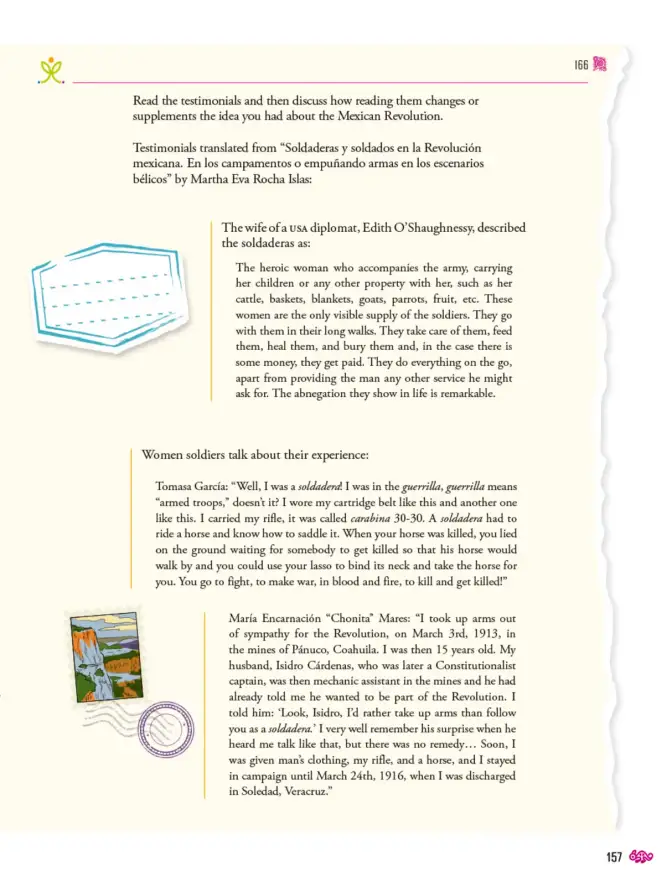
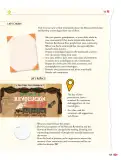
Read the testimonials and then discuss how reading them changes or supplements the idea you had about the Mexican Revolution.
Testimonials translated from "Soldaderas y soldados en la Revolución mexicana. En los campamentos o empuńando armas en los escenarios bélicos" by Martha Eva Rocha Islas:
The wife of a usA diplomat, Edith O'Shaughnessy, described the soldaderas as:
The heroic woman who accompanies the army, carrying her children or any other property with her, such as her cattle, baskets, blankets, goats, parrots, fruit, etc. These women are the only visible supply of the soldiers. They go with them in their long walks. They take care of them, feed them, heal them, and bury them and, in the case there is some money, they get paid. They do everything on the go,apart from providing the man any other service he might ask for. The abnegation they show in life is remarkable.
Women soldiers talk about their experience:
Tomasa Garcia: "Well, I was a soldadera! I was in the guerrilla, guerrilla means "armed troops," doesn't it? I wore my cartridge belt like this and another one like this. I carried my rifle, it was called carabina 30-30. A soldadera had to ride a horse and know how to saddle it. When your horse was killed, you lied on the ground waiting for somebody to get killed so that his horse would walk by and you could use your lasso to bind its neck and take the horse for you. You go to fight, to make war, in blood and fire, to kill and get killed!"
María Encarnación "Chonita” Mares:"I took up arms out of sympathy for the Revolution, on March 3rd, 1913, in the mines of Pánuco, Coahuila. I was then 15 years old. My husband, Isidro Cárdenas, who was later a Constitutionalist captain, was then mechanic assistant in the mines and he had already told me he wanted to be part of the Revolution. I told him: Look, Isidro, I'd rather take up arms than follow you as a soldadera.'I very well remember his surprise when he heard me talk like that, but there was no remedy... Soon, I was given man's clothing, my rifle, and a horse, and I stayed in campaign until March 24th, 1916, when I was discharged in Soledad, Veracruz."
p.
166


157
9