Saltar al contenido
MisLibrosTexto
Ad

Seek and Find: situaciones de medición y unidades fundamentales

📄 ejercicios fisica 🎓 secundaria · 2° Secundaria México 🇲🇽 MX 🗣 Español
Página 65
65 de 171
Página 65 de Uérakua anapu uantakua. Projects and Readings.  Libro de Educación Secundaria Grado 2°  Ciclo Escolar 2025 - 2026
Anterior Página 65 / 171 Siguiente

Respuesta rápida

  1. Falta de instrumento adecuado. 2) Magnitud, unidad e instrumento. 3) h = d \cdot \tan\theta. 6) Unidades SI: m, kg, s, A, K, mol, cd.
📚 exercise fisica ⭐⭐ Dificultad 2/5 ⏱ 8 min lectura

Solución — Página 65

Uérakua anapu uantakua. Projects and Readings. Libro de Educación Secundaria Grado 2° Ciclo Escolar 2025 - 2026

1
Ejercicio 1

In communities, each member talks about a situation where you needed to measure something, but you didn't have the right instrument for doing it.

  1. Se elige una situación cotidiana de medición: por ejemplo, medir la longitud de una barda sin cinta métrica.
  2. Se identifica la magnitud (longitud) y la unidad requerida (metro).
  3. Se propone un instrumento sustituto: pasos, cuartas, cordel marcado o regla graduada.

Respuesta orientativa: Compartir en comunidad situaciones como medir la altura de una puerta sin flexómetro, la temperatura sin termómetro o el peso de una carga sin balanza; en cada caso se reconoce la magnitud y el instrumento faltante.

2
Ejercicio 2

Choose one of the situations just described in community, and answer the following questions in your notebook.

a
Parte 2.a

¿Qué necesitabas saber para resolver esa situación?

  1. Identificar la magnitud física que se mide (longitud, masa, tiempo, temperatura).
  2. Conocer la unidad del Sistema Internacional correspondiente (m, kg, s, K).
  3. Saber qué instrumento es el adecuado y cómo se usa.
Respuesta

Necesitaba conocer la magnitud, su unidad (por ejemplo, metro) y el instrumento adecuado (cinta métrica o flexómetro).

b
Parte 2.b

¿Qué harías si estuvieras en esa misma situación otra vez?

  1. Elegir el instrumento correcto antes de medir.
  2. Verificar su calibración y el cero de la escala.
  3. Repetir la medición al menos tres veces y promediar.
Respuesta

Seleccionaría el instrumento adecuado, lo calibraría y repetiría la medición para reducir el error.

c
Parte 2.c

¿Cuál es la forma correcta de resolver ese problema?

  1. Definir la magnitud y la unidad.
  2. Usar el instrumento apropiado con la técnica correcta.
  3. Registrar el valor con su incertidumbre y unidad.
Respuesta

Medir con el instrumento adecuado, aplicar la técnica correcta y anotar el resultado como valor \pm incertidumbre con su unidad.

3
Ejercicio 3

Search how to calculate the height of a given object, based on one of the distances and the inclination angle.

  1. Se forma un triángulo rectángulo entre el observador, la base del objeto y su parte superior.
  2. Se mide la distancia horizontal d al objeto y el ángulo de elevación \theta.
  3. Se aplica la razón trigonométrica: \tan\theta = \frac{h}{d}.
  4. Se despeja la altura: h = d \cdot \tan\theta.
Respuesta

h = d \cdot \tan\theta. Ejemplo: si d = 10\,\text{m} y \theta = 30^\circ, entonces h = 10 \cdot \tan 30^\circ \approx 5.77\,\text{m}.

Ad
4
Ejercicio 4

Based on your results, look for the information you need for answering the previous questions.

  1. Consultar la biblioteca escolar o el libro Colección Sk'asolil. Saberes y pensamiento científico. Segundo grado.
  2. Buscar definiciones de magnitud, unidad e instrumento de medida.
  3. Contrastar la información con la experiencia del ejercicio 1.

Respuesta orientativa: Las fuentes confirman que toda medición requiere una magnitud, una unidad patrón y un instrumento; el libro de texto de segundo grado desarrolla estos conceptos en el bloque de medición.

5
Ejercicio 5

Take note of the information in your notebook and have it at hand.

  1. Registrar en el cuaderno las magnitudes, unidades e instrumentos identificados.
  2. Anotar el procedimiento h = d \cdot \tan\theta con un ejemplo propio.
  3. Conservar las notas para el proyecto final.

Respuesta orientativa: El cuaderno debe contener la tabla de magnitudes con sus unidades del SI y el procedimiento trigonométrico para calcular alturas.

6
Ejercicio 6

Now, let's solve some situations involving the fundamental measuring units.

  1. Recordar las siete magnitudes fundamentales del SI: longitud (m), masa (kg), tiempo (s), corriente (A), temperatura (K), cantidad de sustancia (mol) e intensidad luminosa (cd).
  2. Identificar en cada situación la magnitud y su unidad.
  3. Expresar el resultado con el símbolo correcto.

Find and Learn

How can you describe an object based on characteristics that cannot be measured directly?

  1. Se elige un objeto cuya propiedad no sea medible directamente (por ejemplo, el volumen de una piedra irregular).
  2. Se aplica el principio de Arquímedes: sumergir el objeto y medir el volumen de agua desplazado.
  3. Se calcula la diferencia de volúmenes: V_{objeto} = V_{final} - V_{inicial}.

Respuesta orientativa: Las propiedades no medibles directamente se determinan por métodos indirectos, como el desplazamiento de agua para el volumen o la ley de la palanca para masas grandes; el experimento permite inferir la propiedad a partir de magnitudes medibles.

Respuesta

Las unidades fundamentales del SI son m, kg, s, A, K, mol y cd; toda medición se expresa con una de ellas o con unidades derivadas.

Contenido de la página

Seek and Find

  1. In communities, each member talks about a situation where you needed to measure something, but you didn't have the right instrument for doing it.

  2. Choose one of the situations just described in community, and answer the following questions in your notebook: a) What did you need to know to solve that situation? b) What would you do if you were in that same situation again? c) What is the correct way to solve that problem?

  3. Search in the School Library or on the internet how to calculate the height of a given object, based on one of the distances and the inclination angle, calculated with your measuring instrument. Obtain the height of the object.

  4. Based on your results, look for the information you need for answering the previous questions. Some useful sources will be your School Library, the book Colección Sk'asolil. Saberes y pensamiento científico. Segundo grado, or any other pertinent material.

  5. Take note of the information in your notebook and have it at hand; you will need it to develop your project.

  6. Now, let's solve some situations involving the fundamental measuring units.

Find and Learn

How can you describe an object based on characteristics that cannot be measured directly? In order to answer this question, perform the following experiments:

Ejemplos resueltos

Calcular la altura de un poste si la distancia horizontal es d = 10\,\text{m} y el ángulo de elevación es \theta = 30^\circ.

  1. Se identifica el triángulo rectángulo.
  2. Se aplica h = d \cdot \tan\theta.
  3. Se sustituye: h = 10 \cdot \tan 30^\circ.
  4. \tan 30^\circ \approx 0.577.
  5. h \approx 5.77\,\text{m}.

Tabla

Magnitud Unidad SI Símbolo
Longitud metro m
Masa kilogramo kg
Tiempo segundo s
Corriente eléctrica ampere A
Temperatura kelvin K
Cantidad de sustancia mol mol
Intensidad luminosa candela cd

Diagrama

flowchart TD
  A[Situacion de medicion] --> B[Identificar magnitud]
  B --> C[Elegir unidad SI]
  C --> D[Seleccionar instrumento]
  D --> E[Medir y registrar]
  E --> F[Calcular altura h = d * tan(theta)]

Fórmulas y ecuaciones

h = d \cdot \tan\theta

h = d \cdot \tan\theta

\tan\theta = \frac{h}{d}

V_{objeto} = V_{final} - V_{inicial}

Glosario (4)

magnitud
Propiedad física que puede medirse y expresarse con un número y una unidad.
unidad de medida
Cantidad patrón con la que se compara una magnitud.
ángulo de inclinación
Ángulo formado entre la horizontal y la línea de visión hacia un objeto.
medición indirecta
Determinación de una magnitud a partir de otras que sí se miden directamente.

Preguntas para practicar

How can you describe an object based on characteristics that cannot be measured directly?

Mediante métodos indirectos: el volumen de un sólido irregular se obtiene por el volumen de agua desplazado, $V_{objeto} = V_{final} - V_{inicial}$; la masa de un objeto grande puede inferirse con la ley de la palanca. Así se relacionan magnitudes medibles con la propiedad buscada.

Temas y conceptos clave

MediciónUnidades fundamentalesInstrumentos de medidaCálculo de alturas por trigonometríamagnitudunidadinstrumento de mediciónángulo de inclinaciónmedición indirecta

Fuentes y referencias

  • Colección Sk'asolil. Saberes y pensamiento científico. Segundo grado
  • Biblioteca escolar
¿Te fue útil esta página?

Figuras de la página (2)

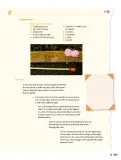
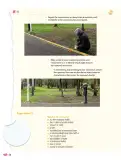
Cinta métrica amarilla enrollada mostrando números 44, 43, 42, 101, 100, 99, 98.
Figura 1 image
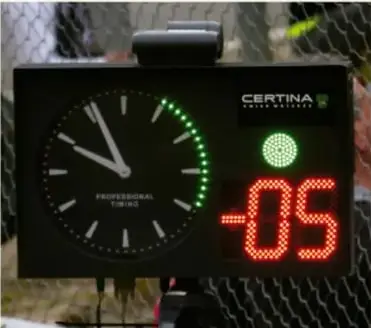
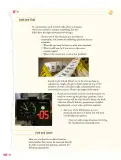
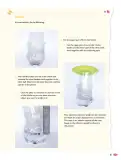
Reloj digital CERTINA con pantalla roja que marca -05 y esfera analógica con luz verde.
Figura 2 image

Preguntas que la gente también hace

¿Cómo se calcula la altura de un objeto usando el ángulo de inclinación?
Consulta la solución completa arriba o explora el libro entero para temas relacionados.
¿Cuáles son las unidades fundamentales del Sistema Internacional?
Consulta la solución completa arriba o explora el libro entero para temas relacionados.
¿Cómo medir una magnitud que no se puede medir directamente?
Consulta la solución completa arriba o explora el libro entero para temas relacionados.
📌 Antes de leer esto
  • • Concepto de magnitud y unidad
  • • Uso de regla y cinta métrica
  • • Nociones básicas de triángulos rectángulos
Siguiente tema sugerido
Experimentos de medición indirecta y notación científica
📝 Transcripción de la página (texto seleccionable) 1404 caracteres

Seek and Find

  1. In communities, each member talks about a situation where you needed to measure something, but you didn't have the right instrument for doing it.

2.Choose one of the situations just described in community, and answer the following questions in your notebook:

a) What did you need to know to solve that situation?b) What would you do if you were in that same situation again?

c) What is the correct way to solve that problem?

  1. Search in the School Library or on the internet how to calculate the height of a given object, based on one of the distances and the inclination angle, calculated with your measuring instrument. Obtain the height of the object.

  2. Based on your results, look for the information you need for answering the previous questions. Some useful sources will be your School Library, the book Colección Sk'asolil. Saberes y pensamiento cientifico.Segundo grado, or any other pertinent material.

  3. Take note of the information in your notebook and have it at hand; you will need it to develop your project.

  4. Now, let's solve some situations involving the fundamental measuring units.

Find and Learn

How can you describe an object based on characteristics that cannot be measured directly?In order to answer this question, perform the following experiments:

0 8

8

![](page=0,bbox=[383, 574, 889, 766])

![](page=0,bbox=[151, 928, 522, 1256])

乐

64

Ad

Otros libros recomendados

Ver todos →
Ad

Usamos cookies propias y de terceros para personalizar contenido, mostrar publicidad y analizar el tráfico. Las cookies necesarias siempre están activas.