

















Experiment 1: Measuring the height of tall objects with a homemade clinometer
Respuesta rápida
Clinómetro casero. Altura: H = h_{0} + d\cdot\tan\theta. Con d=5\,\text{m}, \theta=40^\circ, h_{0}=1.5\,\text{m}: H\approx 5.70\,\text{m}.
Solución — Página 66
Uérakua anapu uantakua. Projects and Readings. Libro de Educación Secundaria Grado 2° Ciclo Escolar 2025 - 2026
Experiment 1 — Measuring the height of a tall object
Enunciado (traducción): En comunidades, dividan una hoja de papel por la mitad. Enrollen los dos trozos para hacer dos tubos delgados como popotes y pónganles cinta adhesiva para que no se desenrollen. Corten un trozo de hilo y aten un arandela o tornillo a un extremo. Aten el tubo de papel al otro extremo y asegúrenlo con cinta. Vayan al patio o al parque y elijan un objeto para medir su altura, como el asta de la bandera o un árbol. Aten el hilo alrededor del objeto y aléjense 5 metros. Midan esa distancia con el flexómetro. Marquen el piso y párense ahí. Usen el instrumento que construyeron y observen por el tubo. Inclinen el instrumento hasta ver la parte más alta del objeto. Coloquen el origen del transportador en el vértice formado entre el nudo del hilo y el tubo de papel. Midan el ángulo entre ellos.
Paso 1: Construir el clinómetro
- Dividir la hoja de papel en dos mitades iguales.
- Enrollar cada mitad formando un tubo delgado (como popote).
- Fijar cada tubo con cinta adhesiva para que no se desenrolle.
- Atar una arandela o tornillo a un extremo del hilo (servirá de plomada).
- Atar el otro extremo del hilo al tubo de papel y asegurarlo con cinta.
Respuesta orientativa: El instrumento construido es un clinómetro casero: el tubo sirve de mira y el hilo con la arandela cuelga verticalmente marcando la vertical del lugar.
Paso 2: Tomar la medida en el campo
- Elegir un objeto alto (asta de bandera, árbol).
- Atar el hilo alrededor del objeto.
- Alejarse 5\,\text{m} del objeto y medir esa distancia con el flexómetro: d = 5\,\text{m}.
- Marcar el piso y pararse ahí.
- Mirar por el tubo e inclinarlo hasta ver la parte más alta del objeto.
- Colocar el origen del transportador en el vértice entre el nudo del hilo y el tubo, y medir el ángulo \theta entre el hilo (vertical) y el tubo.
Respuesta orientativa: El ángulo medido \theta es el ángulo de elevación desde el ojo del observador hasta la cima del objeto.
Paso 3: Calcular la altura del objeto
Con la distancia horizontal d y el ángulo \theta se usa la tangente:
\tan\theta = \frac{h}{d} \;\Rightarrow\; h = d\cdot\tan\theta
Sustituyendo d = 5\,\text{m}:
h = 5\cdot\tan\theta \;\text{m}
Si además se conoce la altura del ojo del observador h_{0} (aprox. 1.5\,\text{m}), la altura total es:
H = h_{0} + 5\cdot\tan\theta
Ejemplo numérico: si \theta = 40^\circ y h_{0}=1.5\,\text{m}:
H = 1.5 + 5\cdot\tan 40^\circ \approx 1.5 + 5(0.8391) \approx 1.5 + 4.20 = 5.70\,\text{m}
Respuesta: La altura del objeto se obtiene con H = h_{0} + d\cdot\tan\theta; con d=5\,\text{m}, \theta=40^\circ y h_{0}=1.5\,\text{m} resulta H\approx 5.70\,\text{m}.
Contenido de la página
Experiment 1
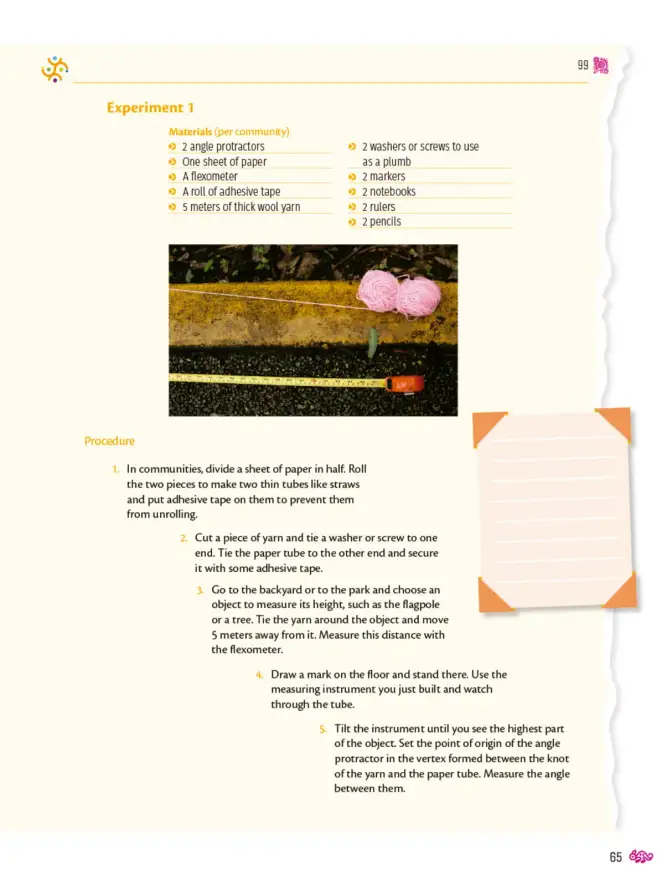
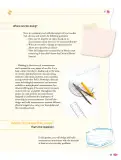
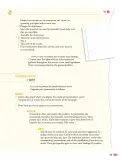
Materials (per community)
- 2 angle protractors
- One sheet of paper
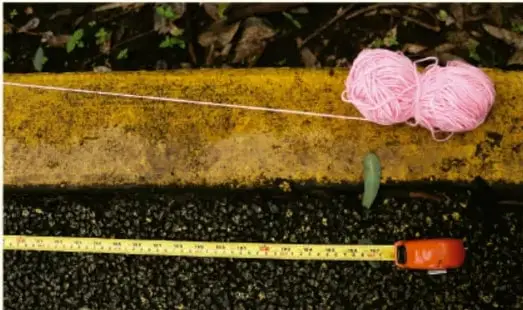
- A flexometer
- A roll of adhesive tape
- 5 meters of thick wool yarn
- 2 washers or screws to use as a plumb
- 2 markers
- 2 notebooks
- 2 rulers
- 2 pencils
Procedure
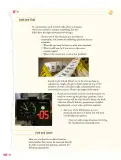
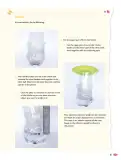
- In communities, divide a sheet of paper in half. Roll the two pieces to make two thin tubes like straws and put adhesive tape on them to prevent them from unrolling.
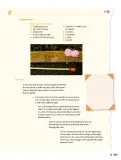
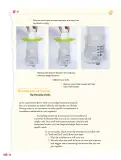
- Cut a piece of yarn and tie a washer or screw to one end. Tie the paper tube to the other end and secure it with some adhesive tape.
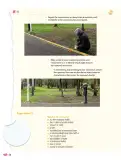
- Go to the backyard or to the park and choose an object to measure its height, such as the flagpole or a tree. Tie the yarn around the object and move 5 meters away from it. Measure this distance with the flexometer.
- Draw a mark on the floor and stand there. Use the measuring instrument you just built and watch through the tube.
- Tilt the instrument until you see the highest part of the object. Set the point of origin of the angle protractor in the vertex formed between the knot of the yarn and the paper tube. Measure the angle between them.
Ejemplos resueltos
Con d = 5\,\text{m}, \theta = 40^\circ y altura del ojo h_{0} = 1.5\,\text{m}, calcula la altura del objeto.
- \tan 40^\circ \approx 0.8391.
- h = 5\cdot 0.8391 \approx 4.20\,\text{m}.
- H = 1.5 + 4.20 = 5.70\,\text{m}.
Respuesta: H \approx 5.70\,\text{m}.
Tabla
| Material | Cantidad |
|---|---|
| Transportadores | 2 |
| Hoja de papel | 1 |
| Flexómetro | 1 |
| Cinta adhesiva | 1 rollo |
| Hilo de lana gruesa | 5 m |
| Arandelas o tornillos | 2 |
| Marcadores | 2 |
| Cuadernos | 2 |
| Reglas | 2 |
| Lápices | 2 |
Diagrama
graph TD
A[Hoja de papel] --> B[Dos tubos]
B --> C[Tubo con hilo y arandela]
C --> D[Clinómetro casero]
D --> E[Medir ángulo θ]
E --> F[Calcular H = h0 + d·tanθ]
Fórmulas y ecuaciones
H = h_{0} + d\cdot\tan\theta
\tan\theta = \frac{h}{d}
h = d\cdot\tan\theta
H = h_{0} + d\cdot\tan\theta
Glosario (6)
- angle protractor
- transportador de ángulos
- flexometer
- flexómetro, cinta métrica
- plumb
- plomada; objeto pesado que cuelga para marcar la vertical
- yarn
- hilo o estambre grueso
- flagpole
- asta de la bandera
- vertex
- vértice, punto donde se unen dos lados de un ángulo
Preguntas para practicar
Why is it useful to measure heights indirectly with a clinometer?
Porque permite calcular alturas de objetos inaccesibles (árboles, edificios, postes) sin necesidad de subir a ellos, usando solo una distancia horizontal y un ángulo medido con instrumentos sencillos.
Temas y conceptos clave
Figuras de la página (1)
Preguntas que la gente también hace
¿Cómo se mide la altura de un árbol con un clinómetro casero?
¿Qué es el ángulo de elevación y cómo se calcula?
¿Cómo se usa la tangente para calcular alturas inaccesibles?
- • Uso del transportador
- • Triángulos rectángulos
- • Razones trigonométricas básicas (seno, coseno, tangente)
- • Manejo de unidades de longitud (metros)
📝 Transcripción de la página (texto seleccionable) 1153 caracteres
Experiment 1
Materials (per community)
2 angle protractors 2 washers or screws to use One sheet of paper asa plumb )A flexometer 2 markers )Aroll of adhesive tape 2 notebooks 5 meters of thick wool yarn 2 rulers 2 pencils
Procedure
1.In communities, divide a sheet of paper in half. Roll the two pieces to make two thin tubes like straws and put adhesive tape on them to prevent them from unrolling.
Cut a piece of yarn and tie a washer or screw to one end. Tie the paper tube to the other end and secure it with some adhesive tape.
Go to the backyard or to the park and choose an object to measure its height, such as the flagpole or a tree. Tie the yarn around the object and move 5 meters away from it. Measure this distance with the flexometer.
4.Draw a mark on the floor and stand there. Use the measuring instrument you just built and watch through the tube.
5.Tilt the instrument until you see the highest part of the object. Set the point of origin of the angle protractor in the vertex formed between the knot ofthe yarn and the paper tube. Measure the angle between them.
8
99

65
乐
Otros libros recomendados

Colección Sk´asolil. Lenguajes. Libro de Educación Secundaria Grado 2° Ciclo Escolar 2025 - 2026
SEP/CONALITEG
323 págs.

Colección Sk´asolil. Saberes y pensamiento científico. Libro de Educación Secundaria Grado 2° Ciclo Escolar 2025 - 2026
SEP/CONALITEG
339 págs.

Colección Sk´asolil. Ética, naturaleza y sociedades. Libro de Educación Secundaria Grado 2° Ciclo Escolar 2025 - 2026
SEP/CONALITEG
355 págs.
Fichas de Matemática 2 · 2024
Larisa Mansilla Fernández y equipo
100 págs.
Comprensión lectora : manual para el docente de segundo grado de Secundaria 2018 · 2018
MINEDU
194 págs.
Comprensión lectora 2 : manual para el docente de segundo grado de Secundaria · 2017
MINEDU
130 págs.
Fichas de aprendizaje de Comunicación 2 · 2024
Carmen Patricia Cáceres Villanueva y equipo
100 págs.

Uérakua anapu uantakua. Projects and Readings. Libro de Educación Telesecundaria Grado 3° Ciclo Escolar 2025 - 2026
SEP/CONALITEG
187 págs.