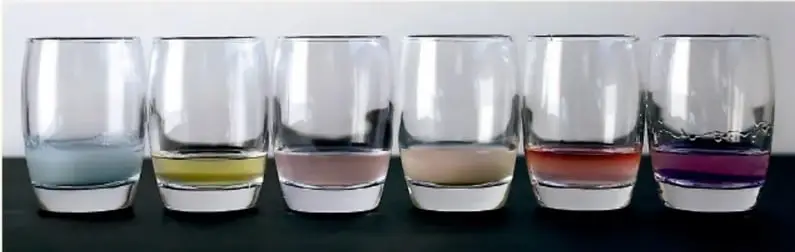
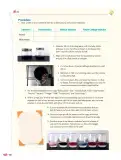
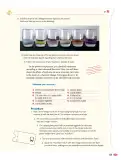
12.Add five drops of the cabbage indicator liquid to the second batch and take pictures or make drawings.
Determine the meaning of the samples' colors once they are mixed with the indicator liquids regarding their chemical function.
Follow the instructions of your teacher to dispose of waste.
In the previous experience, you classified substances according to their chemical function. Now, you will learn about the effects of acid rain on some materials. Acid rain is the result of a chemical change. Investigate about it. In assembly, organize yourselves to get the following materials.
Materials (per classroom)
Distilled or ionized water (for ironing)2 plastic plates
y vinegar 2 spray bottles
)2 10-peso-coins or 2 copper tubes A baby bottle
(no wider than 5 cm)A 10 ml syringe
10 smashed eggshells Apermanent marker
2 small plants in pots
Procedure
Add 5 ml of vinegar to 95 ml of water using the syringe. You can measure it with the baby bottle. This solution represents acid rain.
Fill one of the spray bottles with distilled water and another with the vinegar solution.
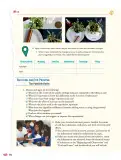
On a plastic plate, place half the smashed eggshells (to represent stone constructions). Add a coin or one of the copper tubes (to represent pipes, statues, and metallic structures) and place one of the plants beside them. Label it as "Acid Rain."
4.Set up a second batch with the same materials and label them "Rain."
- Spray the"Acid Rain" batch with the vinegar solution and the "Rain"one with water, making sure the materials are saturated with the liquids
127


159
8