















Saltar al contenido
MisLibrosTexto
Ad

Present perfect, past simple y secuencia de un experimento

📄 ejercicios ingles 🎓 bachillerato · 3° Secundaria México 🇲🇽 MX 🗣 Español
Página 41
41 de 187
Página 41 de Uérakua anapu uantakua. Projects and Readings.  Libro de Educación Secundaria Grado 3°  Ciclo Escolar 2025 - 2026
Anterior Página 41 / 187 Siguiente

Respuesta rápida

4.a have learned / save; 4.b did not do / did; 4.c have just made; 4.d have just told / do not listen; 4.e has arrived / subscribed; 4.f have made; 4.g are. Reading: 1,2,3,4,5,6,7,8.

📚 exercise ingles ⭐⭐ Dificultad 2/5 ⏱ 8 min lectura

Solución — Página 41

Uérakua anapu uantakua. Projects and Readings. Libro de Educación Secundaria Grado 3° Ciclo Escolar 2025 - 2026

4
Ejercicio 4

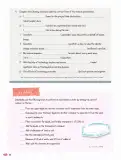
Complete the following sentences with the correct form of the verbs in parentheses.

a
Parte 4.a
  1. La acción de aprender ocurre desde el pasado hasta ahora, se usa present perfect: have learned.
  2. La segunda acción es una verdad general, presente simple: save.
Respuesta

I have learned in this project that electrolytes save people's lives.

b
Parte 4.b
  1. Last school year indica pasado simple negativo: did not do.
  2. During this one indica pasado simple afirmativo: did.
Respuesta

I did not do any experiment last school year; but I did a few during this one.

c
Parte 4.c
  1. Just con acción reciente se usa con present perfect: have just made.
Respuesta

Scientists have just made many discoveries on behalf of human beings.

d
Parte 4.d
  1. Primera acción reciente: have just told.
  2. Segunda acción negativa en presente simple: do not listen.
Respuesta

Scientists have just told us how to solve the climate change crisis but people do not listen carefully.

e
Parte 4.e
  1. Since I first subscribed marca inicio en pasado; la acción continúa: has arrived.
  2. El verbo en la cláusula con since va en pasado simple: subscribed.
Respuesta

My science magazine has arrived almost every week since I first subscribed.

f
Parte 4.f
  1. Acción con resultado presente y relevancia actual: have made.
Respuesta

With the help of technology, doctors and nurses have made significant steps in treating and preventing diseases.

g
Parte 4.g
  1. Estado general y permanente: presente simple are.

Reading

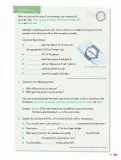
Individually, put the following steps to perform an experiment in order by writing the correct number on the line.

  1. Place a container for liquids, preferably transparent, of 500 ml.
  2. Measure 250 ml of water and 100 ml of edible oil.
  3. Add the liquids to the transparent container.
  4. Add a tablespoon of sand or soil.
  5. Mix the materials perfectly well.
  6. Wait until the elements are separated.
  7. Pour the upper liquid into another container until it separates from the lower liquid.
  8. Subsequently, pour the lower liquid into another container to separate it from the sand or earth sediments.

Respuesta: 1, 2, 3, 4, 5, 6, 7, 8.

Respuesta

The effects of technology on society are both positive and negative.
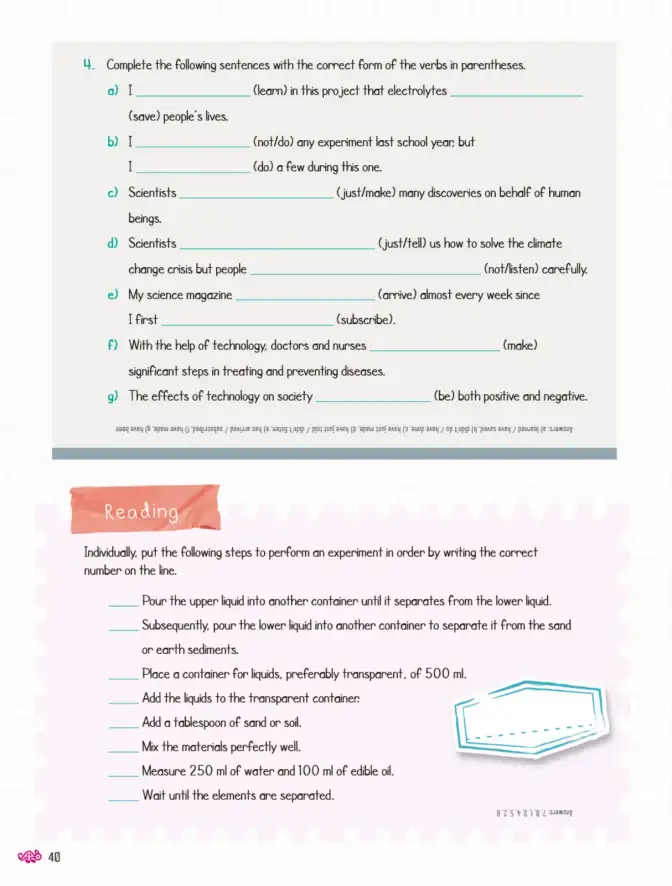
Contenido de la página

4. Complete the following sentences with the correct form of the verbs in parentheses.

a) I ______ (learn) in this project that electrolytes ______ (save) people's lives.

b) I ______ (not/do) any experiment last school year; but I ______ (do) a few during this one.

c) Scientists ______ (just/make) many discoveries on behalf of human beings.

d) Scientists ______ (just/tell) us how to solve the climate change crisis but people ______ (not/listen) carefully.

e) My science magazine ______ (arrive) almost every week since I first ______ (subscribe).

f) With the help of technology, doctors and nurses ______ (make) significant steps in treating and preventing diseases.

g) The effects of technology on society ______ (be) both positive and negative.
Reading

Individually, put the following steps to perform an experiment in order by writing the correct number on the line.

___ Pour the upper liquid into another container until it separates from the lower liquid.

___ Subsequently, pour the lower liquid into another container to separate it from the sand or earth sediments.

___ Place a container for liquids, preferably transparent, of 500 ml.

___ Add the liquids to the transparent container.

___ Add a tablespoon of sand or soil.

___ Mix the materials perfectly well.

___ Measure 250 ml of water and 100 ml of edible oil.

___ Wait until the elements are separated.

Ejemplos resueltos

I ______ (learn) in this project that electrolytes ______ (save) people's lives.

have learned (present perfect por acción que continúa) y save (presente simple, verdad general).

Glosario (5)

electrolytes
electrolitos, sustancias que conducen electricidad en solución
on behalf of
en nombre de, en beneficio de
edible oil
aceite comestible
sediments
sedimentos, partículas que se depositan en el fondo
container
recipiente

Temas y conceptos clave

Present perfectPast simpleInstrucciones y secuenciashave/has + participiodid + base formsince + past simpleorden lógico de un procedimiento experimental
¿Te fue útil esta página?

Figuras de la página (1)

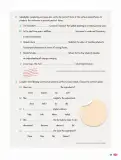
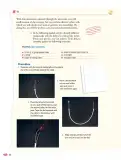
Recuadro con líneas punteadas para escribir la secuencia del experimento.
Figura 1 image

Preguntas que la gente también hace

¿Cuándo se usa el present perfect y cuándo el past simple en inglés?
Consulta la solución completa arriba o explora el libro entero para temas relacionados.
¿Cómo se ordenan los pasos de un experimento de separación de mezclas?
Consulta la solución completa arriba o explora el libro entero para temas relacionados.
¿Qué diferencia hay entre 'have just made' y 'made'?
Consulta la solución completa arriba o explora el libro entero para temas relacionados.
📌 Antes de leer esto
  • • Conjugación del verbo to have en presente
  • • Formación del participio pasado de verbos regulares e irregulares
  • • Vocabulario básico de laboratorio y experimentos
Siguiente tema sugerido
Uso de conectores de secuencia (first, then, next, finally) en instrucciones de laboratorio
📝 Transcripción de la página (texto seleccionable) 1335 caracteres
  1. Complete the following sentences with the correct form of the verbs in parentheses.

a)Ⅰ(learn) in this project that electrolytes (save) people's lives.

b)Ⅰ_(not/do) any experiment last school year; but I (do) a few during this one.

c) Scientists (just/make) many discoveries on behalf of human beings.

d)Scientists (just/tell) us how to solve the climate change crisis but people (not/isten) carefully.

e))My science magazine (arrive) almost every week since I first (subscribe).

f)With the help of technology, doctors and nurses (make)significant steps in treating and preventing diseases.

g)The effects of technology on society (be) both positive and negative.
a s a p

Reading

Individually, put the following steps to perform an experiment in order by writing the correct number on the line.

Pour the upper liquid into another container until it separates from the lower liquid.

Subsequently, pour the lower liquid into another container to separate it from the sand or earth sediments.

Place a container for liquids, preferably transparent,of500ml.

Add the liquids to the transparent container:

Add a tablespoon of sand or soil.

Mix the materials perfectly well.

Measure 250 ml of water and 100 ml of edible oil.

Wait until the elements are separated.

![](page=0,bbox=[818, 1223, 1103, 1376])

9212

40

Ad

Otros libros recomendados

Ver todos →
Ad

Usamos cookies propias y de terceros para personalizar contenido, mostrar publicidad y analizar el tráfico. Las cookies necesarias siempre están activas.