















Saltar al contenido
MisLibrosTexto
Ad

Integration and Broadcasting: Presenting the Identity Handbook

📄 ejercicios ingles 🎓 otro · 1° TELESECUNDARIA México 🇲🇽 MX 🗣 Español
Página 107
107 de 187
Página 107 de Uérakua anapu uantakua. Projects and Readings.  Libro de Educación Telesecundaria Grado 1°  Ciclo Escolar 2025 - 2026
Anterior Página 107 / 187 Siguiente

Respuesta rápida

Integración: mejora el cuadernillo con sugerencias. Difusión: prepara lugar, materiales, ensaya y comparte; recoge opiniones con las preguntas guía.

📚 exercise ingles ⭐⭐ Dificultad 2/5 ⏱ 8 min lectura

Solución — Página 107

Uérakua anapu uantakua. Projects and Readings. Libro de Educación Telesecundaria Grado 1° Ciclo Escolar 2025 - 2026

1
Ejercicio 1

Integration

Enunciado: Again, in communities, make any necessary changes to improve your projects based on others' suggestions. In the space you left for questions and answers about your project's assessment add more blank sheets of paper.

  1. Reviso las sugerencias recibidas de compañeros y comunidad sobre mi Identity Handbook.
  2. Identifico los cambios necesarios: contenido, traducción, imágenes o materiales.
  3. Aplico las mejoras al cuadernillo.
  4. Agrego hojas blancas en la sección de preguntas y respuestas para registrar nuevas observaciones.

Respuesta orientativa: El estudiante debe incorporar al menos una mejora concreta basada en la retroalimentación y ampliar el espacio de registro de preguntas y respuestas.

Integration 2

Enunciado: As you finish, remember it is very important to establish how you will present your Identity Handbooks. How will you make them? What materials will you use? What do you want to show about yourselves to others?

  1. Defino el formato de presentación: oral, escrito o mixto.
  2. Elijo materiales: cartulina, telas, fotografías, música, texto en lengua indígena.
  3. Selecciono qué aspecto de mi identidad quiero mostrar (lengua, tradiciones, vestimenta, comida).
  4. Preparo el cuadernillo de forma creativa.

Respuesta orientativa: Se espera que el estudiante describa su plan de presentación y justifique los materiales elegidos como representativos de su identidad.

Broadcasting 1

Enunciado: It is necessary to prepare the location and find a time to present your Identity Handbook. Consider the following:

a
Parte 1.a
  1. Organizo los materiales de apoyo: relato en lengua indígena, música, imágenes o textiles de la región.
  2. Elijo recursos que refuercen la idea de identidad.

Respuesta orientativa: Los materiales deben estar organizados y ser pertinentes para mostrar la identidad cultural.

b
Parte 1.b
  1. Reúno todos los recursos para una presentación oral o escrita.
  2. Considero sistemas lingüísticos alternativos, como la lengua de señas.

Respuesta orientativa: La presentación debe ser accesible; se puede usar lengua de señas o apoyo visual.

c
Parte 1.c
  1. Identifico los lugares donde me ubicaré.
  2. Verifico que los recursos de aprendizaje estén listos para usarse.

Respuesta orientativa: El espacio debe permitir la visibilidad y el acceso a los materiales.

Broadcasting 2

Enunciado: Before the presentation, rehearse it to check its duration and adjust accordingly.

  1. Ensayo la presentación completa.
  2. Mido el tiempo con cronómetro.
  3. Ajusto el contenido si excede o falta tiempo.

Respuesta orientativa: El ensayo permite controlar la duración y mejorar la fluidez.

Broadcasting 3

Enunciado: After presenting your handbook, pass it around so participants can see it up close, touch it, and read it. Listen to their opinions and ask for suggestions. Use the following questions as a guide:

a
Parte 1.a

Respuesta orientativa: Noté que el proyecto integra lengua, imágenes y tradiciones de mi comunidad.

b
Parte 1.b

Respuesta orientativa: La información resuena conmigo porque refleja costumbres que vivo a diario.

c
Parte 1.c

Respuesta orientativa: Me habría gustado encontrar más testimonios de personas mayores.

d
Parte 1.d

Respuesta orientativa: Se pueden mejorar la traducción, incluir glosario y adaptar el formato para mayor claridad.


Contenido de la página

Integration

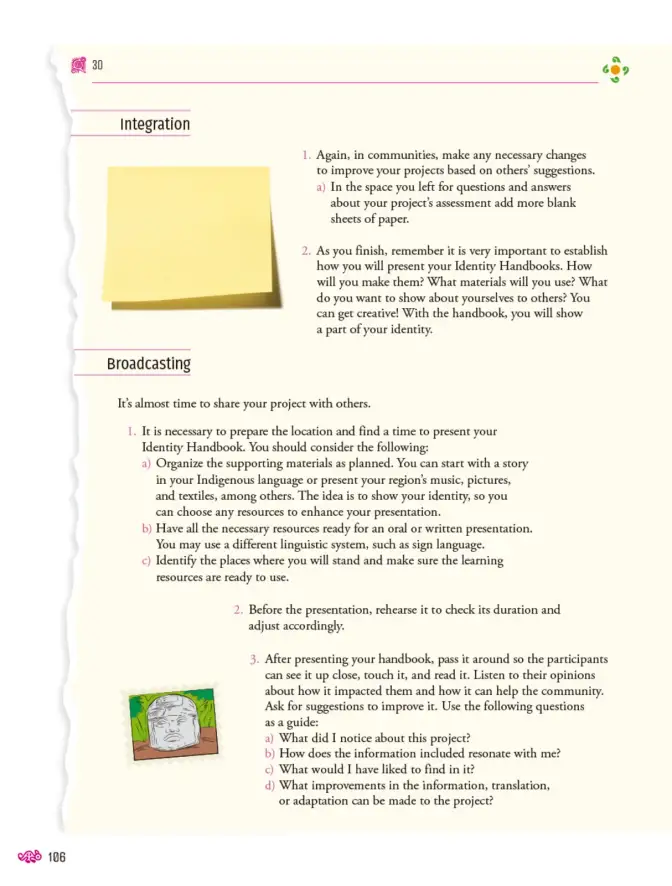
  1. Again, in communities, make any necessary changes to improve your projects based on others' suggestions. a) In the space you left for questions and answers about your project's assessment add more blank sheets of paper.

  2. As you finish, remember it is very important to establish how you will present your Identity Handbooks. How will you make them? What materials will you use? What do you want to show about yourselves to others? You can get creative! With the handbook, you will show a part of your identity.

Broadcasting

It's almost time to share your project with others.

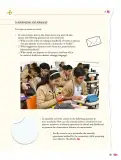
  1. It is necessary to prepare the location and find a time to present your Identity Handbook. You should consider the following: a) Organize the supporting materials as planned. You can start with a story in your Indigenous language or present your region's music, pictures, and textiles, among others. The idea is to show your identity, so you can choose any resources to enhance your presentation. b) Have all the necessary resources ready for an oral or written presentation. You may use a different linguistic system, such as sign language. c) Identify the places where you will stand and make sure the learning resources are ready to use.

  2. Before the presentation, rehearse it to check its duration and adjust accordingly.

  3. After presenting your handbook, pass it around so the participants can see it up close, touch it, and read it. Listen to their opinions about how it impacted them and how it can help the community. Ask for suggestions to improve it. Use the following questions as a guide: a) What did I notice about this project? b) How does the information included resonate with me? c) What would I have liked to find in it? d) What improvements in the information, translation, or adaptation can be made to the project?

Glosario (5)

Identity Handbook
Cuadernillo elaborado por el estudiante para mostrar aspectos de su identidad cultural.
Broadcasting
Difusión o presentación pública del proyecto ante la comunidad.
Rehearse
Ensayo previo de una presentación para ajustar tiempo y contenido.
Sign language
Lengua de señas, sistema lingüístico alternativo para la comunicación.
Indigenous language
Lengua originaria de un pueblo indígena.

Preguntas para practicar

What did I notice about this project?

Noté que el proyecto integra lengua, imágenes y tradiciones de mi comunidad.

How does the information included resonate with me?

La información resuena conmigo porque refleja costumbres que vivo a diario.

What would I have liked to find in it?

Me habría gustado encontrar más testimonios de personas mayores.

What improvements in the information, translation, or adaptation can be made to the project?

Se pueden mejorar la traducción, incluir glosario y adaptar el formato para mayor claridad.
Temas y conceptos clave

Integración de proyectoDifusión comunitariaIdentidad culturalIdentity HandbookBroadcastingRetroalimentaciónLengua indígenaLengua de señas
¿Te fue útil esta página?

Figuras de la página (2)

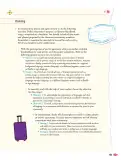
Hoja de papel amarilla con esquina doblada, símbolo de notas o cuadernillo.
Figura 1 image
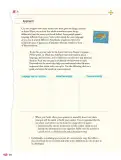
Ilustración de una estela o cabeza tallada en piedra, representando patrimonio cultural.
Figura 2 image

Preguntas que la gente también hace

¿Cómo presentar un Identity Handbook en la comunidad?
Consulta la solución completa arriba o explora el libro entero para temas relacionados.
¿Qué materiales usar para mostrar mi identidad cultural?
Consulta la solución completa arriba o explora el libro entero para temas relacionados.
¿Cómo pedir retroalimentación después de una presentación?
Consulta la solución completa arriba o explora el libro entero para temas relacionados.
📌 Antes de leer esto
  • • Vocabulario básico en inglés sobre identidad y comunidad
  • • Elaboración previa del Identity Handbook
  • • Nociones de exposición oral
Siguiente tema sugerido
Evaluación final del proyecto y reflexión sobre la identidad
📝 Transcripción de la página (texto seleccionable) 1935 caracteres

Integration

  1. Again, in communities, make any necessary changes to improve your projects based on others' suggestions.a) In the space you left for questions and answers about your project's assessment add more blank sheets of paper.

  2. As you finish, remember it is very important to establish how you will present your Identity Handbooks. How will you make them? What materials will you use? What do you want to show about yourselves to others? You can get creative! With the handbook, you will show a part of your identity.

Broadcasting

It's almost time to share your project with others.

  1. It is necessary to prepare the location and find a time to present your Identity Handbook. You should consider the following:

a)Organize the supporting materials as planned. You can start with a story in your Indigenous language or present your region's music, pictures,and textiles, among others. The idea is to show your identity, so you can choose any resources to enhance your presentation.

b) Have all the necessary resources ready for an oral or written presentation.You may use a different linguistic system, such as sign language.

C Identify the places where you will stand and make sure the learning resources are ready to use.

  1. Before the presentation, rehearse it to check its duration and adjust accordingly.

  2. After presenting your handbook, pass it around so the participants can see it up close, touch it, and read it. Listen to their opinions about how it impacted them and how it can help the community.Ask for suggestions to improve it. Use the following questions as a guide:

a) What did I notice about this project?

b) How does the information included resonate with me?

c What would I have liked to find in it?

d)What improvements in the information, translation,or adaptation can be made to the project?

30

![](page=0,bbox=[185, 294, 510, 557])

![](page=0,bbox=[223, 1235, 399, 1376])

A

106

Ad

Otros libros recomendados

Ver todos →
Ad

Usamos cookies propias y de terceros para personalizar contenido, mostrar publicidad y analizar el tráfico. Las cookies necesarias siempre están activas.