Speaking
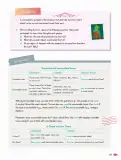
In communities, go back to the previous text and take turns to read it aloud. Listen as each participant reads their part.
After reading the text, discuss the following questions. Allow each participant to share their thoughts and opinions.
a) What are the main ideas presented in the text?
b) What did you learn about social media from it?
c) Do you agree or disagree with any opinions or perspectives shared in the text? Why?
Grammar
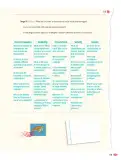
With plural countable nouns, you can either state the quantity (e.g. five people) or use some if you don't know the exact amount. You can also use some for uncountable nouns. Use much if the noun is uncountable (e.g., water; sand). Use many if the noun is countable (e.g., oranges,children).
Remember; most uncountable nouns don't have a plural form. Use a/an with singular countable nouns and don't use articles with uncountable nouns.


Countable and Uncountable Nouns
| Explanation | Examples | Question-Words |
| Countable nouns | These nouns refer to things we can count. | Posts, comments, likes, shares, followens | How many posts do you have? |
| Uncountable nouns | These nouns refer to things we can't count. They often represent substances, matenials, or abstract ideas. | Information, time, fun, popularity, content,engagement, feedback, entertainment | How much content do you see on social media? |

Is There and Are There
| Explanation | Examples |
| Is there? | Use is thene with singular nouns and uncountable nouns. | Is there any new content today? |
| Are there? | Use ane thene with plural countable nouns. | Are there many intenesting posts on your feed? |