















What I Need to Know (Lo que necesito saber)
Investigar en la comunidad qué son los afectos, emociones, sentimientos y estados de ánimo, y cómo se expresan.
Buscar en fuentes confiables estereotipos y roles que promuevan desigualdad de género y discriminación al expresar emociones.
- Definir los cuatro conceptos: afecto (vínculo emocional hacia alguien o algo), emoción (reacción breve ante un estímulo), sentimiento (estado afectivo más duradero) y estado de ánimo (tono emocional general).
- Consultar biblioteca escolar, biblioteca pública y aula interactiva.
- Registrar ejemplos de estereotipos: "los hombres no lloran", "las mujeres son más sensibles", "los niños no deben tener miedo".
- Analizar cómo esos estereotipos limitan la expresión libre de emociones y generan discriminación.
Respuesta orientativa: Los estereotipos de género asignan emociones "permitidas" según el sexo; identificarlos permite cuestionarlos y proponer formas de expresión más libres e igualitarias.
Entrevistar a expertos (psicólogos u orientadores) sobre afectos, sentimientos y emociones.
- Elaborar un guion de 5 a 8 preguntas abiertas.
- Solicitar consentimiento y agendar la entrevista.
- Registrar respuestas y contrastarlas con la investigación documental.
Respuesta orientativa: El experto aporta definiciones técnicas y estrategias de regulación emocional que complementan la información de las fuentes escritas.
Building and/or Proving — Organizing the Activities
Para crear el Emotional Dictionary, realizar una encuesta escolar sobre cómo se expresan afectos, emociones, sentimientos y estados de ánimo, con el fin de establecer relaciones inclusivas y equitativas.
Paso 1
Con ayuda del docente, investigar cómo crear una encuesta, cómo aplicarla y cómo analizar y presentar los resultados.
- Revisar tipos de preguntas: abiertas, cerradas y de escala Likert.
- Definir objetivo, población y tamaño de muestra.
- Diseñar el formato de análisis (tablas y gráficas).
Respuesta orientativa: Una encuesta bien diseñada tiene objetivo claro, preguntas pertinentes y un plan de análisis previo a su aplicación.
Paso 2
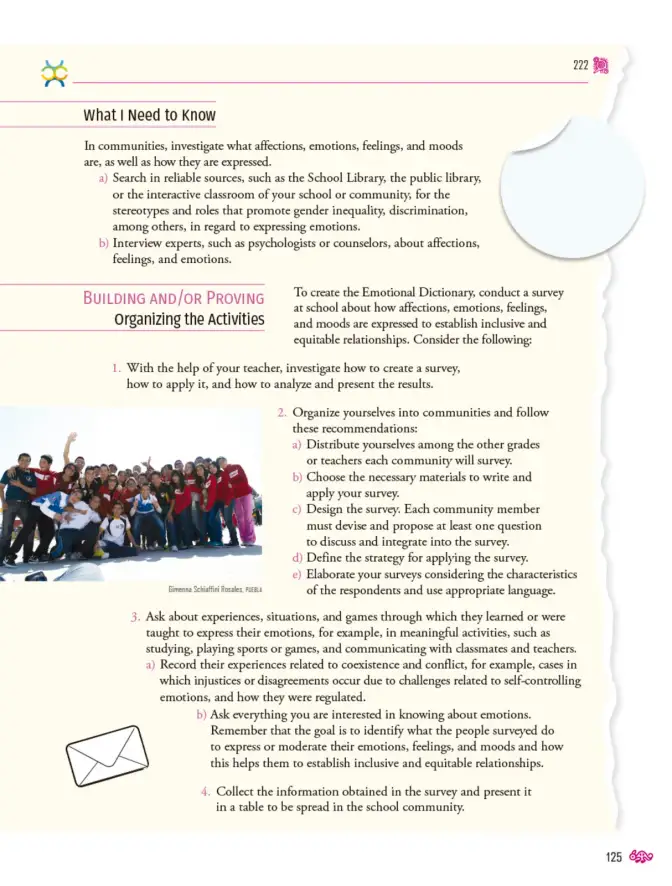
Organizarse en comunidades y seguir las recomendaciones.
Distribuirse entre los demás grados o docentes a encuestar.
Respuesta orientativa: Cada equipo asume un grado o grupo de docentes para evitar duplicar respuestas y cubrir toda la escuela.
Elegir los materiales necesarios para escribir y aplicar la encuesta.
Respuesta orientativa: Hojas, plumas, tablas de registro, dispositivo para digitalizar y carpeta de evidencias.
Diseñar la encuesta; cada integrante propone al menos una pregunta.
Respuesta orientativa: Ejemplos: ¿Cómo expresas alegría?, ¿Qué haces cuando sientes enojo?, ¿Crees que hombres y mujeres expresan igual sus emociones?
Definir la estrategia de aplicación.
Respuesta orientativa: Elegir horarios de receso o clases, pedir permiso, explicar el propósito y garantizar el anonimato.
Elaborar la encuesta considerando las características de los encuestados y usar lenguaje apropiado.
Respuesta orientativa: Adaptar vocabulario según la edad; usar términos claros y respetuosos.
Paso 3
Preguntar sobre experiencias, situaciones y juegos mediante los cuales aprendieron a expresar emociones.
Registrar experiencias de convivencia y conflicto, injusticias o desacuerdos por dificultades para autocontrolar emociones y cómo se regularon.
Respuesta orientativa: Ejemplo: un conflicto en un partido de fútbol se resolvió con diálogo y respiración profunda; se registra como caso de regulación emocional.
Preguntar todo lo que interese saber sobre emociones.
Respuesta orientativa: El objetivo es identificar qué hacen las personas para expresar o moderar sus emociones y cómo eso favorece relaciones inclusivas y equitativas.
Paso 4
Recolectar la información y presentarla en una tabla para difundirla en la comunidad escolar.
Respuesta orientativa: Tabla con columnas: pregunta, respuestas frecuentes, interpretación y propuesta de mejora.
Proyecto completo: investigación documental, entrevista a expertos, encuesta escolar y tabla de resultados para el Emotional Dictionary.