
















(Assembly discussion)
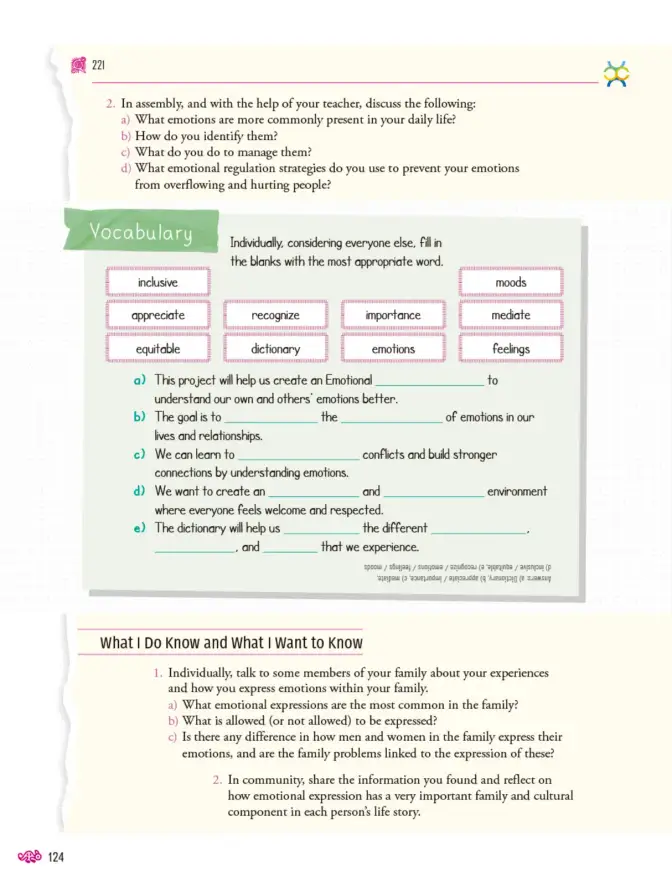
En asamblea, con ayuda del docente, discutan lo siguiente:
What emotions are more commonly present in your daily life?
Respuesta orientativa: Las emociones más frecuentes en la vida diaria suelen ser la alegría, la tristeza, el enojo, el miedo y la ansiedad. Estas aparecen en situaciones escolares, familiares y sociales, y varían según la persona y el contexto.
How do you identify them?
Respuesta orientativa: Se identifican a través de señales físicas (ritmo cardíaco, tensión muscular, respiración), pensamientos y conductas. También ayuda ponerles nombre: “estoy sintiendo enojo”, “estoy nervioso”.
What do you do to manage them?
Respuesta orientativa: Se pueden gestionar respirando profundo, contando hasta diez, hablando con alguien de confianza, escribiendo lo que siento o haciendo una pausa antes de reaccionar.
What emotional regulation strategies do you use to prevent your emotions from overflowing and hurting people?
Respuesta orientativa: Estrategias como la respiración consciente, la comunicación asertiva, pedir tiempo para calmarse y buscar apoyo evitan que las emociones desborden y dañen a otros.
Vocabulary
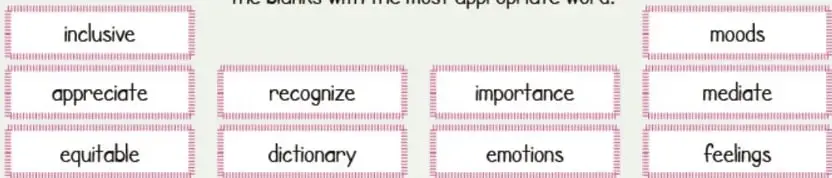
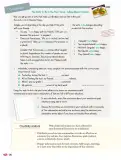
Completa los enunciados con la palabra más adecuada.
This project will help us create an Emotional ______ to understand our own and others' emotions better.
dictionary
The goal is to ______ the ______ of emotions in our lives and relationships.
recognize / importance
We can learn to ______ conflicts and build stronger connections by understanding emotions.
mediate
We want to create an ______ and ______ environment where everyone feels welcome and respected.
inclusive / equitable
The dictionary will help us ______ the different ______, ______, and ______ that we experience.
What I Do Know and What I Want to Know
appreciate / emotions / feelings / moods