- In community, read the following text and reflect on the origin of the Indigenous and Afro-Mexican communities, as well as the racism they have faced over the centuries.
In Mexico and Latin America, the Indigenous and Afro-descendant communities were relevant in many historical matters. Even when they have not been acknowledged in history books, there is a record of the cultural expressions that are part of the Mexican and Latin American identity. Nowadays, the racist and discriminative system that was born in America during the Colonial period is still operative, and violates the rights of Indigenous and Afro-descendant people who, for generations, have struggled for their development in societies that reproduce racism.
- Now, read a fragment of Cristina Masferrer's research, a historian and anthropologist who has studied the manifestations of racism in schools of Afro-Mexican communities.
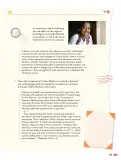
Classes had ended, and students were ready to get home, but they were still playing in the school's backyard, in Cuajinicuilapa,an Afro-Mexican community in the Costa Chica region in Guerrero. Before going home, Rosa, a fifth-grade student, told me a story she knew about black and brown-skinned people,a local story about a sunken ship supposedly carrying a lot of African people who populated the region later.
[…]
Rosa explained that the"black"people got married to the"brown-skinned"people because the"white"didn't want to marry them. Then I asked her, "How could you know if someone is brown-skinned?" To which she answered, as something obvious, "Because they are brown-skinned."I insisted, "But what if you cannot see? If you close your eyes and you can't see,how can you realize if they are brown-skinned or not?" [..] Rosa closed her eyes and, after a moment, she answered, "I can hear a person telling them,'I don't sit next to you because you are brown-skinned." (Masferrer, 2016, p. 2)
.灾
198


139