















Saltar al contenido
MisLibrosTexto
Ad

Following Through / Recording the Experience: proyecto de infografía sobre la historia de las mujeres

📄 ejercicios ingles 🎓 otro · 1° TELESECUNDARIA México 🇲🇽 MX 🗣 Español
Página 137
137 de 187
Página 137 de Uérakua anapu uantakua. Projects and Readings.  Libro de Educación Telesecundaria Grado 1°  Ciclo Escolar 2025 - 2026
Anterior Página 137 / 187 Siguiente

Respuesta rápida

Plan de investigación con preguntas guía, fuentes confiables (Colección Ximhai, bibliotecas), boceto, verificación de fuentes, infografía final y presentación con dificultades y retroalimentación docente.

📚 exercise ingles ⭐⭐ Dificultad 2/5 ⏱ 6 min lectura

Solución — Página 137

Uérakua anapu uantakua. Projects and Readings. Libro de Educación Telesecundaria Grado 1° Ciclo Escolar 2025 - 2026

1
Ejercicio 1

In community, develop an information research plan to delve into women's history. Get organized to create the infographic, following the agreed-upon criteria and elements.

  1. Definir el tema y el enfoque: la historia de las mujeres en la comunidad o en México.
  2. Formular preguntas de investigación: ¿Qué mujeres han sido clave en la historia local? ¿Qué aportaron?
  3. Acordar criterios de la infografía: título, datos breves, imágenes, fuente citada y diseño legible.
  4. Distribuir tareas en equipo: búsqueda, redacción, diseño y revisión.
  5. Establecer un cronograma con fechas de avance y entrega.

Respuesta orientativa: Un plan de investigación debe incluir tema delimitado, preguntas guía, fuentes previstas, criterios de la infografía, reparto de tareas y fechas. Se sugiere registrar todo en el cuaderno o en tarjetas de índice para dar seguimiento.
2
Ejercicio 2

Write the sources useful for the project in your notebook or index cards. You can consult the following informative sources:

a
Parte 2.a

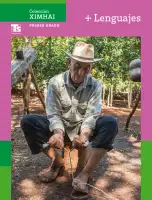
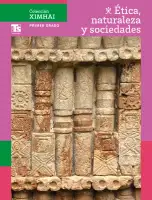
Book Colección Ximhai. Ética, naturaleza y sociedades. Primer grado.

Respuesta

Fuente impresa oficial de la SEP; útil para datos éticos y sociales sobre el papel de la mujer.

b
Parte 2.b

Your Classroom Library, School Library, public library, or any other sources available.

Respuesta

Se pueden usar libros de la biblioteca escolar y pública, así como fuentes digitales confiables (sitios de gobierno, enciclopedias, archivos históricos).

3
Ejercicio 3

In communities, introduce the contents and ideas of illustrations or images for your infographic. Listen to your classmates' opinions.

  1. Mostrar bocetos de las imágenes al equipo.
  2. Explicar qué idea transmite cada imagen.
  3. Escuchar opiniones y ajustar la selección.

Respuesta orientativa: Las imágenes deben reforzar el mensaje central de la infografía; se eligen tras escuchar al equipo y verificar que sean pertinentes y respetuosas.

Ad
4
Ejercicio 4

You can make a sketch or a preliminary version of the infographic. Then, with your classmates and the help of your teacher, decide if it is necessary to make any changes in its design or contents. Ensure you leave some space in the infographics to include the main source you consulted.

  1. Elaborar un boceto con título, secciones y espacio para la fuente.
  2. Revisar con compañeros y docente.
  3. Corregir diseño o contenido según observaciones.

Respuesta orientativa: El boceto permite detectar errores antes de la versión final; siempre debe reservarse un espacio visible para citar la fuente principal consultada.

5
Ejercicio 5

Verify the kind of source consulted. Remember that all information gathered must be current and reliable.

  1. Identificar si la fuente es primaria o secundaria.
  2. Comprobar autor, fecha y respaldo institucional.
  3. Descartar información sin sustento.

Respuesta orientativa: Se prefieren fuentes actuales y verificables: libros de texto, enciclopedias, sitios oficiales y archivos históricos; se evita información anónima o sin fecha.

6
Ejercicio 6

Develop the infographics and present them to your classmates.

  1. Pasar el boceto a formato final (papel o digital).
  2. Revisar ortografía y datos.
  3. Presentar ante el grupo con apoyo visual.

Respuesta orientativa: La infografía final debe ser clara, visualmente ordenada y con la fuente citada; la presentación oral explica el proceso y los hallazgos.

Ad
7
Ejercicio 7

When presenting the infographics, consider the following aspects:

a
Parte 7.a

Mention the difficulties and obstacles you faced during your project's process.

Respuesta orientativa: Se pueden mencionar dificultades como falta de fuentes, desacuerdos en el equipo o tiempo limitado, y cómo se resolvieron.

b
Parte 7.b

Ask your teacher to give you pertinent feedback.

Respuesta orientativa: Solicitar retroalimentación sobre claridad, veracidad de datos y diseño permite mejorar el trabajo y aprender del proceso.

Contenido de la página

Following Through

  1. In community, develop an information research plan to delve into women's history. Get organized to create the infographic, following the agreed-upon criteria and elements.

  2. Write the sources useful for the project in your notebook or index cards. You can consult the following informative sources:

    a) Book Colección Ximhai. Ética, naturaleza y sociedades. Primer grado

    b) Your Classroom Library, School Library, public library, or any other sources available

Recording the Experience

  1. In communities, introduce the contents and ideas of illustrations or images for your infographic. Listen to your classmates' opinions.

  2. You can make a sketch or a preliminary version of the infographic. Then, with your classmates and the help of your teacher, decide if it is necessary to make any changes in its design or contents. Ensure you leave some space in the infographics to include the main source you consulted.

  3. Verify the kind of source consulted. Remember that all information gathered must be current and reliable.

  4. Develop the infographics and present them to your classmates.

  5. When presenting the infographics, consider the following aspects:

    a) Mention the difficulties and obstacles you faced during your project's process.

    b) Ask your teacher to give you pertinent feedback.

Tabla

Etapa Acción Producto
1 Planear la investigación Plan escrito
2 Registrar fuentes Tarjetas de índice
3 Diseñar boceto Boceto de infografía
4 Verificar fuentes Lista de fuentes confiables
5 Elaborar y presentar Infografía final

Diagrama

flowchart TD
  A[Plan de investigación] --> B[Registro de fuentes]
  B --> C[Boceto de infografía]
  C --> D[Verificación de fuentes]
  D --> E[Infografía final]
  E --> F[Presentación y retroalimentación]

Glosario (6)

Following through
Llevar a cabo o dar seguimiento a un plan hasta terminarlo.
Research plan
Plan de investigación con pasos y fuentes.
Infographic
Representación visual que combina texto e imágenes para explicar un tema.
Reliable
Confiable, que merece crédito.
Feedback
Retroalimentación u opinión para mejorar un trabajo.
Sketch
Boceto o borrador inicial.

Preguntas para practicar

¿Qué mujeres de tu comunidad han sido importantes y por qué?

Se pueden mencionar maestras, líderes comunitarias, artesanas o defensoras de derechos; se justifica su aporte con hechos concretos.

¿Cómo verificas que una fuente es confiable?

Se revisa autor, fecha, institución responsable y si la información es verificable en otras fuentes.

Temas y conceptos clave

Proyecto de investigación sobre la historia de las mujeresElaboración de infografíasRegistro y verificación de fuentesresearch planinfographicreliable sourcefeedbackwomen's history

Fuentes y referencias

  • Colección Ximhai. Ética, naturaleza y sociedades. Primer grado
  • Biblioteca escolar y pública
¿Te fue útil esta página?

Figuras de la página (3)

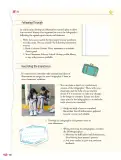
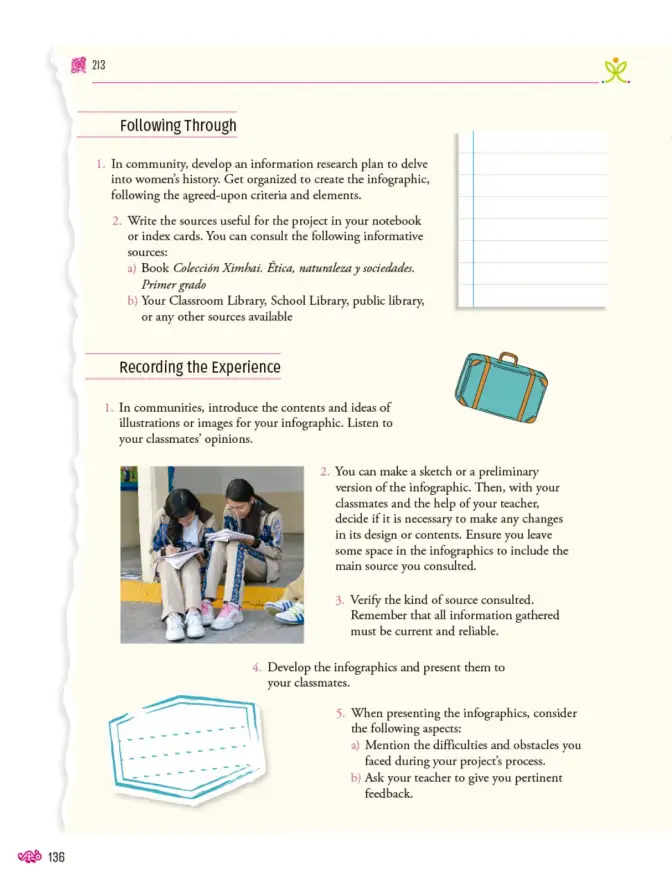
Hoja de cuaderno rayada que sugiere tomar notas.
Figura 1 image
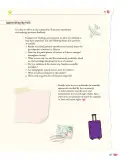
Maleta de viaje color turquesa, símbolo de proyecto o travesía de aprendizaje.
Figura 2 image
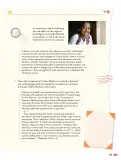
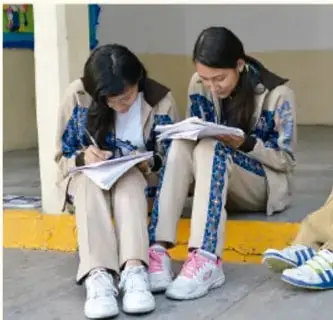
Fotografía de dos estudiantes sentadas escribiendo en el patio escolar.
Figura 3 image

Preguntas que la gente también hace

¿Cómo hacer una infografía sobre la historia de las mujeres para secundaria?
Consulta la solución completa arriba o explora el libro entero para temas relacionados.
¿Qué fuentes confiables puedo usar en un proyecto de investigación escolar?
Consulta la solución completa arriba o explora el libro entero para temas relacionados.
¿Cómo presentar una infografía ante la clase en inglés?
Consulta la solución completa arriba o explora el libro entero para temas relacionados.
📌 Antes de leer esto
  • • Identificar ideas principales en textos en inglés
  • • Conocer qué es una infografía
  • • Diferenciar fuentes primarias y secundarias
Siguiente tema sugerido
Evaluación del proyecto y reflexión sobre el aprendizaje colaborativo
📝 Transcripción de la página (texto seleccionable) 1758 caracteres

Following Through

  1. In community, develop an information research plan to delve into women's history. Get organized to create the infographic,following the agreed-upon criteria and elements.

  2. Write the sources useful for the project in your notebook or index cards. You can consult the following informative sources:

a) Book Colección Ximhai. Etica, naturaleza y sociedades.Primer grado

b) Your Classroom Library, School Library, public library,or any other sources available

Recording the Experience

  1. In communities, introduce the contents and ideas of illustrations or images for your infographic. Listen to your classmates'opinions.

  2. You can make a sketch or a preliminary version of the infographic. Then, with your classmates and the help of your teacher,decide if it is necessary to make any changes in its design or contents. Ensure you leave some space in the infographics to include the main source you consulted.

  3. Verify the kind of source consulted. Remember that all information gathered must be current and reliable.

  4. Develop the infographics and present them to your classmates.

  5. When presenting the infographics, consider the following aspects:

a) Mention the difficulties and obstacles you faced during your project's process.

b) Ask your teacher to give you pertinent feedback.

213

灾

![](page=0,bbox=[819, 631, 989, 762])

![](page=0,bbox=[215, 838, 548, 1158])

![](page=0,bbox=[194, 1251, 485, 1459])

乐

136

Ad

Otros libros recomendados

Ver todos →
Ad

Usamos cookies propias y de terceros para personalizar contenido, mostrar publicidad y analizar el tráfico. Las cookies necesarias siempre están activas.