













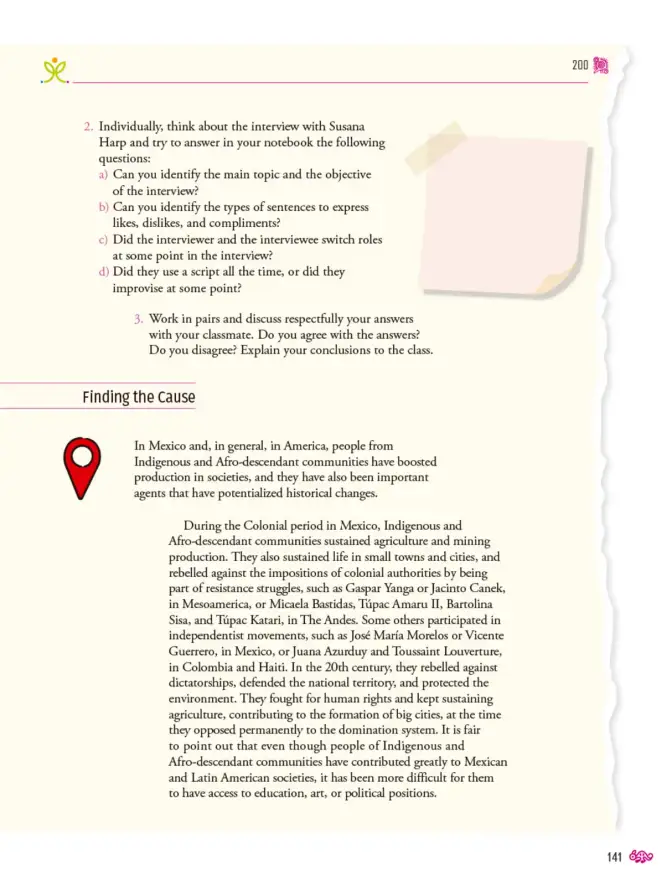
Página — Uerakua Anapu Uantakua Projects And Readings 1 (pág. 142)
Solución no disponible aún
Esta página está en proceso de revisión.
Pídela y la resolveremos antes. Sin registro.
📝 Transcripción de la página (texto seleccionable) 2084 caracteres
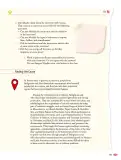
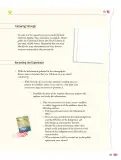
- Individually, think about the interview with Susana Harp and try to answer in your notebook the following questions:
a) Can you identify the main topic and the objective of the interview?
b) Can you identify the types of sentences to express likes, dislikes, and compliments?
c) Did the interviewer and the interviewee switch roles at some point in the interview?
d) Did they use a script all the time, or did they improvise at some point?
- Work in pairs and discuss respectfully your answers with your classmate. Do you agree with the answers?Do you disagree? Explain your conclusions to the class.
Finding the Cause
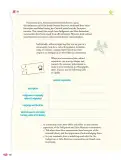
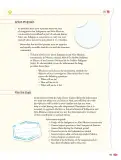
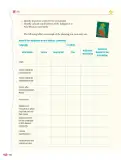
In Mexico and, in general, in America, people from Indigenous and Afro-descendant communities have boosted production in societies, and they have also been important agents that have potentialized historical changes.
During the Colonial period in Mexico, Indigenous and Afro-descendant communities sustained agriculture and mining production. They also sustained life in small towns and cities, and rebelled against the impositions of colonial authorities by being part of resistance struggles, such as Gaspar Yanga or Jacinto Canek,in Mesoamerica, or Micaela Bastidas, Túpac Amaru II, Bartolina Sisa, and Túpac Katari, in The Andes. Some others participated in independentist movements, such as José Maria Morelos or Vicente Guerrero, in Mexico, or Juana Azurduy and Toussaint Louverture,in Colombia and Haiti. In the 20th century, they rebelled against dictatorships, defended the national territory, and protected the environment. They fought for human rights and kept sustaining agriculture, contributing to the formation of big cities, at the time they opposed permanently to the domination system. It is fair to point out that even though people of Indigenous and Afro-descendant communities have contributed greatly to Mexican and Latin American societies, it has been more difficult for them to have access to education, art, or political positions.
灾.
200


141
Otros libros recomendados

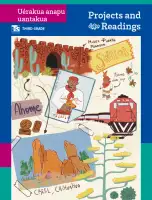
Uérakua anapu uantakua. Projects and Readings. Libro de Educación Telesecundaria Grado 3° Ciclo Escolar 2025 - 2026
SEP/CONALITEG
187 págs.

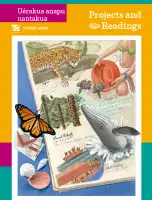
Uérakua anapu uantakua. Projects and Readings. Libro de Educación Telesecundaria Grado 2° Ciclo Escolar 2025 - 2026
SEP/CONALITEG
171 págs.

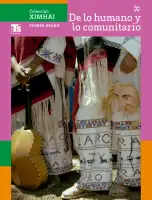
Colección Ximhai. De lo humano y lo comunitario. Libro de Educación Telesecundaria Grado 1° Ciclo Escolar 2025 - 2026
SEP/CONALITEG
259 págs.

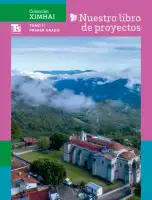
Colección Ximhai. Nuestro libro de Proyectos. Tomo II. Libro de Educación Telesecundaria Grado 1° Ciclo Escolar 2025 - 2026
SEP/CONALITEG
267 págs.

Un libro sin recetas para la maestra y el maestro. Fase 6. Libro de Educación Telesecundaria Grado 1°, 2°, 3° Ciclo Escolar 2025 - 2026
SEP/CONALITEG
203 págs.

Colección Ximhai. Saberes y pensamiento científico. Libro de Educación Telesecundaria Grado 1° Ciclo Escolar 2025 - 2026
SEP/CONALITEG
339 págs.

Colección Ximhai. Nuestro libro de Proyectos. Tomo I. Libro de Educación Telesecundaria Grado 1° Ciclo Escolar 2025 - 2026
SEP/CONALITEG
307 págs.

Colección Ximhai. Nuestro libro de Proyectos. Tomo III. Libro de Educación Telesecundaria Grado 1° Ciclo Escolar 2025 - 2026
SEP/CONALITEG
275 págs.