












Página — Uerakua Anapu Uantakua Projects And Readings 1 (pág. 154)
Solución no disponible aún
Esta página está en proceso de revisión.
Pídela y la resolveremos antes. Sin registro.
📝 Transcripción de la página (texto seleccionable) 1923 caracteres
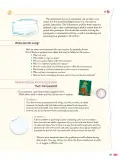
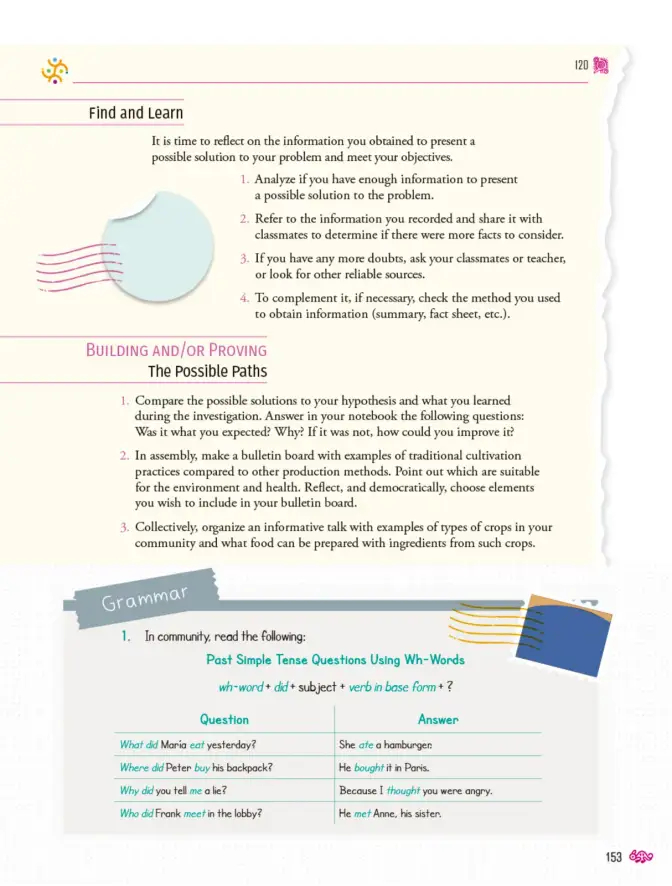
Find and Learn
It is time to reflect on the information you obtained to present a possible solution to your problem and meet your objectives.
Analyze if you have enough information to present a possible solution to the problem.
Refer to the information you recorded and share it with classmates to determine if there were more facts to consider.
If you have any more doubts, ask your classmates or teacher,or look for other reliable sources.
To complement it, if necessary, check the method you used to obtain information (summary, fact sheet, etc.).
BUILDING AND/OR PROVING The Possible Paths
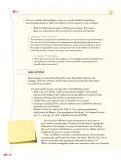
Compare the possible solutions to your hypothesis and what you learned during the investigation. Answer in your notebook the following questions:Was it what you expected? Why? If it was not, how could you improve it?
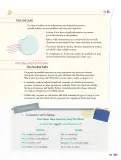
In assembly, make a bulletin board with examples of traditional cultivation practices compared to other production methods. Point out which are suitable for the environment and health. Reflect, and democratically, choose elements you wish to include in your bulletin board.
Collectively, organize an informative talk with examples of types of crops in your community and what food can be prepared with ingredients from such crops.
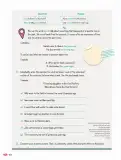
Past Simple Tense Questions Using Wh-Words
Grammar
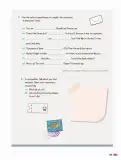
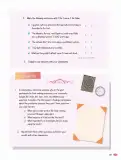
1. In community, read the following:
120


wh-word+ did+ subject + verb in base form + ?
| Question | Answer |
| What did Maria eat yestenday? | She ate a hamburgen |
| Where did Peter buy his backpack? | He bought it in Paris. |
| Why didyou tell me a lie? | Because I thought you were angry. |
| Who did Frank meet in the lobby? | He met Anne, his sisten. |
153
Otros libros recomendados

Uérakua anapu uantakua. Projects and Readings. Libro de Educación Telesecundaria Grado 3° Ciclo Escolar 2025 - 2026
SEP/CONALITEG
187 págs.

Uérakua anapu uantakua. Projects and Readings. Libro de Educación Telesecundaria Grado 2° Ciclo Escolar 2025 - 2026
SEP/CONALITEG
171 págs.

Colección Ximhai. De lo humano y lo comunitario. Libro de Educación Telesecundaria Grado 1° Ciclo Escolar 2025 - 2026
SEP/CONALITEG
259 págs.

Colección Ximhai. Nuestro libro de Proyectos. Tomo II. Libro de Educación Telesecundaria Grado 1° Ciclo Escolar 2025 - 2026
SEP/CONALITEG
267 págs.

Un libro sin recetas para la maestra y el maestro. Fase 6. Libro de Educación Telesecundaria Grado 1°, 2°, 3° Ciclo Escolar 2025 - 2026
SEP/CONALITEG
203 págs.

Colección Ximhai. Saberes y pensamiento científico. Libro de Educación Telesecundaria Grado 1° Ciclo Escolar 2025 - 2026
SEP/CONALITEG
339 págs.

Colección Ximhai. Nuestro libro de Proyectos. Tomo I. Libro de Educación Telesecundaria Grado 1° Ciclo Escolar 2025 - 2026
SEP/CONALITEG
307 págs.

Colección Ximhai. Nuestro libro de Proyectos. Tomo III. Libro de Educación Telesecundaria Grado 1° Ciclo Escolar 2025 - 2026
SEP/CONALITEG
275 págs.