















Ejercicio 1
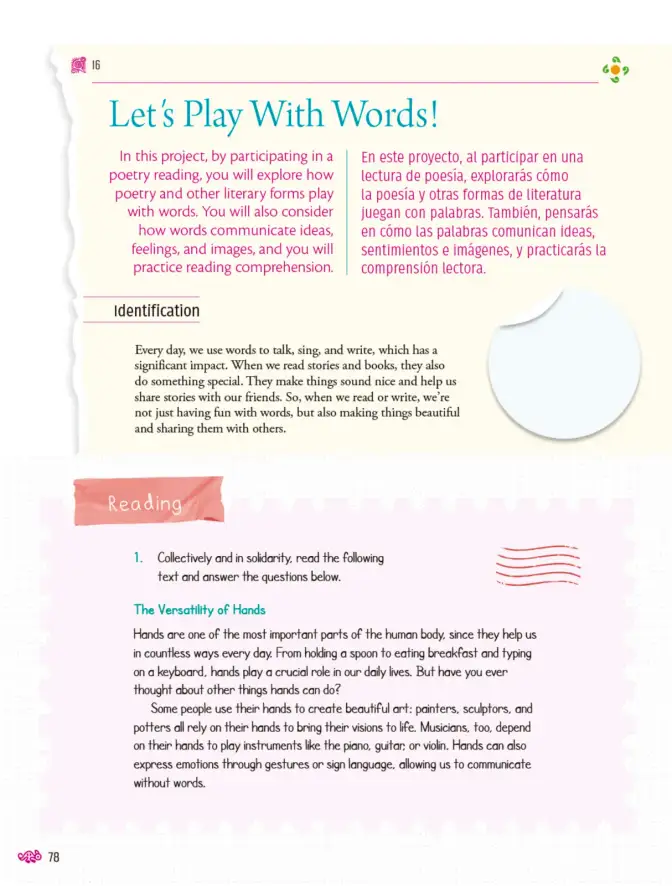
Collectively and in solidarity, read the following text and answer the questions below. / Lean de forma colectiva y solidaria el siguiente texto y respondan las preguntas.
Texto: The Versatility of Hands
- Lectura guiada del texto: se identifica el tema central (las manos y sus múltiples funciones).
- Se localizan las ideas principales: las manos ayudan en tareas cotidianas, crean arte, tocan instrumentos y expresan emociones.
- Se responden las preguntas de comprensión (no visibles en la página, se responden de forma orientativa):
Parte 1.a
What are hands used for in daily life?
- Se busca en el primer párrafo: holding a spoon, eating breakfast, typing on a keyboard.
- Se generaliza: las manos sirven para actividades cotidianas como comer, escribir y sostener objetos.
Respuesta
Hands are used for daily activities such as holding a spoon, eating breakfast, and typing on a keyboard.
Parte 1.b
How do artists and musicians use their hands?
- Se localiza en el segundo párrafo: painters, sculptors, and potters crean arte con las manos.
- Se añade: musicians tocan instrumentos como piano, guitarra o violín.
Respuesta
Artists use their hands to create art, and musicians use them to play instruments like the piano, guitar, or violin.
Parte 1.c
How can hands express emotions without words?
- Se identifica en el texto: through gestures or sign language.
- Se explica: los gestos y la lengua de señas permiten comunicar sentimientos sin hablar.
Respuesta
Hands can express emotions through gestures or sign language, allowing communication without words.
Parte 1.d
What is the main idea of the text?
- Se repasa el título y los dos párrafos.
- Se sintetiza: las manos son versátiles y esenciales en la vida diaria, el arte, la música y la comunicación.
Respuesta
The main idea is that hands are versatile and essential for daily tasks, art, music, and communication.