


















Time Expressions: Present, Past and Future
Respuesta rápida
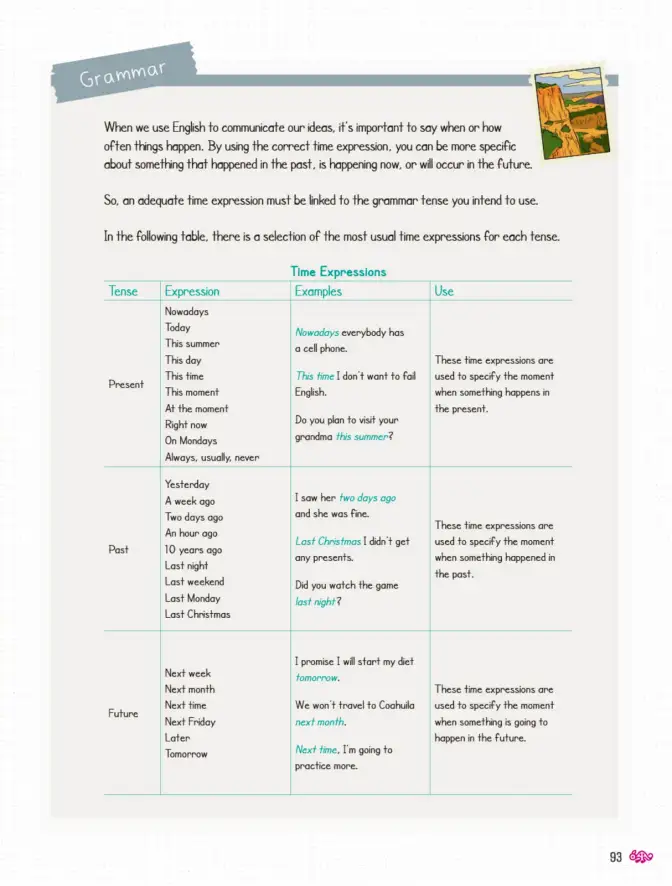
Las time expressions deben concordar con el tiempo verbal: presente (nowadays, today), pasado (yesterday, last night, ago) y futuro (tomorrow, next week).
Solución — Página 94
Uérakua anapu uantakua. Projects and Readings. Libro de Educación Telesecundaria Grado 1° Ciclo Escolar 2025 - 2026
Contenido de la página
La página explica que en inglés es importante indicar cuándo o con qué frecuencia ocurren las cosas. Para ello se usan las time expressions (expresiones de tiempo), que deben concordar con el tiempo verbal (tense) que se utilice.
Tabla de expresiones de tiempo
| Tense | Expression | Examples | Use |
|---|---|---|---|
| Present | Nowadays, Today, This summer, This day, This time, This moment, At the moment, Right now, On Mondays, Always, usually, never | Nowadays everybody has a cell phone. / This time I don't want to fail English. / Do you plan to visit your grandma this summer? | Se usan para especificar el momento en que algo ocurre en el presente. |
| Past | Yesterday, A week ago, Two days ago, An hour ago, 10 years ago, Last night, Last weekend, Last Monday, Last Christmas | I saw her two days ago and she was fine. / Last Christmas I didn't get any presents. / Did you watch the game last night? | Se usan para especificar el momento en que algo ocurrió en el pasado. |
| Future | Next week, Next month, Next time, Next Friday, Later, Tomorrow | I promise I will start my diet tomorrow. / We won't travel to Coahuila next month. / Next time, I'm going to practice more. | Se usan para especificar el momento en que algo va a ocurrir en el futuro. |
Explicación gramatical
- Presente: las expresiones como nowadays, today, at the moment, right now acompañan al presente simple o continuo. Los adverbios de frecuencia (always, usually, never) indican hábito.
- Pasado: expresiones como yesterday, last night, two days ago acompañan al pasado simple (saw, didn't get, did you watch).
- Futuro: expresiones como tomorrow, next week, next month acompañan a will o a going to (I will start, I'm going to practice).
Respuesta orientativa: una expresión de tiempo adecuada debe coincidir con el tiempo verbal de la oración; por ejemplo, yesterday con pasado simple y tomorrow con futuro.
Ejercicio de práctica sugerido
Completa con la expresión de tiempo correcta según el tiempo verbal:
- She is studying for her exam ___ (right now / last night).
- We visited our grandparents ___ (tomorrow / last weekend).
- I will call you ___ (next Friday / yesterday).
Respuestas: 1. right now; 2. last weekend; 3. next Friday.
Contenido de la página
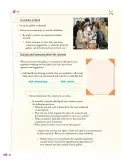
When we use English to communicate our ideas, it's important to say when or how often things happen. By using the correct time expression, you can be more specific about something that happened in the past, is happening now, or will occur in the future.
So, an adequate time expression must be linked to the grammar tense you intend to use.
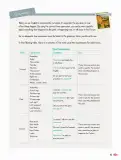
In the following table, there is a selection of the most usual time expressions for each tense.
Time Expressions
| Tense | Expression | Examples | Use |
|---|---|---|---|
| Present | Nowadays, Today, This summer, This day, This time, This moment, At the moment, Right now, On Mondays, Always, usually, never | Nowadays everybody has a cell phone. / This time I don't want to fail English. / Do you plan to visit your grandma this summer? | These time expressions are used to specify the moment when something happens in the present. |
| Past | Yesterday, A week ago, Two days ago, An hour ago, 10 years ago, Last night, Last weekend, Last Monday, Last Christmas | I saw her two days ago and she was fine. / Last Christmas I didn't get any presents. / Did you watch the game last night? | These time expressions are used to specify the moment when something happened in the past. |
| Future | Next week, Next month, Next time, Next Friday, Later, Tomorrow | I promise I will start my diet tomorrow. / We won't travel to Coahuila next month. / Next time, I'm going to practice more. | These time expressions are used to specify the moment when something is going to happen in the future. |
Ejemplos resueltos
Nowadays everybody has a cell phone.
Expresión de tiempo nowadays con presente simple para indicar una situación actual.
I saw her two days ago and she was fine.
Expresión two days ago con pasado simple (saw, was) para indicar cuándo ocurrió la acción.
I promise I will start my diet tomorrow.
Expresión tomorrow con futuro will para indicar una acción futura.
Tabla
| Tense | Expression | Examples | Use |
|---|---|---|---|
| Present | Nowadays, Today, This summer, This day, This time, This moment, At the moment, Right now, On Mondays, Always, usually, never | Nowadays everybody has a cell phone. / This time I don't want to fail English. / Do you plan to visit your grandma this summer? | These time expressions are used to specify the moment when something happens in the present. |
| Past | Yesterday, A week ago, Two days ago, An hour ago, 10 years ago, Last night, Last weekend, Last Monday, Last Christmas | I saw her two days ago and she was fine. / Last Christmas I didn't get any presents. / Did you watch the game last night? | These time expressions are used to specify the moment when something happened in the past. |
| Future | Next week, Next month, Next time, Next Friday, Later, Tomorrow | I promise I will start my diet tomorrow. / We won't travel to Coahuila next month. / Next time, I'm going to practice more. | These time expressions are used to specify the moment when something is going to happen in the future. |
Diagrama
graph TD
  A[Time Expressions] --> B[Present]
  A --> C[Past]
  A --> D[Future]
  B --> B1[Nowadays, Today, Right now]
  C --> C1[Yesterday, Last night, Ago]
  D --> D1[Tomorrow, Next week, Later]
Glosario (6)
- Time expression
- Expresión de tiempo que indica cuándo o con qué frecuencia ocurre una acción.
- Tense
- Tiempo verbal (presente, pasado, futuro).
- Nowadays
- Hoy en día, actualmente.
- Ago
- Hace (se usa con pasado: two days ago).
- Last
- Último/a (last night, last weekend).
- Next
- Próximo/a (next week, next month).
Preguntas para practicar
¿Por qué es importante usar la expresión de tiempo correcta?
Porque permite especificar con precisión cuándo ocurre una acción y mantener la coherencia con el tiempo verbal utilizado.
Temas y conceptos clave
Preguntas que la gente también hace
¿Qué son las time expressions en inglés?
¿Cómo se usan las expresiones de tiempo con el presente, pasado y futuro?
¿Cuáles son ejemplos de expresiones de tiempo en inglés?
- • Reconocer el presente simple y continuo
- • Identificar el pasado simple
- • Conocer el futuro con will y going to
📝 Transcripción de la página (texto seleccionable) 1683 caracteres
When we use English to communicate our ideas, if's important to say when or how often things happen. By using the correct time expression, you can be more specific about something that happened in the past, is happening now, or wil occur in the future.
So, an adequate time expression must be linked to the grammar tense you intend to use.
In the following table, there is a selection of the most usual time expressions for each tense.
Grammar
Time Expressions
| Tense | Expression | Examples | Use |
| Present | Nowadays Today This summer This day This time This moment At the moment Right now On Mondays Always, usually, never | Nowadays everybody has a cellphone. This time I don't want to fail English. Do you plan to visit your grandma this summen? | These time expressions ane used to specif y the moment when something happens in the present. |
| Past | Yesterday A week ago Two days ago An hour ago 10 years ago Last night Last weekend Last Monday Last Christmas | I saw her two days ago and she was fine. Last Christmas I didn't get any presents. Did you watch the game last night? | These time expressions are used to specify the moment when something happened in the past. |
| Future | Next week Next month Next time Next Friday Later Tomorrow | I promise I will stant my diet tomorrow. We won't travel to Coahuila next month. Next time, I'm going to practice more. | These time expressions are used to specify the moment when something is going to happen in the futune. |
限
93
Otros libros recomendados

Historia del pueblo mexicano. Multigrado Libro de Educación Telesecundaria Grado 1° Ciclo Escolar 2025 - 2026
SEP/CONALITEG
331 págs.

Colección Ximhai. Lenguajes. Libro de Educación Telesecundaria Grado 1° Ciclo Escolar 2025 - 2026
SEP/CONALITEG
323 págs.

Colección Ximhai. Ética, naturaleza y sociedades. Libro de Educación Telesecundaria Grado 1° Ciclo Escolar 2025 - 2026
SEP/CONALITEG
355 págs.

Uérakua anapu uantakua. Projects and Readings. Libro de Educación Telesecundaria Grado 3° Ciclo Escolar 2025 - 2026
SEP/CONALITEG
187 págs.

Uérakua anapu uantakua. Projects and Readings. Libro de Educación Telesecundaria Grado 2° Ciclo Escolar 2025 - 2026
SEP/CONALITEG
171 págs.

Colección Ximhai. De lo humano y lo comunitario. Libro de Educación Telesecundaria Grado 1° Ciclo Escolar 2025 - 2026
SEP/CONALITEG
259 págs.

Colección Ximhai. Nuestro libro de Proyectos. Tomo II. Libro de Educación Telesecundaria Grado 1° Ciclo Escolar 2025 - 2026
SEP/CONALITEG
267 págs.

Un libro sin recetas para la maestra y el maestro. Fase 6. Libro de Educación Telesecundaria Grado 1°, 2°, 3° Ciclo Escolar 2025 - 2026
SEP/CONALITEG
203 págs.