b) Do you know what types of energy are employed in technical processes?
c)What energy sources do you know?
d) Which are renewable and which are non-renewable energy sources?
e) Which energies are employed at school and your home?
f) What benefits does using renewable or clean energies have for your community?
- After answering the previous questions, research the following topics using trustworthy sources:
a) Types of energies used in your area.
b) Sources of the energies you employ.
c) Renewable and non-renewable energies.
d) Advantages and disadvantages of the different types of energies.
e) Concept of technical processes and their types.
INQUIRY DESIGN AND DEVELOPMENT That's the Question!
In assembly, share the information you got from your research in "Starting Point."
Reflect, comment, and write in your notebook the answers to the following questions:
a) Which renewable energies do you use at home?
b) Which non-renewable energies do you use at home?
c) What energy is used to make tortillas, bread, and other food in your community?
d) What energy do sewists, carpenters, mechanics, and other service providers, stores, and trades in your community use?
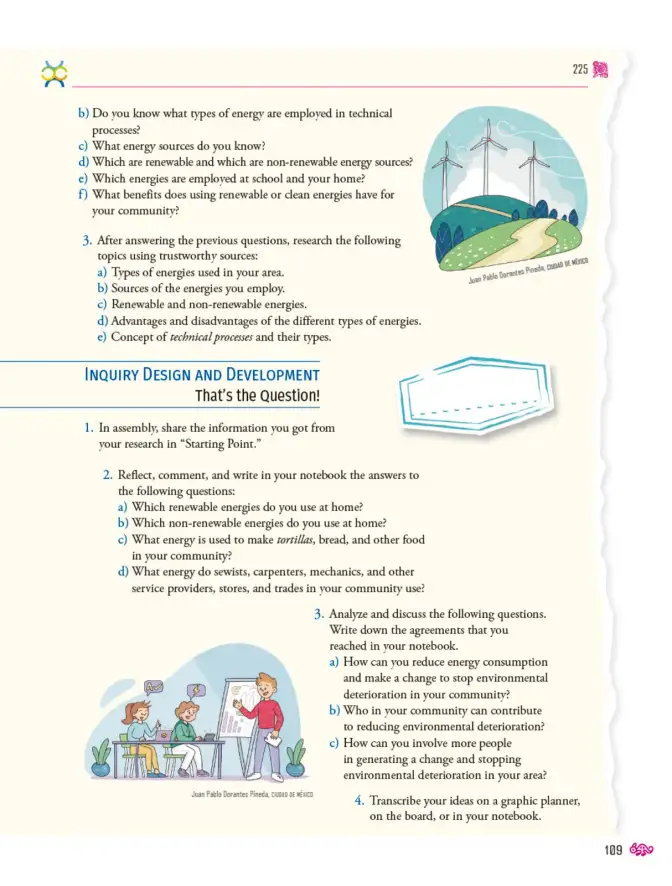
- Analyze and discuss the following questions.Write down the agreements that you reached in your notebook.
a) How can you reduce energy consumption and make a change to stop environmental deterioration in your community?
b) Who in your community can contribute to reducing environmental deterioration?
c)) How can you involve more people in generating a change and stopping environmental deterioration in your area?
- Transcribe your ideas on a graphic planner,on the board, or in your notebook.
8
225


Juan Pablo Dorantes Pineda, CiuDAD DE MExIco
109
8