

















Object Questions and Subject Questions
Respuesta rápida
Object questions: usan auxiliar (do/does/did/will) y preguntan por el objeto. Subject questions: sin auxiliar, la question word es el sujeto.
Solución — Página 21
Uérakua anapu uantakua. Projects and Readings. Libro de Educación Telesecundaria Grado 3° Ciclo Escolar 2025 - 2026
Explicación de la teoría
Object Questions (preguntas por el objeto)
Se usan cuando queremos información sobre el objeto de la oración. Necesitan un verbo auxiliar (do/does/did, will, etc.) y la estructura es:
\text{Question word} + \text{auxiliar} + \text{sujeto} + \text{verbo principal} + \text{complemento}?
Palabras interrogativas: when, where, why, who, what, which.
Ejemplos de la página:
- When did you move here? → I moved here four years ago.
- Where do you live? → I live in Mexico City.
- Why will they arrive until next week? → Because they have work to do this week.
- What did you do last Friday? → I went to the movies with my friends.
Subject Questions (preguntas por el sujeto)
Se usan cuando queremos información sobre el sujeto de la oración. No se usa auxiliar; el orden es el de una oración afirmativa:
\text{Question word} + \text{verbo} + \text{complemento}?
Palabras interrogativas: who, what, which.
Ejemplos de la página:
- Who lives there? → My best friend lives there.
- Which horse has the best saddle? → The brown horse has the best saddle.
- What makes you happy? → Listening to music makes me happy.
Cuadro comparativo
| Aspecto | Object Questions | Subject Questions |
|---|---|---|
| Información buscada | El objeto | El sujeto |
| ¿Usa auxiliar? | Sí (do/does/did/will...) | No |
| Question words | when, where, why, who, what, which | who, what, which |
| Orden | QW + aux + sujeto + verbo | QW + verbo + complemento |
| Ejemplo | What did you do? | What makes you happy? |
Respuesta orientativa: La diferencia clave es que las object questions requieren un auxiliar porque el sujeto ya está presente, mientras que en las subject questions la palabra interrogativa es el sujeto y por eso no se usa auxiliar.
Contenido de la página
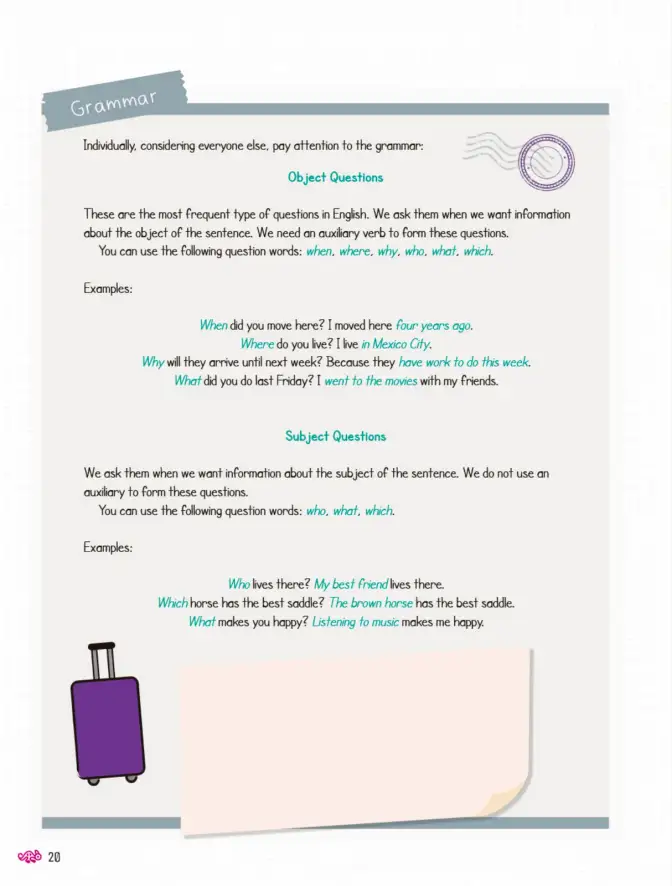
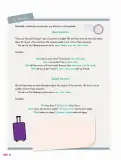
Grammar
Individually, considering everyone else, pay attention to the grammar:
Object Questions
These are the most frequent type of questions in English. We ask them when we want information about the object of the sentence. We need an auxiliary verb to form these questions. You can use the following question words: when, where, why, who, what, which.
Examples:
- When did you move here? I moved here four years ago.
- Where do you live? I live in Mexico City.
- Why will they arrive until next week? Because they have work to do this week.
- What did you do last Friday? I went to the movies with my friends.
Subject Questions
We ask them when we want information about the subject of the sentence. We do not use an auxiliary to form these questions. You can use the following question words: who, what, which.
Examples:
- Who lives there? My best friend lives there.
- Which horse has the best saddle? The brown horse has the best saddle.
- What makes you happy? Listening to music makes me happy.
Ejemplos resueltos
When did you move here?
Es una object question: 'when' pregunta por el objeto (el tiempo), 'did' es el auxiliar y 'you' el sujeto. Respuesta: I moved here four years ago.
Who lives there?
Es una subject question: 'who' es el sujeto, por eso no lleva auxiliar. Respuesta: My best friend lives there.
Tabla
| Aspecto | Object Questions | Subject Questions |
|---|---|---|
| Información buscada | El objeto | El sujeto |
| ¿Usa auxiliar? | Sí | No |
| Question words | when, where, why, who, what, which | who, what, which |
| Ejemplo | What did you do? | What makes you happy? |
Diagrama
graph TD
A[Questions in English] --> B[Object Questions]
A --> C[Subject Questions]
B --> B1[Usan auxiliar]
B --> B2[when, where, why, who, what, which]
B --> B3[What did you do?]
C --> C1[Sin auxiliar]
C --> C2[who, what, which]
C --> C3[Who lives there?]
Fórmulas y ecuaciones
\text{Object Q: QW + auxiliar + sujeto + verbo}
\text{Subject Q: QW + verbo + complemento}
Glosario (4)
- Object question
- Pregunta que busca información sobre el objeto de la oración; requiere auxiliar.
- Subject question
- Pregunta que busca información sobre el sujeto; no usa auxiliar.
- Auxiliary verb
- Verbo auxiliar (do, does, did, will) que ayuda a formar preguntas y negaciones.
- Question word
- Palabra interrogativa: when, where, why, who, what, which.
Preguntas para practicar
¿Por qué las subject questions no usan auxiliar?
Porque la palabra interrogativa (who, what, which) funciona como sujeto de la oración; al ya tener sujeto, no se necesita un auxiliar para formular la pregunta.
¿Qué tipo de información buscamos con una object question?
Buscamos información sobre el objeto de la oración, es decir, sobre la persona, cosa o circunstancia que recibe la acción del verbo.
Temas y conceptos clave
Figuras de la página (2)


Preguntas que la gente también hace
¿Cuál es la diferencia entre object questions y subject questions?
¿Cuándo se usa el auxiliar do/does/did en preguntas en inglés?
¿Qué question words se usan en subject questions?
- • Reconocer sujeto y objeto en una oración
- • Conocer los auxiliares do/does/did
- • Identificar question words básicas
📝 Transcripción de la página (texto seleccionable) 1094 caracteres
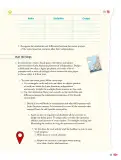
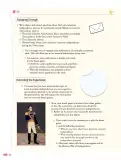
Grammar
Individually, considering everyone else, pay attention to the grammar:
Object Questions
These are the most frequent type of questions in English. We ask them when we want information about the object of the sentence. We need an auxiliary verb to form these questions. You can use the following question words: when, where, why, who, what, which.
Examples:
When did you move here? I moved here four years ago. Where do you live? I live in Mexico City.
Why wil they arrive until next week? Because they have work to do this week. What did you do last Friday? I went to the movies with my friends.
Subject Questions
We ask them when we want information about the subject of the sentence. We do not use an auxiliary to form these questions.
You can use the following question words: who, what, which.
Examples:
Who lives there? My best friend lives there. Which horse has the best saddle? The brown horse has the best saddle.What makes you happy? Listening to music makes me happy.


乐
20

Otros libros recomendados

Colección Nanahuatzin. Lenguajes. Libro de Educación Telesecundaria Grado 3° Ciclo Escolar 2025 - 2026
SEP/CONALITEG
323 págs.
Colección Nanahuatzin. Ética, naturaleza y sociedades. Libro de Educación Telesecundaria Grado 3° Ciclo Escolar 2025 - 2026
SEP/CONALITEG
355 págs.
Colección Nanahuatzin. De lo humano y lo comunitario. Libro de Educación Telesecundaria Grado 3° Ciclo Escolar 2025 - 2026
SEP/CONALITEG
259 págs.

Colección Nanahuatzin. Nuestro libro de Proyectos. Tomo II. Libro de Educación Telesecundaria Grado 3° Ciclo Escolar 2025 - 2026
SEP/CONALITEG
275 págs.

Colección Nanahuatzin. Saberes y pensamiento científico. Libro de Educación Telesecundaria Grado 3° Ciclo Escolar 2025 - 2026
SEP/CONALITEG
339 págs.

Colección Nanahuatzin. Nuestro libro de Proyectos. Tomo I. Libro de Educación Telesecundaria Grado 3° Ciclo Escolar 2025 - 2026
SEP/CONALITEG
299 págs.

Colección Nanahuatzin. Nuestro libro de Proyectos. Tomo III. Libro de Educación Telesecundaria Grado 3° Ciclo Escolar 2025 - 2026
SEP/CONALITEG
291 págs.
Colección Nanahuatzin. Múltiples lenguajes. Libro de Educación Telesecundaria Grado 3° Ciclo Escolar 2025 - 2026
SEP/CONALITEG
163 págs.