















Ejercicio 1
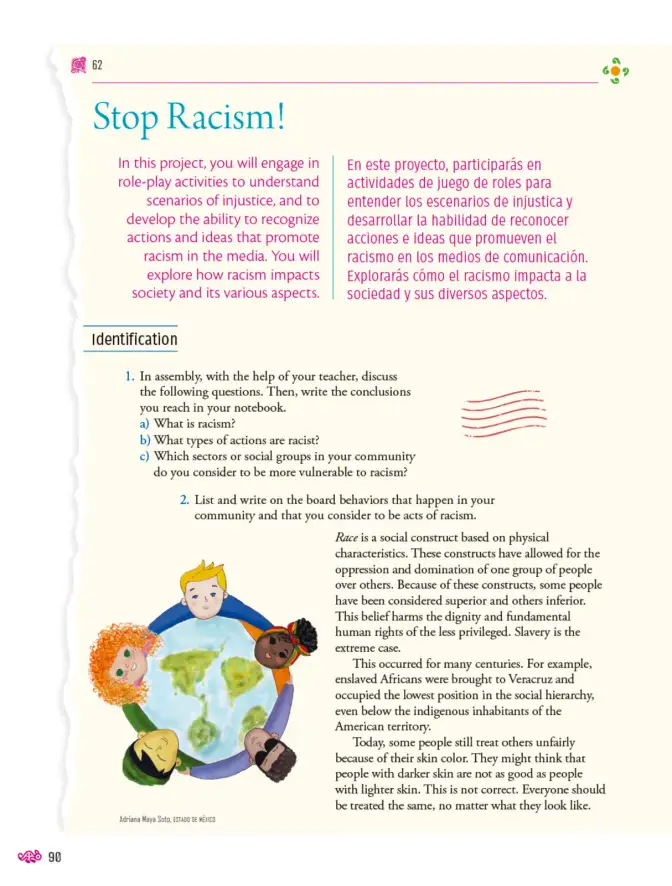
In assembly, with the help of your teacher, discuss the following questions. Then, write the conclusions you reach in your notebook.
Parte 1.a
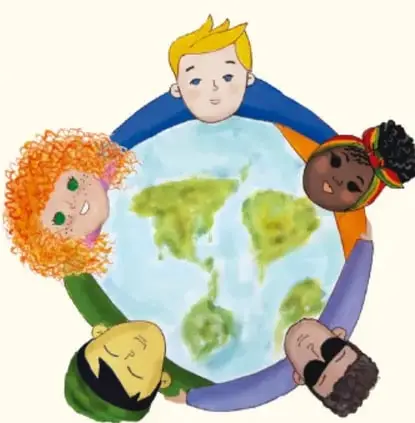
What is racism?
- Racism is a set of beliefs and practices that consider some people superior and others inferior because of physical characteristics such as skin color.
- It is a social construct, not a biological fact: race is based on physical traits, but the value assigned to them is created by society.
- This belief harms the dignity and fundamental human rights of the less privileged.
Respuesta
Racism is the belief that one group of people is superior to another because of physical characteristics, leading to oppression and discrimination.
Parte 1.b
What types of actions are racist?
- Treating someone unfairly because of their skin color or origin.
- Excluding, insulting or mocking a person for their physical appearance.
- Denying opportunities (work, school, health) to a group considered inferior.
- Promoting stereotypes in the media that present some groups as less capable.
Respuesta
Racist actions include unfair treatment, exclusion, insults, denial of opportunities and media stereotypes based on physical characteristics.
Parte 1.c
Which sectors or social groups in your community do you consider to be more vulnerable to racism?
- Indigenous peoples and their descendants.
- Afro-descendant and dark-skinned people.
- Migrants and people from other regions.
- People with fewer economic resources.
Respuesta
Indigenous, Afro-descendant, migrant and low-income groups are usually the most vulnerable to racism in Mexican communities.