Saltar al contenido
MisLibrosTexto
Ad

Let's modify a game! - Proyecto: modificar un deporte

📄 ejercicios ingles 🎓 otro · 3° TELESECUNDARIA México 🇲🇽 MX 🗣 Español
Página 89
89 de 187
Página 89 de Uérakua anapu uantakua. Projects and Readings.  Libro de Educación Telesecundaria Grado 3°  Ciclo Escolar 2025 - 2026
Anterior Página 89 / 187 Siguiente

Respuesta rápida

Proyecto: elegir un deporte, modificar sus reglas y dificultad, redactar instrucciones con conectores (first, then, next), presentarlo, probarlo y reflexionar sobre claridad y diversión.

📚 exercise ingles ⭐⭐ Dificultad 2/5 ⏱ 6 min lectura

Solución — Página 89

Uérakua anapu uantakua. Projects and Readings. Libro de Educación Telesecundaria Grado 3° Ciclo Escolar 2025 - 2026

1
Ejercicio 1

Let's modify a game! (¡Modifiquemos un juego!)

  1. Reunirse en comunidades (equipos).
  2. Con ayuda del docente, lluvia de ideas de deportes y escribirlos en el pizarrón.
  3. Cada comunidad elige un deporte de la lista.
  4. Modificar el deporte añadiendo reglas y aumentando la dificultad para practicar la resolución de problemas.
  5. Guiarse con: ¿Cómo cambiar reglas para exigir más pensamiento y toma de decisiones? ¿Podemos añadir obstáculos o retos?

Respuesta orientativa: Ejemplo de deporte modificado: Fútbol con tres porterías. Reglas nuevas: se juega 5 vs 5, hay tres porterías por equipo y el gol vale 1 punto en la central y 2 en las laterales; cada jugador solo puede tocar el balón tres veces antes de pasarlo. Esto obliga a decidir rápido a qué portería atacar y a quién pasar.

2
Ejercicio 2

Let's add the modifications! (¡Añadamos las modificaciones!)

  1. Escribir las nuevas instrucciones de cómo jugar.
  2. Ser muy específicos; usar conectores: first, then, next.
  3. Intercambiar las modificaciones con otras comunidades y anotar comentarios en el cuaderno.
  4. Usar las opiniones para ajustar las instrucciones si es necesario.

Respuesta orientativa (instrucciones con conectores): First, divide the field into three lanes. Then, place three goals at the end of each lane. Next, give each player a maximum of three touches. Finally, the team with the most points after ten minutes wins.

3
Ejercicio 3

Let's present our modified game! (¡Presentemos nuestro juego modificado!)

  1. Cada comunidad presenta su juego modificado.
  2. Elementos: nombre del juego original, por qué lo eligieron, cómo se juega, qué modificaciones hicieron, cómo ayuda a la toma de decisiones y cómo se jugará.
  3. Pueden usar imágenes, dibujos, proyector, material del docente de educación física y mímica.
  4. Una comunidad practica el deporte y verifica que las instrucciones sean claras.
  5. Reflexionar: ¿Fueron claras las instrucciones? ¿Qué cambiarías para que sean más claras? ¿Fue divertido? ¿Cómo lo harías más divertido y desafiante?

Respuesta orientativa: Las instrucciones fueron claras porque usamos conectores y pasos numerados. Cambiaríamos los dibujos por una demostración en vivo. El juego fue divertido, pero añadiríamos un tiempo límite por jugada para hacerlo más desafiante.

Ad
4
Ejercicio 4

Sharing and Assessing What We Learned (Compartir y evaluar lo aprendido)

  1. Las siguientes sugerencias mejorarán la gestión e implementación de las actividades del proyecto.

Respuesta orientativa: Para evaluar el proyecto se sugiere una rúbrica con criterios de claridad de instrucciones, creatividad de las modificaciones, trabajo colaborativo y reflexión final; cada comunidad autoevalúa su desempeño y coevalúa al equipo que probó su juego.

Contenido de la página

Let's modify a game!

  1. Get together in communities.
  2. With the help of your teacher, brainstorm as many sports as you can remember and write them on the board.
  3. Each community will choose one sport from the list.
  4. Modify the sport you chose by adding rules and increasing the level of difficulty. This will help participants practice their problem-solving skills.
  5. Use the following questions as a guide: How can we change rules requiring more thinking and decision-making? Can we add obstacles or challenges to the activity?

Let's add the modifications!

  1. After defining the new rules, challenges, and/or modifications to the chosen sport, write the new instructions on how to play it.
  2. Be very specific. You can use transition words like first, then, next to help your readers understand.
  3. Exchange your modifications with the other communities in your classroom and take note of all the comments or recommendations in your notebook.
  4. Use the communities' opinions to modify your instructions if necessary.

Let's present our modified game!

  1. Each community will present their new modified game.
  2. Consider the following elements for your presentation: Name of the original game, why you chose it, how to play it, what modifications you made, how this new game will help participants with decision-making, and how you will play it.
  3. You can use pictures, drawings, a projector, material from your physical education teacher, and mime in your presentation.
  4. After outlining your instructions, one community will try to practice the sport and verify your instructions are clear.
  5. Answering the following questions will help you reflect on the results: Were the instructions clear and easy to understand? What would you change to make the instructions clearer? Was the modified game fun? How would you change the game to make it more fun and challenging?

Sharing and Assessing What We Learned

  1. The following suggestions will improve your project's activities management and implementation.

Ejemplos resueltos

Modificar el fútbol añadiendo reglas que exijan más toma de decisiones.

Juego: Fútbol de tres porterías.

Reglas nuevas:

  1. First, se juega 5 contra 5 en una cancha dividida en tres carriles.
  2. Then, cada equipo defiende tres porterías; el gol en la central vale 1 punto y en las laterales 2 puntos.
  3. Next, cada jugador puede tocar el balón máximo tres veces antes de pasarlo.
  4. Finally, gana el equipo con más puntos tras 10 minutos.

Habilidad trabajada: decisión rápida sobre a qué portería atacar y a quién pasar.

Tabla

Etapa Acción principal Producto
1. Modificar Elegir deporte y añadir reglas/retos Lista de reglas nuevas
2. Redactar Escribir instrucciones con first, then, next Instrucciones escritas
3. Intercambiar Compartir con otras comunidades Comentarios y recomendaciones
4. Presentar Exponer el juego modificado Presentación oral
5. Evaluar Reflexionar y aplicar rúbrica Autoevaluación y coevaluación

Diagrama

flowchart TD
  A[Reunirse en comunidades] --> B[Lluvia de ideas de deportes]
  B --> C[Elegir un deporte]
  C --> D[Modificar reglas y dificultad]
  D --> E[Escribir instrucciones con conectores]
  E --> F[Intercambiar con otras comunidades]
  F --> G[Ajustar instrucciones]
  G --> H[Presentar el juego modificado]
  H --> I[Probar y reflexionar]
  I --> J[Evaluar lo aprendido]

Glosario (8)

brainstorm
lluvia de ideas; generar muchas ideas rápidamente en grupo
modify
modificar; cambiar o ajustar algo
rules
reglas; normas que rigen un juego
transition words
conectores de secuencia como first, then, next
obstacles
obstáculos; dificultades añadidas al juego
decision-making
toma de decisiones
mime
mímica; representar con gestos sin hablar
assess
evaluar; valorar el aprendizaje o el desempeño

Preguntas para practicar

How can we change rules requiring more thinking and decision-making?

We can add limits on touches, time restrictions, or multiple scoring targets so players must choose quickly. This forces them to analyze options and decide under pressure.

Can we add obstacles or challenges to the activity?

Yes, we can add cones, zones, or extra rules like playing with the non-dominant hand. Obstacles increase difficulty and make the game more engaging.

Were the instructions clear and easy to understand?

They were mostly clear because we used sequence words and numbered steps. Some parts needed a demonstration to be fully understood.

How would you change the game to make it more fun and challenging?

We would add a time limit per play and bonus points for creative passes. This keeps everyone active and increases the challenge.

Temas y conceptos clave

Modificación de juegos y deportesRedacción de instrucciones en inglésPresentación oral de proyectosEvaluación y reflexión del aprendizajeModify a gameTransition words: first, then, nextProblem-solving skillsDecision-makingCommunities of learningProject assessment
¿Te fue útil esta página?

Figuras de la página (2)

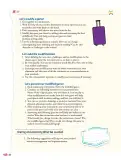
Ilustración de una maleta morada con ruedas y asa extendida.
Figura 1 image
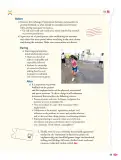
Tarjeta o nota adhesiva con líneas punteadas para escribir.
Figura 2 image

Preguntas que la gente también hace

¿Cómo se redactan instrucciones de un juego en inglés?
Consulta la solución completa arriba o explora el libro entero para temas relacionados.
¿Qué conectores se usan para dar instrucciones en inglés?
Consulta la solución completa arriba o explora el libro entero para temas relacionados.
¿Cómo modificar un deporte para trabajar la toma de decisiones?
Consulta la solución completa arriba o explora el libro entero para temas relacionados.
📌 Antes de leer esto
  • • Vocabulario básico de deportes en inglés
  • • Uso de imperativos y conectores de secuencia
  • • Trabajo en equipos cooperativos
Siguiente tema sugerido
Evaluación y presentación final de proyectos de la unidad
📝 Transcripción de la página (texto seleccionable) 2135 caracteres

Let's modify a game!

  1. Get together in communities.

  2. With the help of your teacher, brainstorm as many sports as you can remember and write them on the board.

  3. Each community will choose one sport from the list.

  4. Modify the sport you chose by adding rules and increasing the level of difficulty. This will help participants practice their problem-solving skills.

  5. Use the following questions as a guide: How can we change rules requiring more thinking and decision-making? Can we add obstacles or challenges to the activity?

Let's add the modifications!

  1. After defining the new rules, challenges, and/or modifications to the chosen sport, write the new instructions on how to play it.

  2. Be very specific. You can use transition words like first, then, next to help your readers understand.

  3. Exchange your modifications with the other communities in your classroom and take note of all the comments or recommendations in your notebook.

  4. Use the communities'opinions to modify your instructions if necessary.

Let's present our modified game!

  1. Each community will present their new modified game.

  2. Consider the following elements for your presentation:Name of the original game, why you chose it, how to play it,what modifications you made, how this new game will help participants with decision-making, and how you will play it.

  3. You can use pictures, drawings, a projector, material from your physical education teacher, and mime in your presentation.

  4. After outlining your instructions, one community will try to practice the sport and verify your instructions are clear.

  5. Answering the following questions will help you reflect on the results: Were the instructions clear and easy to understand?What would you change to make the instructions clearer? Was the modified game fun? How would you change the game to make it more fun and challenging?

Sharing and Assessing What We Learned

  1. The following suggestions will improve your project's activities management and implementation.

237

X

![](page=0,bbox=[926, 196, 1060, 457])

![](page=0,bbox=[814, 1267, 1103, 1472])

A

88
Ad

Otros libros recomendados

Ver todos →
Ad

Usamos cookies propias y de terceros para personalizar contenido, mostrar publicidad y analizar el tráfico. Las cookies necesarias siempre están activas.